Showing posts with label fangirling. Show all posts

Tuesday, July 11, 2017

The Myers-Briggs Fan Types


In the world of fandoms, you'll run across every kind of person. Go to a midnight release. You'll inevitably see someone cosplaying a character. You'll see someone who looks (and smells) like they haven't left the house in weeks. You'll see someone who definitely doesn't want to be there, but is just there because their friend/sibling/significant other wanted them there. You'll see people who look like they belong in the fandom and people who very much don't. But what do the different personality types look like as fans?

ISTP
The Fanfic-er


Fanfic-ers love to experiment, to explore. If they find a fandom they like, their first reaction will be to change it up, to see what would happen if the story had gone differently, had gone how they think it should, rather than how the author thought it should. What does the author know anyway?

ISFP
The Fanartist


Similar to the Fanfic-er, Fanartists want to put their own spin on fandoms they love. But rather than rewrite the story, Fanartists will play with the aesthetics of the fandom, finding personal expression through something outside of themselves, whether it's physical art, makeup, cosplay, or something else entirely. There's nothing fun in leaving things as they are, so Fanartists will switch things up, just for the sake of it. Just don't criticize their work.

ESTP
The Everyfan


Everyfans have a finger in every fandom they've seen. Forget going all in on one fandom, Everyfans want the thrill of having it all. And they'll be an active part of every fandom they're in—until it gets boring. Because once the fandom stops being stimulating and interesting, Everyfans will move onto the next hot fandom.

ESFP
The Actor


Who does an interpretive dance to their favorite opening song? Who can be found at midnight showings in full costume acting out scenes from the last movie? Who will make people laugh when marathons get boring by making up dialogue? Actors, of course. Actors will read the room and make sure the entire room is having a good time. And they'll love it.

INFJ
The Shipper


Shippers want everyone to be happy. Particularly, they want everyone to be happy with everyone else. And their pairings would work, too, whether it's a platonic friendship or a bromance or a full-blown romantic endeavor, because they know how to find the path to success, no matter how long it is. Shippers know that love is pain, but they also knows that love will fix the world. Any world.

INFP
The Big Ball of Feels


Big Balls of Feels can't handle any fandom, but they love them all. You'll often find them squeeing and clutching their hearts and crying over cinnamon rolls. When they're in a fandom, they're all in, because their poor feels can't handle more than a few fandoms at a time.

ENFJ
The Theme Partier


Theme Partiers have a lot of friends and a lot of feelings. So what better way to express those feelings than with all those friends at a fandom-themed party? Not only do Theme Partiers use their parties as an outlet for their need to be with people, they use parties as an excuse to win others to their fandoms. Because is there really anything better to advocate what you believe in than a party?

ENFP
The Efangelist


Efangelists want everyone to love their fandoms. There aren't other options. Because how can friends be truly connected if they don't have connections at every level? Efangelists have unending energy and will come up with increasingly creative schemes until the entire world knows about and loves their fandoms, with all the best intentions, of course. What do you mean it's weird? You'll love it!

ISTJ
The Shusher


Shushers are rational above all else and like to have all the facts when it comes to their fandoms. And obviously, the best way to get all the facts is to pay attention to the book/show/movie. And you interrupting their research... well, that's just impractical. So shush. We'll analyze it later.

ISFJ
The Fan Mom


Fan Moms, just like their distant relation the Soccer Mom, just want everyone to be taken care of and included. Supportive, enthusiastic, and observant, Fan Moms will purposefully become the center of any fandom group, only so that they can more easily reach everyone else. And you can always bet that Fan Moms will be at any fandom gathering with snacks and a shoulder to cry on.

ESTJ
The Orderly


Orderlies know exactly how people in a certain fandom are supposed to act. You can find them weeding out gifs that aren't true to the fandom, moderating forums, or single-handedly building a fanbase around something. But they know that groups are best when individuals hone their strengths, so if you need someone to sort you into a Hogwarts house, the Orderly is your fan.

ESFJ
The Yes Fan


Yes Fans are into whatever their friends are into, and they're into it wholeheartedly. When their friends switch fandoms, they switch fandoms. But they'll also take a piece of every fandom with them, because when they can't be surrounded by their real life friends, they'll take solace in the company of their fictional friends.

INTJ
The Closet Fan


Closet Fans are as much a fan as anyone else, sometimes even more so. They'll care deeply about fandoms, but they don't see the point in broadcasting to the world what they do and don't love. It's none of the world's damn business, anyway. Until someone is wrong, that is.

INTP
The Theorist


Theorists often publish articles with the tagline, "This will blow your mind!!!," though they probably didn't actually add that line. Theorists are amazing at connecting the dots, solving the murders, drawing parallels between fandoms, coming up with fan theories spanning not only decades of a fandom but often multiple fandoms at once. Talk to them for too long and your mind will most likely explode.

ENTJ
The But Actually


Who can spot a flaw from a mile away and has no problem pointing it out? But Actuallys. They know how the world works, and if a fandom ignores that, But Actuallys will let you know. They'll argue plot holes for hours, and they'll be the ones walking out of movies going, "that could never happen," and then going into extreme detail as to why it could never happen. Prove them wrong, however, and you'll win their respect. Until you take your argument just a step too far. "But ACTUALLY..."

ENTP
The But What If


Similar to the But Actually, But What Ifs will also be the ones walking out of movies saying, "that could never happen." But rather than explaining why it couldn't happen, But What Ifs will come up with an infinite number of scenarios that might have fixed the plot hole. And even if there wasn't a plot hole, they'll argue different scenarios, different plots, until you're blue in the face. What? It's fun.

What kind of fan are you?

Friday, August 26, 2016

Four Ways to Fandom-ify your Space


As a HUGE Disnerd, I love to display my fandom however I can! In public, I Disneybound or wear Disney t-shirts. However, I like to be surrounded by the things I love! I'm going to show you a few ways that I bring some Disney magic to my room. You can use these tips with any fandom!

1. Display a collection.


Snow White is my favorite Disney princess, so I like to display my Snow White collection on my shelf! You can display any kind of collection: Pop! vinyl figures, books, or cosplay props.

2. Make a photo collage.


I've made a collage with pictures from the first time I went to Disney World. You can use any assortment of pictures from any event, such as a trip to a theme park, a convention, or a movie premiere! You can also find ideas online for different collage shapes.

3. Be subtle.


Most of my room is very flamboyantly Disney-fied, but if you don't have a lot of merch or if you're decorating a work desk and want to still look professional, you can place a small toy or a framed quote in a corner. This is a stack of Tsum Tsum figures that I have on my nightstand.

4. Try a DIY.


If you don't want buy stuff for your room, you can make something yourself! These Winnie the Pooh inspired hunny pots took me about 30 minutes to make (minus drying time) and they're so cute on my windowsill. All I did was paint the flower pots. Try searching "[your fandom] inspired diy" on Google, Pinterest, or YouTube for inspiration!

How do you show off your fandom?

Friday, June 10, 2016

Dante Was a Fanboy

Fan-fiction is centuries old. As someone who enjoys reading fan-fiction, I thought it would be important to share that fact. Fan-fiction is nothing new under the sun. As avid fangirls, it is crucial to remind family and friends who look at us askance that classic literature is rife with reminders that always, ALWAYS, humans will read or see something they love and try to infuse this ‘something’ into their own lives and creations. Of course, if you look at that one skeptical person in your life who believes you are wasting your time over trivial fictional characters, look right back at them and say, “Even the greatest authors were fanboys and fangirls.” And if you need to, direct them here to read this. Here are some of the top writers who integrated fan-fiction into their works.

 1. Dante Alighieri 

The Italian poet from Florence, Italy who wrote The Divine Comedy couldn’t help himself. He portrayed himself and his literary hero, Virgil, the Roman poet, in this epic story of his journey from Hell to Paradise. Virgil became his traveling companion throughout the story until they reached Heaven, and Dante committed the hilarious felony of self-insertion into his story. Along the way he encountered Achilles and Odysseus, among others. I am pretty sure that, all seriousness aside, Dante was grinning to himself as he wrote, thinking, “Ah, yes! Watch me now, Homer! Watch me stick your hero Achilles in the Circle of the Lustful. Watch me!” And it worked. The Divine Comedy is considered one of the pinnacles of Western literature.

2. Charlotte Bronte 

Apparently, Bronte was so intrigued by the character of Jane Fairfax in Jane Austen’s Emma that she decided to explore Fairfax further by writing Jane Eyre. Jane Eyre finds herself bound by necessity to find a job as a governess, just as Jane Fairfax in Emma must make her own livelihood as a governess. If this isn’t alternate-universe fanfiction, I don’t know what is.


3. John Milton 

Yet another example of a curious writer—Milton was a Puritan Englishman who wrote his renowned epic poem Paradise Lost based on the structure of The Iliad and The Odyssey by Homer, as well as the Aeneid by Virgil. He intended to create a Christian epic and portray the Biblical origins of humanity. Whether or not he intended to, many read Paradise Lost as a unique perspective on the character of Satan. In fact, some claim that Milton was attempting to justify the motives of Satan and stir our sympathies in favor of the fallen archangel. I suppose this would put Milton in the same category as one of those people who write paragraphs of meta about Kylo Ren and Loki (I am one of those people). Even more ironic is how Milton chose to depict God—as an old man who glared down at his recently created humans, Adam and Eve, waiting for them to screw up. I’m not sure how intentional this was on Milton’s part.

So, to sum it all up, we fangirls are in good company. Classic literature is rife with people contemplating their favorite stories and writing up follow-up tales to explore the characters even more. To be a fangirl is more than squealing over Captain America or Luke Skywalker. It is about delving deeper than the average person and creating head-canons that explain that character’s personality and motives more thoroughly, more deeply. Therefore, whenever anybody looks at you and tells you that fan-fiction is ridiculous, you look right back at them and say, “Hey, Dante was a fanboy.”

Wednesday, January 13, 2016

Converting Others to a Fandom

I recently moved in with a new batch of roommates, which can always be interesting, but luckily for me mine are super great. Because of this super greatness, they bestowed on me the privilege of introducing them to Jane the Virgin. (Thank you, Netflix!) We watched the first three episodes. There were many squeals, what-the-hecks, and my attempts to not spoil things. This experience inspired me to talk about the process of conversion to fandom and its different point of views. 
source

So I introduced Jane the Virgin to my roommates, my sister, my mother, and our very own Sky. Re-watching the series with someone else can be a completely new experience because there are new insights and additions I had never thought of the first time around. Plus, it's fun to fangirl around.
source


Then there are times people just aren't into what you are into. I'm going to sound like the biggest fangirl hypocrite, but I don't care much for Doctor Who. I watched all the way until David Tennant when one of my best friends suggested it, but I stopped because I found I wasn't enjoying myself. I have been on the other end of this spectrum. When you really like something, sometimes it can be hard when someone you care about doesn't like it as much. Because you want to fangirl, but you can't fangirl. Because people get so bored by a show, they're on their phones during your favorite part.
source
On the other side, I have been introduced to shows I've absolutely loved. In the case of Jane the Virgin, I was the hipster fan who watched everything first, but not with Vampire Diaries. The show was well into its third season when I started watching. My sister was the hipster fan, and after some fairly spoilery discussions, I was hooked. It gave me that needed dose of post-Twilight vampires.
source
Whether introducing someone to a new show/movie/book or being introduced to a show/movie/book, the outcome can lead to dislike or absolute obsession. 
source
What fandoms have you introduced or been introduced to?

Thursday, September 17, 2015

The Next Generation of Nerds


From the day we are born till the day we die, stories have a significant impact our lives. No matter where you go, you probably can’t escape stories. They color everything we do, and there’s a reason why. They provide a medium for us to communicate and to understand the world we live in. They make us laugh, they make us cry, they give us hope.

I was read to since I was a baby, so stories have been in my life for as long as I can remember. I started off my career as a fangirl when I was just three years old, listening to The Lion, the Witch and the Wardrobe on cassette tape. My love for stories began at such a young age, and I’ve heard similar stories about others who started young, too. I think a lot of our fangirlness is founded in the very beginning of our lives.

So that’s why, today, I want to talk about the little fans.


Often we don’t think of little kids as fans. After all, they’ve barely even scratched the surface of the world’s possibilities. But they are watching and soaking up everything--including the books, TV shows, and movies they’re exposed to. For me, what I was exposed to when I was young--which includes Star Trek: The Next Generation and 60s music--has stuck with me for my entire life.

This fact is important--vital, even--because we have a huge responsibility to pass on what we love to those who are younger than us.
It may look something like this.
I personally enjoy doing this with one little fan in particular. There’s a kid that my family babysits who is a huge superhero fan. Sometimes we talk about Captain America or just being a superhero in general (sometimes we act like superheroes, too). His opinion on superheroes greatly mirrors my own.
Me: “Who’s your favorite superhero?”
Little Fan: “Um… all of dem.”
Yesterday I put on my Marvel t-shirt, thinking nothing of it. In the middle of the day, Little Fan suddenly gasped and said “Spider-man!” He came over and I told him who each hero was. His favorite on my shirt was “the big green guy” (the Hulk) and Spider-man.

This made me happy. I loved thinking about how maybe he’ll discover he really does love Spider-man even more when he’s older. He’ll find other things he loves, too. (But I’ll be honest--I want him to be my Marvel padawan for the rest of his childhood.)

My urge to pass on my fandoms doesn’t just stop at Little Fan, and it can get slightly uncontrollable at times. I once saw a little girl in public wearing an Iron Man shirt. I wanted to hug her and tell her to never let the world dim her enthusiasm, especially the people who say she can’t love superheroes because she’s a girl. Every time I see someone wearing a Star Wars t-shirt, or a Marvel t-shirt, or anything else fandom-related, I want to give them a huge hug and tell them to never change.
Yes. Like this. Thank you, Dean.
Even my own family isn’t safe. I’ve taken my twelve-year-old sister through the ins and outs of fandoms. We watch Once Upon a Time together and discuss Marvel headcanons and theories (and cry about Steve Rogers). She knows what shipping is, she fangirls, and she’s well on her way to a life filled with nerdiness. As she gets older, I plan to introduce her to even more of my favorite stories.

Let’s be real: if I know you, I’ll probably spew feels all over you and talk about the things I love. If you spend enough time around me, you may just be well on your way to fangirling. (And I’m sorry-not-sorry for that.)
This is me.

Though I know it can be hard, I think it’s incredibly important that we are open with others about our enthusiasm for things. Wearing our heart on our sleeves helps us bring others into the joy of what we love so deeply. It’s difficult and scary, especially in a world that frowns upon fangirling, but it is so, so important. Especially when the next generation of fandom is watching.

There are so many reasons we need to pass on stories to the little fans. For one, stories help us process humanity and the way the world works. Stories affect us on an emotional level that can’t be explained. Stories remind us that we are not alone. And finally, stories help us know that dragons can be beaten, as G.K. Chesterton (and Neil Gaiman, and many others) once said:
Fairy tales do not give the child his first idea of bogey. What fairy tales give the child is his first clear idea of the possible defeat of bogey. The baby has known the dragon intimately ever since he had an imagination. What the fairy tale provides for him is a St. George to kill the dragon.
- G.K. Chesterton
For me, there is no better reason to pass on the love of stories than that.

To put it simply, fellow fans, we have a job to do. The next generation of fans is here. They’re being born, going to school, and growing up. They’re going to need a book or a TV show or a video game to help them through life. They’re going to need the community of the fandom. They’re going to need that one particular character or that one particular line that will reach right into their soul. They’re going to need to know that they are not alone.

Agents, it’s our job to bring them into the fandom. Who’s with me?


What little fans do you have in your life?


Saturday, August 15, 2015

Why I Don't Like the Term 'Fangirl'


you do not want to be this.
I was discussing my passion for (it sounds better than ‘obsession with’) Asia with a friend the other day, and I ended up saying, “I generally dislike the word ‘fangirl.’ It implies a kind of shallow and self-centered obsession. I really genuinely care about these people.”

                 She replied that she had used ‘fangirl’ in the general sense of the word. “I have never once doubted that you genuinely care about these people,” she assured me.

                And I began to think about it. I write for a website I love, namely The Fangirl Initiative, yet I’m wary of using the words ‘fangirl’ or ‘fangirling’ at all. Why? Because when I think of them, my mind conjures up images of thousands of screaming teenagers who carry the belief that somehow they’ll meet and fall in love with the object of their celebrity desire, and anyone else who looks at them had better stop right now because HE’S MINE.

                In Korea, a fan like this is called a sassaeng fan, and they’re something all celebrities dread. Jang Guen Suk, an actor/singer nicknamed ‘the Prince of Asia,’ once went to Twitter in a righteous rage because he had found a tracking device on his car.

                One singer was shamed because he shoved a ‘fan’ – who was attempting to invade the home of his fellow singer and best friend.

                Sometimes these ‘fangirls’ are so vicious that they actually attempt to injure the celebrity’s ‘competition.’ One singer was given a glass of orange juice by what he thought was a PA, and was rushed to the hospital. An anti-fan had put glue in the drink, and it was years before the singer was able to move past the trust issues he had from that incident.

                As a result of this so-called ‘fangirling,’ I try to avoid associating with the word. However, there really isn’t anything wrong with the word itself – so how do we go about fixing the stereotype that accompanies it?
1. REMEMBER PEOPLE ARE PEOPLE.
In Asia, celebrities are frequently referred to as 'idols.' What we would call a kpop star is called a 'kpop idol,' and it's a term I avoid using - although the blunt honesty of it is thought-provoking. For many fans, these aren't human beings - they really are idols, practically worshipped with a religious fervor. These singers and actors are not idols of any sort - they're human beings who work hard and deserve to be treated with basic decency.
2. REMEMBER THEY ARE NOT 'YOURS.'
I often refer to people I love as 'my baby,' but I mean this in an affectionate way. In no way do I suffer from a delusion that these people are in any way 'mine.' I've seen so many fangirls turn vicious when someone else loves 'their' celebrity - and it's reactions like this that give fangirls a bad name. Relax, people. You're watching from afar. You aren't destined to marry. Let them be happy, give them their space, and for heaven's sake, don't boycott them the second they start dating.
3. BE MATURE.
This can be hard. People frequently equate 'fangirling' with immaturity, but it doesn't have to be this way. I can name a number of celebrities I love and pray for, but I don't plaster their posters all over my walls, dedicate shrines to them, write their names all over notebooks, or wear shirts saying "Mrs. Lee." Don't be ridiculous. Fangirling can be a huge part of your life, but you have to remember that it's just that - part. Not all. You need to be able to function in the real world while still having this love as part of you.
THAT'S IT. THREE THINGS TO REMEMBER. BE REALISTIC, BE RESPECTFUL, BE MATURE. GIVE FANGIRLING A GOOD NAME.


Friday, July 10, 2015

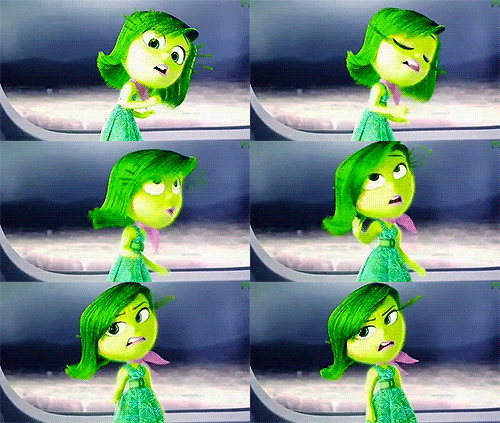
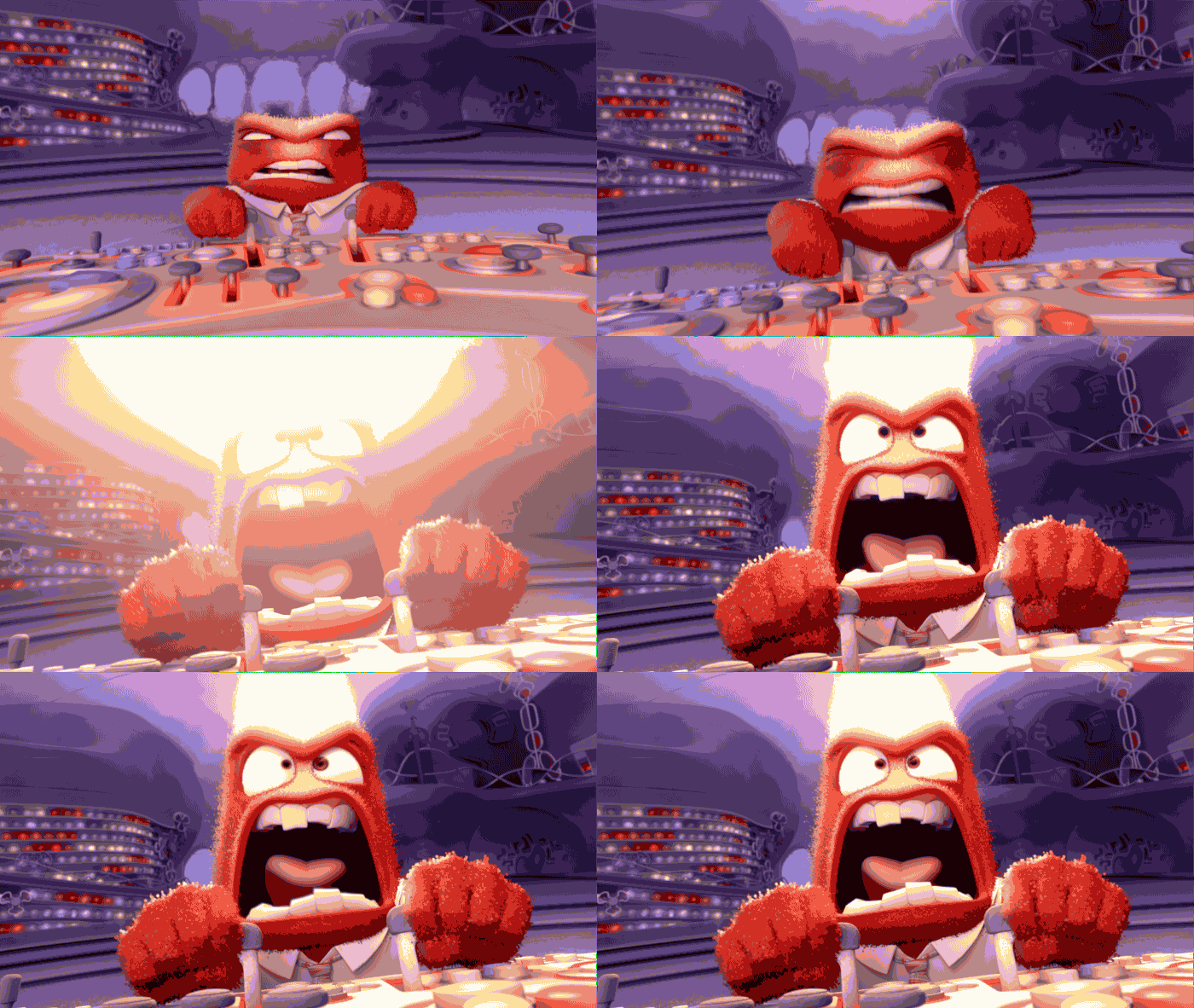
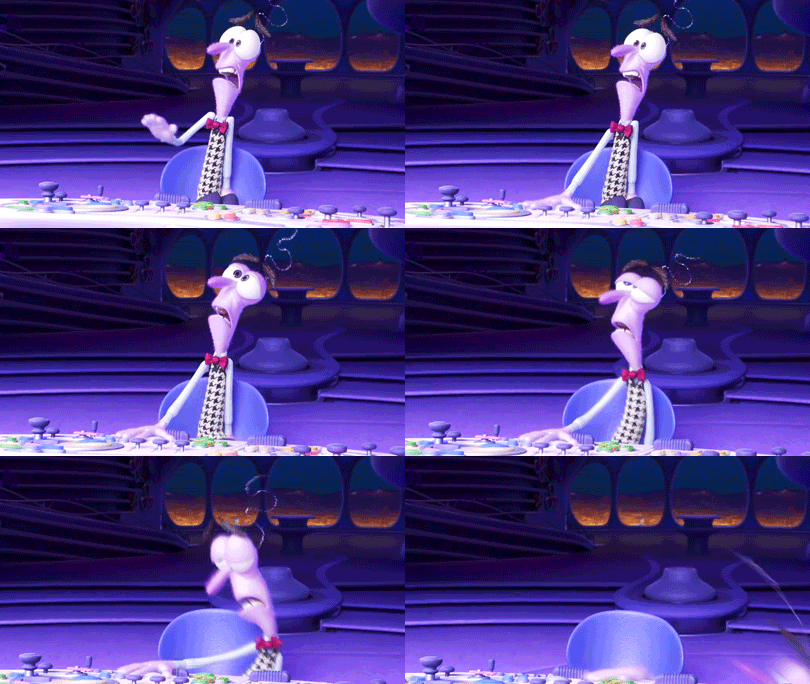
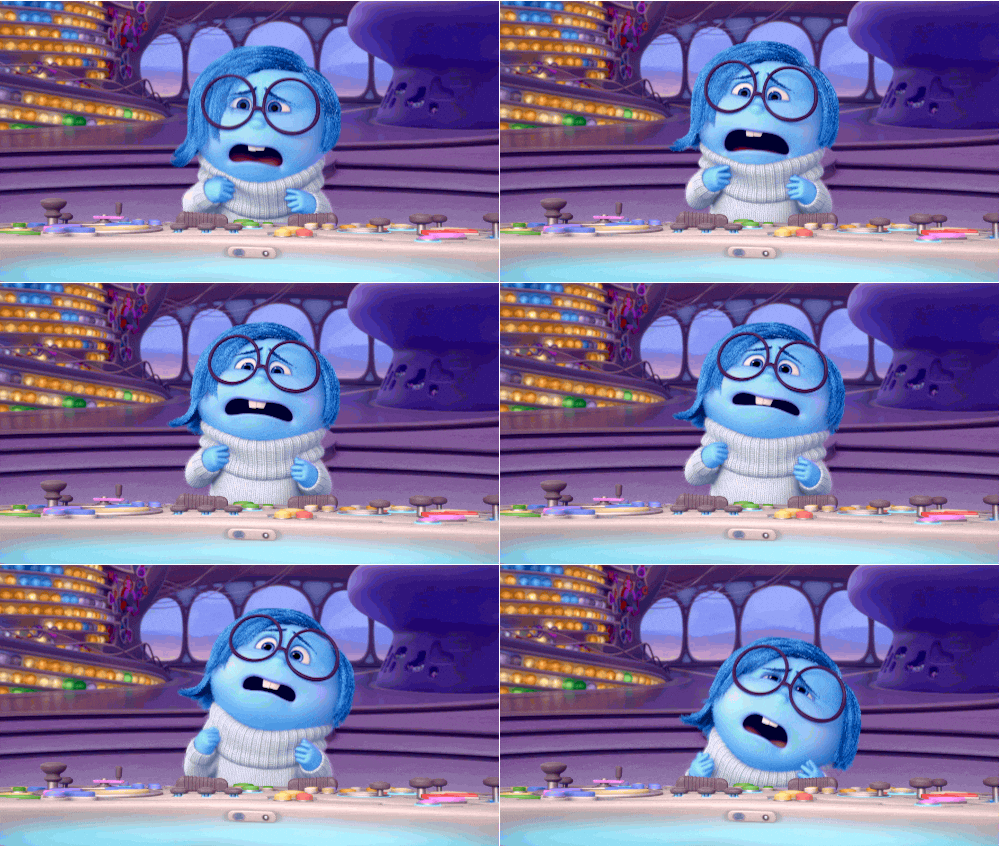
Comic-Con: As Told by the Emotions from Disney Pixar's Inside Out


   Comic Con is an exciting time for any fan!   Even if we don't attend, we hear about what our favorite movies, television shows, and comics have in store for the coming years.   Inside Out itself was announced at 2014's convention!   Here are the emotions' thoughts on Comic Con.

I can't believe that this show is finally coming back!

*cough SHERLOCK cough*

What do you mean, I have to wait a year?

spoilers animated GIF
Really, people.

Wait, what did you do to my favorite character?

Nope.

What if this new plot device ruins the entire show?

#done

Why can't I be there?

If I was there, I would just be crying over my favorite actors.

What was your favorite announcement from this week's Comic-Con?

Sunday, April 5, 2015

6 Ways Fangirl Life Improves Reality

There are plenty of posts about nerd and fangirl problems. We as fangirls certainly do spend a lot of time moaning over characters, pacing while awaiting our favorite shows, complaining about movie adaptations, and struggling to save our sinking ships. Our eyes dry out from staring at screens, our brains grow fuzzy from lack of sleep, our arms ache from holding up heavy novels, and bad internet connections are agonizing. Sometimes we struggle with reality because fiction is SO much better. It's also difficult to have non-fan friends because they just don't get it; if I have to explain the reference, it's no longer a reference. Plus, there are lifelong disappointments to cope with, like never receiving a Hogwarts letter.
Yes, the life of a fangirl can indeed be fraught with perils.
But it is also a life of excitement and joy, and it's a life I am glad to call my own. I would even say that fangirl life has enriched my ordinary life.

Here are 6 reasons why:

1) Being a fangirl lets you live more than one life. No, I'm not talking about regeneration. As fangirls, we journey beside every character we love (and even a few we love to hate.) We get to live their lives alongside them, and even through their eyes. We experience things we otherwise couldn't. Through stories, I've rebelled against tyrants, rescued innocents, and run for my life. Being a fangirl has given me adventures beyond my own world, and that makes this life more of an adventure, too.

(You can replace reader with Fangirl for this quote :) )


2) We learn as fangirls. As we live alongside our fictional friends, we also learn from them. Caring for imaginary people may seem trivial to non-fans, but I've found it makes me more empathetic. Books and films have taught me about love and loss, and they're lessons that have transferred into reality. Life may not be exactly like fiction, but each still helps me understand the other. As fangirls, we journey alongside others, through triumphs and struggles, and I think this makes us wiser and more empathetic in reality. Plus, I've learned never to trust overbearing governments. I should probably stop reading so many dystopian books...


3) Being a fangirl makes you fluent in another language. I call it "AGFYSKPMQL." It is the native tongue of excited fans, and understood universally among fangirls. Plus, most of us are also fluent in sarcasm and can even speak whale.


4) Fangirls have an awesome community. Some of us may be shy, or even a little antisocial at times, (can I get an amen, or is that just me?) but there is nothing like finding fellow fan friends. We can speak our unique language (see above), discuss ships and canons without sounding like pirates, and simply embrace our mutual nerdiness. This is the reason I am so proud to be part of the Fangirl Initiative! Being a fangirl has truly brought some fantastic friends into my life.


5) Everything is awesome. Being a fangirl amplifies excitement levels! Life is worth celebrating, and fangirls are better at celebration than anyone else. From big things, like attending a concert, to small things, like someone understanding your reference, fangirls appreciate the awesomeness of it all.


6) Living the fangirl life encourages you to live your own unique life. I know, reason #1 was about living other lives. However, being a fangirl has helped me celebrate the various things I like. It's made me comfortable with my nerdiness and quirkiness, and it's helped me embrace those differences. Because when it all comes down to it, being a fangirl is really just about being you. You, with all your fabulous squeals and ships and style. Fangirl life improves real life because it encourages you to do you. And that's fan-worthy right there.