Showing posts with label Star Wars: Episode VIII. Show all posts

Wednesday, December 26, 2018

What 'The Last Jedi' ACTUALLY Got Wrong About Luke Skywalker – Part Two


Note: if you haven’t read part one of this article series, I recommend you do so before continuing. 


Last time, we analyzed Luke's character and arc, figured out his main flaw, and where his story should have gone after the original trilogy. This time we'll be analyzing where his story actually went in The Last Jedi, why it didn't work for so many people, and some suggestions for how Luke's fall and redemption could have been done better. Spoiler warning for all Star Wars movies. 


In the last article, we established that, instead of a static hero who is only meant to save the world, Luke is a highly flawed figure who is meant to change and grow over the course of the franchise. He finds little sense in the Jedi principle of accepting one’s fate and the fates of those he cares about. He’s an outgoing, energetic, and restless character who responds to trauma by jumping in and helping. This leads him into all kinds of trouble over the course of the original trilogy and even puts him at risk of following the same path his father did. Although he ultimately manages to keep his feet on the good path, there’s still a lot he has to learn about the Force and about letting go. 

By examining his arc so far and comparing it to the most universally used character arc structure, we learned that Luke is still in the point of his life where he wants to have his cake and eat it too – to use the Force as a tool to get what he wants without the willingness to surrender to it. Promotional material released by the current Star Wars writing team proved that they were aware of this and hinted it would be a main theme in The Last Jedi. And by continuing to examine this structure, we discovered the next chapter of Luke’s life should finally force him to confront his misuse of the Force and misguided belief that intervening is always the answer–to either grow to a place of acceptance or refuse to surrender his control and end up sinking lower than ever before. 

Now that we have a thorough understanding of Luke, his themes, arc, and how the continuation of his story was advertised, it’s time to move on to the main event…

Luke in The Last Jedi: 

After a time of traveling and studying Jedi history and philosophy, Luke starts a Jedi academy. He learns that his nephew, Ben Solo, is struggling with the dark side of the Force. And because Luke believes in always intervening, especially to help those he cares about because Luke is filled with hubris and believes the Skywalkers have a superior bloodline, he agrees to take Ben on as a student. Things do not go as planned, however. After witnessing a vision of all the terrible things his nephew is capable of, Luke almost kills Ben in his sleep. And though he stops himself at the last second, Ben still sees what he was about to do, gets angry, and recruits some of the other students while killing the rest. Ben Solo becomes Kylo Ren. 

Luke is quite traumatized by this series of events. And because he reacts to trauma by jumping in and trying to fix things even when he’d be better off leaving things alone withdrawing and avoiding his responsibilities, Luke decides to go find an island where he can disappear from the people who know him. Because Luke is an extrovert who can’t stand being away from people for any length of time introvert who doesn’t want to be around people, he chooses a remote island with a low population and shuts himself away from the few who do live there. 

Rey comes to the island, but he refuses to help her. Now being a non-interventionist, Luke has finally embraced Jedi teachings about accepting others' fate rejected Jedi teachings. He’s angry at the Jedi because the fall of his father and the rise of the Emperor were largely due to their non-intervention hubris and interference. He believes it’s time for the Jedi to end. 

After Rey leaves, Yoda appears. He destroys a tree and collection of books that Luke doesn’t care about. Does care about? kind of cares about and encourages him to help Rey. Yoda was the most prominent Jedi master during the time of Anakin’s fall and the Emperor’s rise to power so it takes Luke some time to forgive and trust him enough to take his advice but the issue never comes up between them and Luke accepts his advice immediately. Luke Force-projects himself to another part of the galaxy to aid his friends in the fight against Kylo Ren. The projection ultimately kills him, but he dies finally learning the lesson he’s needed to learn all this time: that jumping in and intervening isn’t always the answer, and the Force should not be used simply as a power to protect people you care about from danger. that if you have the power to protect the people you care about, it’s always your responsibility to intervene when they’re in danger. 

Okay, well. A few things seem to be a bit off here. Let’s take a closer look at the various problems.

Problem #1: Luke’s personality and reactions have completely changed. 

Take for example his extroversion. In Episode IV, deleted scenes, and the film's novelization, Luke is so desperate to be around people, he neglects his chores and almost runs over an old woman just to get to his “friends” faster. And these “friends” don’t even like him, which they make quite clear. But he is desperate to be around them anyway because social contact is that necessary for him. Now he can suddenly spend over a decade in complete isolation? The most disappointing thing about this creative decision is how unnecessary it is. Even the new, canon EU novels have extroverts who go into hiding on remote planets: they pick heavily populated planets that are removed enough from the rest of the galaxy that the population there hasn't heard of them, and/or they socialize under a fake name. So why have Luke act out of character when he doesn’t have to? 

The Luke we got to know in the original trilogy had a specific personality. He was energetic, hasty, the type to blurt out an ill-timed statement before thinking it through. An impatient, whiny, naïve, good-natured, optimistic, boy-next-door type. While I understand he’s older now and jaded, there are still ways of portraying him that retain that same personality. I think we’ve all met impatient, restless old men. Men who whine unnecessarily loudly about aches and pains, and about how young people just don’t do things the right way and THIS is how you’re ACTUALLY supposed to do it. Men who tell long, meandering stories no one wants to hear, about how they’re not as young as they used to be and the world wasn’t like it was back in the good old days. When I picture an older Luke Skywalker, I always end up imagining someone like Mr. Hippo from the Five Night’s At Freddy’s games – someone so busy talking he fails to realize how unwelcome his speeches are, how no one shares his enthusiasm about whatever topic he’s currently fixated on. Someone who, through their long years, has clearly been through some things, but still somehow has that extroverted apple-pie innocence that inadvertently becomes annoying. 

When watching The Last Jedi, there’s very little about Luke I recognize. He has two basic “voices.” The first is his generic wise teacher “voice” where he provides exposition and explains the history of the Jedi to Rey. The second is his jaded “voice”–this is a man who’s seen more terrible things than he’d like. A man whose experiences have taught him to be skeptical and has no time for people like the Jedi. A man with a snarky comeback every time a young kid like Rey does something he thinks is stupid. A man with the courage to face his evil nephew–“See ya ‘round, kid,” he says with a wink, brushing the dust off his shoulder and swaggering off. You know, it doesn’t feel like Luke and yet…something about it feels familiar but...I can’t quite put my finger on –


Oh. Oh.

If you’re familiar with the Star Wars fandom, you’ll know there’s been an ongoing war between Han and Luke fans. It’s not like you have to hate Han to be a fan of Luke or anything. But there seems to be a consensus in the fandom that Luke makes for a poor protagonist and Han should have been the hero instead. Luke was the main character of the original trilogy, yet Han was the face of most of the merchandise. Mark Hamill was the lead actor, yet Harrison Ford became the household name. Unusually for a protagonist, the Luke fandom is rather small. Han's is unending. Those of us Luke fans that do exist are passionate and write as much meta as we can about what a great character he is. Many of us even consider him to be the feminist icon of the franchise. George Lucas was (possibly unknowingly) being quite progressive in choosing Luke over the more traditionally masculine Han as the hero. But rather than embrace this, we’ve had to watch the majority of the fandom minimize his character, sometimes throwing homophobic and misogynistic slurs at him, criticizing Lucas’s decision to make “pathetic, wussy” Luke the hero instead of the snarky, cool, macho (and therefore more deserving) Han. The REAL reason people like Star Wars is because of Han, they say. If it was just Luke, no one would care to watch it.

Well, it looks like the hardcore Han fans have been proven right. A Star Wars film where Luke doesn’t speak a single line but has Han teaming up with the new kids can be very successful. But once Han is dead, we have to make up for his absence in the next film by erasing Luke’s personality and turning him into a pseudo-Han. Ever since TLJ came out, do you know how many articles I’ve seen by Han Solo fans that say, good news, guys, we’re finally allowed to like Luke now because he’s FINALLY cool?


It’s not just his extroversion or his general personality that’s been changed. The way Luke responds to trauma is the exact opposite as before. When faced with trauma, Luke reacts by charging into the situation, attempting to make things better until he succeeds or is prevented from trying anymore. Not only is this how he reacts to trauma, it’s always been his biggest flaw and the main thrust of his character arc. But he goes through a traumatic experience with Kylo and suddenly he reacts by shutting himself off from everything, never trying to do anything ever again? How we react to trauma is deeply ingrained into us. It’s extremely rare for it to change, if it’s even possible for it to change at all. If it did change, it would have to be due to something deeply traumatic – something worse than he’s ever experienced before. But, to be honest…

Problem #2: Luke’s trauma isn’t enough to warrant such a change

Sure, it’s a tough thing when a villain catches you about to kill them and then uses their resulting anger to harm other people (especially when the villain in question is someone you’re related to). But is this really the worst thing Luke has been through? He’s seen the deaths of two mentors, a best friend, a father, and he even discovered the crispy corpses of his legal guardians in the ruins of his childhood home – all of which took place when he was much younger and inexperienced. He took part in a war at a young age, almost died several times, and almost watched his best friends get killed due to his own mistakes. His own mentor showed over and over he didn’t believe in him. The father he looked up to for years turned out to be an evil villain who wanted to kill him. He was electrocuted over and over by the most powerful Sith in the galaxy. And Luke went through all of this while consistently dealing with the trauma through intervention. But this one event with his nephew–being caught almost doing something and having Ben turn into Kylo as a result – is the one thing that will suddenly transform his entire personality and reactions? 


Problem #3: Viewers can’t relate to Luke’s mistake. 

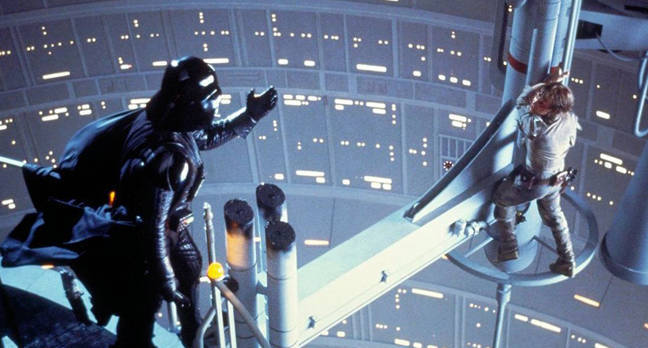
Let’s talk about what is perhaps the most highly criticized aspect of the film: the fact that Luke almost killed Kylo when he foresaw what his nephew was capable of. As many fans of the film have pointed out, he did something similar in Episode VI, when he began fighting Darth Vader – his father who he was trying to redeem – in response to a threat to his sister. So, if everyone was fine with it in the original trilogy, why did it upset so many people in Episode VIII?

There are many differences between the moment with Vader and the moment with Kylo. First, Vader was the authority figure. He was the powerful and abusive father figure while Luke was the young, inexperienced, and vulnerable son. It makes sense that a young man would act rash in such a terrifying situation. Second, Vader is an imposing, dangerous figure, and the films spend a lot of time displaying the heartlessness he shows other people. Even Luke first gets to know him as a terrifying villain before he finds out Vader is his father. The idea of redeeming Vader rather than defeating him is a new one, and neither Luke nor the audience know if it’s even possible. It makes sense for Luke to momentarily give up that idea and decide he needs to defend his sister from this dangerous villain instead. 


Whereas, when Luke makes the big mistake explored in Episode VIII, Luke was the authority figure with power and experience and his young nephew was the one lying vulnerable, troubled and lost.  Plus, Kylo Ren is not nearly as intimidating as his grandfather. Luke thinks of him as a family member he loves and wants to help. And most of the fanbase views Kylo as either a poor baby who needs to be saved from Snoke’s evil influence or as a pathetic wannabe punk who will never be as “cool” as Darth Vader. Although there is a bad seed in him and a vision shows he’s capable of great treachery, most of the evil in him at that point was mere potential – and potential that Luke, as his teacher and uncle, was in the perfect position to avert without violence. Luke knew this. So why would he feel so desperate in that moment that he would lose sight of everything and go full attack mode? 

While it’s not impossible for Luke to react that way (he is a very hasty person), it would take a lot of care and time to root the audience in the moment and in Luke's mind for them to buy it. Instead we got a couple second-long flashbacks with voice overs explaining what happened. This is a great example of telling instead of showing. We’re just supposed to take the filmmakers’ word for it that, whatever Luke saw in his vision of Kylo, it was enough to overpower his love for his nephew, his experience as a teacher, and the responsibility he feels toward his sister and best friend to take care of their son. But here’s the thing: audiences don’t want to take someone’s word for it. They want to feel, to experience. Especially when it comes to one of the biggest turning points in the life of a character they’ve known for decades. 

Problem #4: Luke’s motivations were needlessly changed. 

As he's a character who believes it’s always right to jump in and get involved, it already makes sense that Luke would take on his nephew to train him and try to save him from Snoke’s influence. But the filmmakers decided Luke needed a different motivation. In The Last Jedi, Luke reveals the real reason he helped his nephew was because of “hubris” and a belief that the Skywalker bloodline is superior.


Problem #5: Luke’s outlook is inconsistent. 

All throughout the film, Luke blames himself for contradictory things. He’s angry at himself for not being able to save Ben. He’s angry at himself for having the “hubris” to try to save Ben (how is it hubris to want to save your own nephew anyway?). He blames himself for letting Ben gain so much power and wishes he had recognized the darkness in Ben so he could have stopped him. But…he did try to stop him. He did recognize the darkness and considered murdering Ben in his sleep. And he is also angry at himself for that. So he’s angry at himself for trying to save Ben and for not saving him, for not doing anything to stop Kylo and for trying to stop Kylo. I mean, people do sometimes blame themselves for contradictory things when they’re upset. But the film never treats it as a contradiction. I’m honestly not sure if the filmmakers even noticed the contradiction existed. 

In fact, Luke expresses contradictory beliefs all throughout the film. At one point, he says Snoke is to blame for Kylo going to the dark side. But at another, he claims Leia is in denial about her son because she believes Snoke is to blame for him going to the dark rather than him going on his own. During his famous scene with Leia, Luke tells her he can’t save Kylo because he’s too far gone. Leia nods and assures him she’s already accepted her son is gone. Suddenly Luke turns it around and says, “No one is ever really gone.” Okay? Make up your mind? I get that he’s partially referring to Han in that scene, but still, does he want her to let go of hope for her son or not? Luke, what do you actually believe about anything? 

Problem #6: Luke’s reasons for hating the Jedi are illogical. 

I’m still trying to figure out why Luke wants the Jedi to end. The reasons he gives are: 

a. Because the Force exists whether the Jedi exist or not (that’s no reason to end them…) 
b. They had hubris (he keeps saying that word…)
c. They let the Emperor rise to power. 
d. They let Anakin go to the dark side. 

So…apparently the Jedi need to end because they made some mistakes long ago, before he was born…all of which he fixed at the end of Episode VI. So why do they need to end now that he’s the only one and has the power to shape the ideology as he wants? And as far as I can tell, none of the Jedi’s mistakes have any bearing on the universe’s current problems. The current problems are all due to Snoke (who we know nothing about) and the First Order–a human political movement that formed because they idealized the “law and order” of the fallen Empire. Not even Luke’s mistake with Kylo has much to do with the Jedi, so why is Luke so bitter at them now? 

To make things worse, if the filmmakers needed to have Luke rebel against the Jedi, there was a much easier way, as Jedi philosophy has always been in direct opposition to Luke’s goals. As I discussed in my previous article, the Jedi believe in accepting fate – in being swept up by the Force to find peace rather than trying to control it – even if it means accepting the loss of people you care about. Luke believes that non-intervention is evil and that the Force should always be used as a tool to help those he loves. The disparity between these two outlooks is something Luke has never faced…and in this movie, he still doesn’t face it – even though his plotline is literally about him rebelling against the Jedi. Instead, Luke acts like the Jedi’s mistakes were due to them intervening too much and, as a response, he has decided to become a non-interventionist himself. Which leads me to…

Problem #7: Luke’s rebellion against the Jedi makes him act like a Jedi. 

Let’s look at the Jedi’s mistakes that Luke is so angry about. What caused them? Well, Anakin went evil because the Jedi refused to take him seriously or train him properly. Then they refused to help when he was concerned about his wife, causing him to turn to the dark side for help instead. And what about the Emperor? Palpatine came to power because the Jedi did nothing as he was climbing the political ladder. And when he revealed his true intentions, they responded by going into hiding. True, there was a huge target on their backs, but still. The mistakes they made were largely due to their non-intervention and dismissal of a young Force user. And Luke is fixing those mistakes by…repeating them?


Luke is unknowingly embracing Jedi teachings by choosing to do nothing. Which…could work if it had been intentional. If someone pointed out to Luke (or he realized himself) that, by trying to run away from his identity as a Jedi, he’s inadvertently becoming just like them, I think it would have been an interesting thing to see him work through his own hypocrisy. Instead, Luke calls the Jedi hypocrites. And the film, while ultimately disagreeing with his choice of non-intervention, still treats it as a consistent rejection of Jedi principles. Again, the filmmakers don’t seem to notice any discrepancy.  

Problem #8: Luke’s change of heart makes no sense. 

Of course, the most important moment in a story about a hero’s fall from grace is when he comes back to the light. Luke’s change of heart, however, occurs during one brief (and rather bizarre) scene. 

The scene starts with Yoda destroying the tree and books. Luke was going to destroy them himself but had second thoughts. Then Yoda appeared and did the job for him. I’m not sure what the point of this was, other than to show that Luke’s feelings toward Jedi history is more complicated than he lets on (and even the purpose of conveying that is a bit…fuzzy?). But how are we supposed to relate to Luke and feel the deep feelings he’s experiencing when we know so little about the tree, the books, and his history with either? And honestly, why did Luke need to see the books destroyed to regain faith? Especially since his bad decisions started when he lost faith in the religion the books are about? 


“Time it is for you to look past a pile of old books,” Yoda says. But what’s that supposed to mean? It’d be one thing if Luke was such a bookworm that he was just too busy reading to be of any help. But that isn’t the case. It wasn’t until this moment that Luke showed he even cared about the books. So…what does…destroying them…prove? 

Anyway, as the tree and books burn, Luke is too distracted by the fiery ruin in front of him to think about the bigger picture of Rey and her importance to the galaxy’s future. Yoda, however, states the opposite. “Skywalker, still looking to the horizon. Never here, now–the need in front of your nose.” 


In the end, it’s a single adage – “The greatest teacher failure is” – that changes Luke’s entire perspective. Even though many other people he loves have given him much more motivation than that to change his mind with no results. What’s more, the adage comes from Yoda, one of the most prominent Jedi at the time of Anakin’s fall and the Emperor’s rise to power. He's the character that Luke has, you know, basically been blaming and hating during the entirety of this movie. And he just…accepts Yoda’s advice immediately. No questions asked, no confrontation or conversations about the stuff Yoda did that Luke is mad about. Seriously, why would the grudge he holds against Yoda just magically disappear like that? Why were his concerns about Yoda’s responsibility in past events not addressed? 

I also wonder if Yoda would even realistically disapprove of Luke’s choices, or if he just does so for plot convenience. He was the one out of all the Jedi that was arguably most against attachment and intervention. Yoda is the one who distrusted Kid!Anakin just because Anakin was worried about his mother and wanted to help her. He was the one who told Adult!Anakin not to try to save Padme and learn to let go instead. He went into hiding when Palpatine rose to power and initially refused to train Luke when the galaxy was desperate for a hero. And he advised Luke to not go rescue his friends when they were possibly dying, telling him to instead focus on his training. But now that Luke has become like him, finally accepting he can’t control the Force to save others, suddenly Yoda’s all gung-ho for intervention and rescuing people we’re attached to? 

Problem #9: Luke’s character arc accidentally became a circle. 


At the beginning of Luke’s character arc, he’s a foolish boy who believes that jumping in and helping others is always the correct thing to do. But at the end of his character arc, now that he’s older and wiser, he finally sees that jumping in and helping others is…always the right thing to do. In other words, Luke ultimately “matures” by re-embracing the "lie" he believed in the beginning. The film’s themes and how Luke relates to them have been completely reversed. Which brings me to perhaps the most important point, and the one which permeates all others…

Problem #10: The filmmakers don’t understand what the Jedi believe.

…Or they do and just don’t care.

George Lucas was a student of comparative religion who was particularly fascinated with Buddhism and Christianity. As such, the Jedi religion he created is essentially a mix of eastern philosophies such as peace, non-intervention, and non-attachment and Christian ideals such as submitting to God’s will regardless of whether His will lines up with our own personal goals. Because of this, the main goals of a Jedi are to learn to be still and calm, to not intervene even if they want to, and to not form attachments that will tempt them to misuse the Force as a tool. True, the Jedi did help people, but only when the tide of the force swept them into a situation where it was clear that’s what It wanted them to–not because they had personal attachments to the people in need of help. This distinction has always been important. 


And that’s why Luke was the protagonist. They purposely chose someone who never gives up, never sits still, never stops loving, and never stops trying to save those he cares about. They chose him so that he could face the conflict between his own ideals and those of the Jedi. So that his journey could eventually teach him the dangers of his outlook on life and show him how to create goodness through non-attachment, non-intervention, and peace. However, none of these ideas are touched upon in The Last Jedi. In fact, the film treats the Jedi quite simplistically, as if they were just cool warriors who saved the day a lot but made some mistakes along the way, and now, because Luke is angry, he’s going to pretend like they were all bad and go mope in his room for awhile. There’s no exploration of what the Jedi actually stood for, the parts of their ideology he’s always struggled with, or – once Luke “finds himself” again – how he now relates to this religion he holds dear, even though so many aspects of it conflict with who he is and what he wants to do. During his downfall, Luke ends up embracing every philosophy the Jedi have been wanting him to embrace this whole time, and the film portrays it as a rebellion against Jedi thought. And when he goes back to his old nature – which has always been at odds with Jedi philosophy – the film treats it as if he’s finally come back to his religion.

I understand that stories about non-intervention and non-attachment are not nearly as exciting or marketable as the typical hero narrative. Western audiences love stories about action, and controlling one’s own destiny. But you can’t take a fictional religion that’s been established over six movies and unceremoniously change it to something more marketable, hoping no one will notice. It’s fine to disagree with Jedi teaching. It’s fine to have the characters disagree with Jedi teaching. I certainly don’t agree with Jedi teaching and personally have always wanted to see a Star Wars hero rebel against the Jedi to the end while still remaining a good guy. But if you’re going to make a Star Wars film that disagrees with Jedi teaching, you must do so by confronting their ideas honestly. Represent it accurately and explore nuance. Don’t portray ideals that are opposite to theirs and pretend it’s what they’ve believed this whole time. 

In Conclusion: 

So, what did The Last Jedi ACTUALLY get wrong about Luke Skywalker? Everything from his general personality, to his motivations, flaws, reactions to trauma, character arc, and the moral lesson he’s meant to learn is all retconned to be the exact opposite of what they once were. And while disagreeing with the original themes is fine, this film does it in the most irresponsible way possible. Key scenes in Luke's plotline are told instead of shown, inconsistencies are overlooked, hypocrisy goes unnoticed, and time that could have been spent exploring important aspects of Luke’s character is instead spent on secondary plotlines that viewers ended up disliking anyway. What’s more, most of the problems with his portrayal could have been easily fixed with small, simple changes, making the film’s lazy approach even more frustrating. 

Not every problem in the movie is Rian Johnson’s fault. In many ways, JJ Abrams set him up for failure by forcing him to tackle hard questions about the original trilogy characters at an inopportune time – right smack in the middle of the new trilogy, when all of the new characters’ storylines are taking off in important ways. What’s more, Abrams was the one who decided to start the trilogy long after Luke had gone into hiding, forcing Johnson to explain Luke’s backstory via ineffective flashbacks. Still, the amount of inconsistencies in this movie surprise me. Rian Johnson is typically noted for his attention to detail. Freeze frame any scene in one of his films and you can find symbolism, sly references, and easter eggs galore. So how did he miss so much this time? And, if he was such a huge fan of the original trilogy growing up, why are there so many aspects of it he doesn’t seem to grasp? And considering how closely he worked with the novel writers, why did his film stray so far from the themes and character arc they teased in the film’s promotional material? 

I’m not sure what happened behind the scenes that caused The Last Jedi to go so wrong. But the good news is Luke’s story isn’t over yet. Rumors indicate that Luke will appear in Episode IX as a Force ghost. And while Episode VIII did leave a bad taste in my mouth, I still want to keep an open mind. I look forward to seeing what’s in store for Luke in the future. 

What did you think of Luke in The Last Jedi? And what do you hope for his character in future movies? Let us know in the comments! 

Wednesday, December 19, 2018

What 'The Last Jedi' ACTUALLY Got Wrong About Luke Skywalker – Part One

There’s no denying that The Last Jedi was a controversial film. And perhaps the most controversial aspect was its portrayal of a fallen Luke Skywalker. The reception of his portrayal has been extremely polarized with some calling it a travesty and others declaring it a beautiful and realistic story of a hero’s fall and redemption. While I think the majority of reactions have been extreme, my opinion was that Rian Johnson ultimately did not achieve what he was hoping for. I’m here to tell you why, and my reasoning might not be what you expect. 

Before we begin, I want to emphasize that I don’t hate the film, I certainly don’t hate Rian Johnson or anyone else involved with making the film, and I do not at all condone the harassment that has been thrown their way. And for fans of The Last Jedi: I do not want to take away your love of the film. If you enjoy it, you have every right to do so. I love seeing people’s passion for media regardless of whether or not I agree on the film’s quality. My only intention is to answer the question, “Why did the portrayal of Luke in The Last Jedi disappoint so many people?” Are Star Wars fans just overly rabid? Can they simply not accept their hero has flaws? Or is there some way we could have had a fallen Luke that would have been better received? Spoiler warning for all Star Wars movies, as well as the novels Bloodline and The Legends of Luke Skywalker.


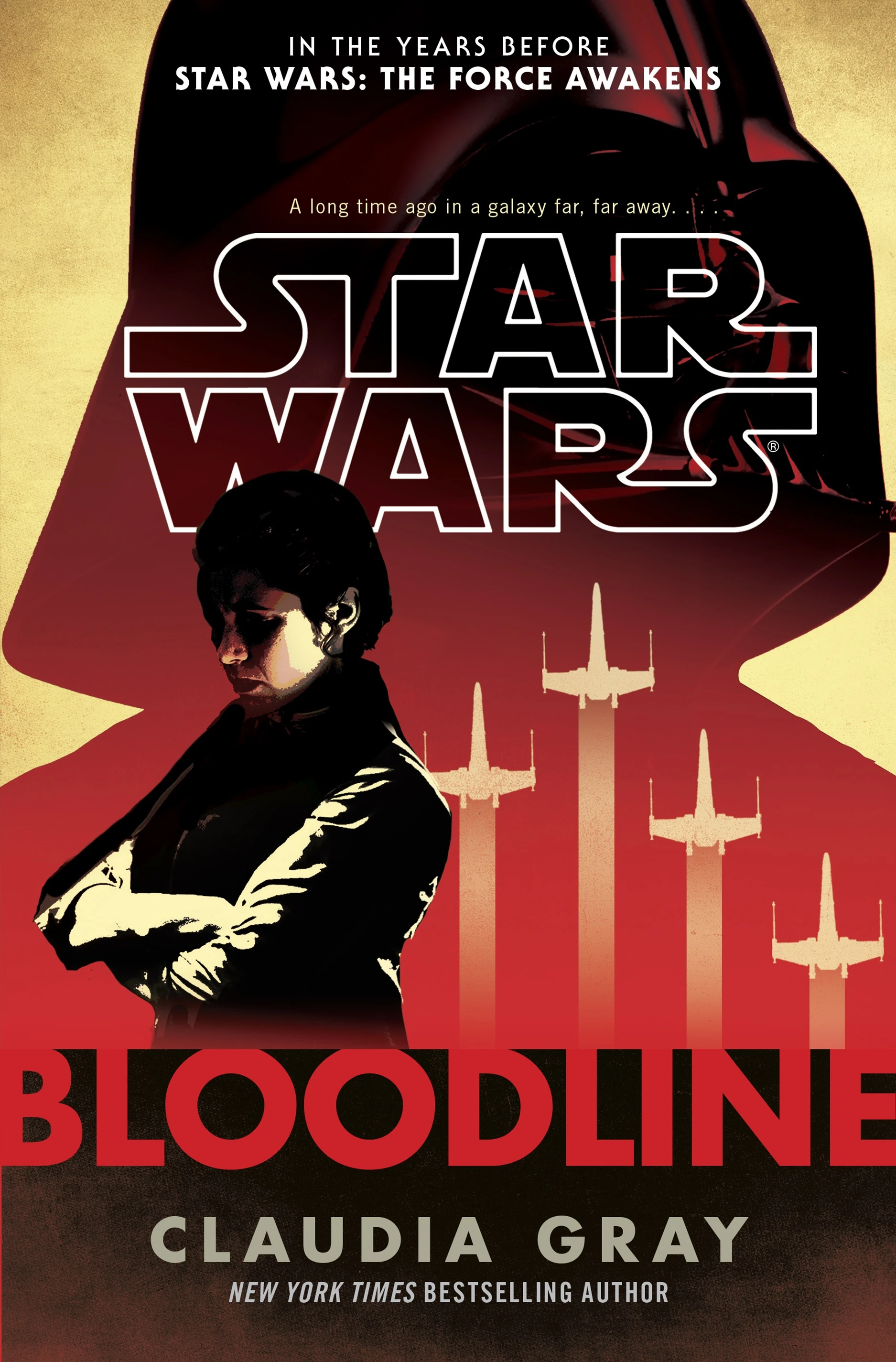
I want to start off by tackling the question most frequently brought up by fans of the film: are those disappointed by the film simply not able to admit that their hero makes enormous mistakes just like everyone else? Is it simply impossible to write Luke falling from grace without backlash? I believe the answer to this question is no. And for proof, I turn to a fairly recent canon Star Wars novel called Bloodline, written by Claudia Gray. 

Bloodline is a bleak story featuring a deeply flawed Leia Organa. Gone is the young woman with the fiery determination and hope. Gone is the Leia excited to jump into the political universe and bring huge, positive change to the galaxy. Instead, we meet a Leia who is older and…tired. Jaded. A Leia who would rather abandon the people who count on her than continue the fight for change. A Leia who only follows through with her political duties because she’s forced into it. And even the few genuine attempts toward positive change she does make are met with failure. A vein of disappointed hopes runs through the story. Leia struggles with PTSD due to being tortured by her father years ago. Her marriage is slowly dissipating. Her son is falling to the dark side. An old friend of hers is dying. A new friend will soon be led to execution. And her darkest secret is revealed to all the galaxy, leading to her disgrace. The First Order is rising. By the end, Leia tries to gather up what little strength she has left so she can weather the oncoming storm, but the attempt feels more like a gasp than a battle cry. In many ways, the novel’s portrayal of her is even darker and more difficult than Luke’s fall from grace. And though the portrayal is sympathetic, there isn’t much in the way of shining redemption moments like Luke got at the end of The Last Jedi. If Star Wars fans simply can’t accept seeing disgraced versions of their heroes, you’d think the release of this book would have been met with revolt. 

It wasn’t. 


Instead, it became a New York Times bestseller. Star Wars fans embraced Bloodline, particularly praising Claudia Gray’s depiction of Leia, calling it one of the most accurate depictions of her character seen in a novel. Sure, she made mistakes, and it was difficult seeing her in such a dark place in her life. But none of that mattered because it felt honest. So, if Star Wars fans just can’t accept the idea of Luke having flaws, why were they so receptive to seeing them in Leia? Sure, you could blame it on sexism. But I've seen many women who cherish Leia as a strong, feminist icon love her portrayal in Bloodline yet still hate Luke's portrayal in TLJ. There’s obviously more going on here. 

When it comes to writing stories, it’s not what you do but how you do it. A talented writer can make any character do almost anything and still get the audience to accept it. I think it is absolutely possible to write a believable story where Luke has fallen from grace (and for the record, that’s something I would have loved to see. As a long time fan of villains, anti-villains, and anti-heroes, I don’t need my favorite character to be a perfect golden boy). Unfortunately, Rian Johnson failed in swaying a good portion of his audience, and I think I can explain why. But before we can jump into The Last Jedi, I must first give a bit of context by delving into three different aspects of Luke’s character: his personality, his thematic role in the story, and his overall character arc. 

Luke’s Personality:

So, what do we know about Luke Skywalker, based on his portrayal in the original trilogy? Well, we know that he’s adventurous and ready to take on the world. We know he has an old-fashioned, boy-next-door vibe going on – you know, the kind of guy who says corny stuff like “Golly” or “Gee whiz,” as if he’s straight out of Leave It To Beaver. We know that he will always choose to rescue his friends when he can. And we know that he values life and would rather redeem a villain than kill one – especially if said villain is family. He is, in general, a good guy who wants to make the universe a better place. 

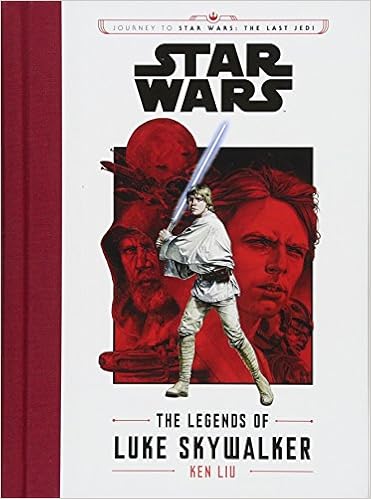
That being said, he is definitely not free of faults. He has a habit of neglecting work at home so he can drive off to Tosche Station (even though the people there don’t even like him, according to the official novelization of A New Hope), showing he’s extremely extroverted. Not that there’s anything wrong with being an extrovert. But he seems to become restless, needy, and often selfish whenever he’s forced to be away from people for any extended period of time. He’s often whiny and sulky. He’s immature and plays with toy ships like a boy half his age. And I’m sure we’re all familiar with the moment he aimed his lightsaber straight at his face. In other words, he’s not always the brightest bulb in the box. He’s curious at all the wrong times. His “adventurous spirit” is more a nervous energy than it is courage. Even his sense of humor typically stems from a passive-aggressive, faux naïveté that allows him to ignore people who are cross with him. Take for example this passage from the canon novel, The Legends of Luke Skywalker, where Luke and a scientist companion are sailing through a stomach-acid lake after being swallowed by an enormous beast:

     “I’m getting used to the smells,” said Luke. “Wonder if we can tell if something is edible by our noses…I really wish I knew more about biology…Maybe you could give me some lessons as long as we’re in here.”     I wanted to scream at him to shut up. His relentless patter was driving me crazy. We were going to die, and he was talking about eating and biology lessons!     “You should stop the raft here, and I’ll just roll into the lake,” I said. My voice sounded dull, already dead. “Would be quicker to go that way rather than waiting to starve slowly after days of wandering around in this place.”     “Sure,” Luke’s voice was calm, as if my suggestion was perfectly reasonable. “But you should probably strip off your suit first. I’m not sure that the synthetic materials would be healthy for our host. Might give it indigestion.”      I was outraged at this suggestion.

As much as I love Luke, I have to admit it requires a lot of patience to deal with him. 

But out of all Luke’s qualities, the one I want to emphasize is one that is often idealized: his tendency to “never give up!” Whenever a problem arises, Luke is right there, giving his all to try to remedy the situation. Most fans assume this relentless drive comes from a place of hope and positivity. But if you really pay attention to his reactions and motivations, it paints a much different picture. When Han is unsure about their offer in the cantina, Luke immediately jumps in to save the day…by arguing with Han and almost losing them the deal. When danger appears after they board the Millenium Falcon, Luke steps forward – “What’s that flashing?” he cries, pushing random buttons he knows nothing about, which could potentially crash the ship. Obi Wan Kenobi is killed in a duel and Luke steps up to avenge him…ignoring the desperate cries of his friends and delaying their escape. Luke prepares for danger by arming himself…before entering a cave made to test him, after Yoda explicitly told him not to bring a weapon. Luke hurries to rescue his friends…even though Yoda warns him this is the last thing his friends want him to do and that it could lead him to the dark side. When Vader threatens to kill Luke’s sister, Luke comes to her rescue…by giving away his hiding spot and attempting to kill Vader – even though Luke’s goal is actually to keep his father alive and redeem him. In the original Star Wars novelization, there’s even a scene where Luke almost runs over an old woman with his landspeeder. He sees her there but doesn’t bother slowing down – after all, he’s got places to go and nothing’s going to get in his way! 

It’s true that Luke is driven by action and that he never stops moving in the face of danger. But how often does it actually feel like a positive thing?


People seem to assume the original trilogy shows Luke at his healthiest – that this is how he reacts when things are going his way and he’s the hero – while TLJ shows, for the first time, how he reacts to real trauma. What they forget is that, in the original trilogy, Luke is already deeply traumatized. Think of what he goes through over the course of the films: his home is destroyed, he finds the charred bodies of his family members, he’s immediately thrust into a dangerous world he knows little about, the fate of the galaxy rests on his shoulders even though he has little experience or knowledge of how to handle such a huge responsibility, he and everyone he cares about are in constant danger, his mentor dies in front of him, his best friend dies beside him in battle, he loses a hand, and the father he’s idolized for years – the man who is the very reason Luke wanted to become a Jedi in the first place – turns out to be the force of evil he’s been fighting all this time. Yeah, Luke is no stranger to trauma in the original trilogy. As it turns out, “never giving up!” (even when he really should give up and let someone more experienced handle it) is how he responds to trauma. 

People react to trauma differently depending on what kind of personality they have. It’s true there are some people who respond by withdrawing. But there are others who react in the opposite way, through action – transforming into workaholics, becoming impulsive and restless, leaping before they look, and overwhelming themselves (and those around them) with their need to constantly get out there and “make the situation better” (even though it usually ends up making it worse). Saying this tendency comes from a “positive attitude” is like saying a person who struggles with OCD is just “neat, organized, and conscientious” or that a person with an eating disorder is just “trying their best to stay fit.” It’s not a positive thing. It’s a reaction to anxiety and trauma. For this reason, we shouldn’t be saying “Luke would never make huge mistakes because he never gives up!” We should be saying “Luke will definitely make huge mistakes because he never gives up – and that’s his problem.” 

Luke’s Thematic Role:

Protagonists tend to fall into one of two categories. There’s the static hero with a flat arc. These are the kind of characters that already believe in the main moral or theme the filmmaker is trying to convey. By the end of the story, they bring change to the world around them rather than changing themselves. Then there’s the “unlikely hero” with a dynamic arc. These characters don’t yet believe the main theme the filmmaker wants to convey (in fact, they often believe the opposite) and the story conveys their journey toward the truth. 

So, what kind of character is Luke Skywalker? To determine this, we must first figure out what the overall theme was that George Lucas was trying to convey. Many assume the theme of Star Wars, like most adventure fantasies, is just to go out and do your best to save the world. Under this interpretation, Luke would be a static character. He already believes at the beginning that the right thing to do is go out and save the universe, help his friends, and redeem his father. And by the end of this film, he’s done all those things. So he’s a static hero with a flat arc, right? 

Wrong. While the story does condone doing good in the universe, the way in which you try to achieve that good is even more important. Star Wars is ultimately a conflict between acting vs. standing still, passion vs. peace. And in a story about jumping in vs. letting go, the narrative is decidedly on the side of letting go – letting go of fear and anger, letting go of need, letting go of attachments, and learning to accept loss. We see this illustrated very clearly in Anakin’s story. Anakin is a person of passion, fiercely protective of those he cares about. There’s no length he won’t go to save someone he loves. All of this might sound great to us, but in the context of the Star Wars universe, they are considered flaws. This is why the Jedi Council was distrustful of Anakin as a child when they sensed he missed his mother, why Yoda urged adult Anakin to just let go of Padme rather than try to save her, and why Anakin’s frequent attempts to help those he cared about ultimately led to his downfall. 


Luke’s story in the original trilogy is essentially a retelling of his father’s story but with a happy ending. Luke, much like his father, is a person of passion who will do anything to save his friends (including, to Yoda’s disappointment, abandoning his training). He’s an unlikely hero whose trauma has made him restless and easily attached to others, living in a world where restlessness and attachment are pathways to evil. This is why Yoda and Obi-Wan have so little faith in him and start placing hope in Leia instead (“No, there is another”). Luke wants to redeem his father, but before he can do so, he needs to prove that he is not like his father – that he would not fall to the dark side for the sake of rescuing people as Anakin did with Padme. The ultimate purpose of his story is to learn that jumping in isn’t always the right choice when people are in danger, even when those in danger are people he cares about. This is why he almost loses when he fights Darth Vader over a threat to his sister. This is why he wins when he throws his lightsaber aside, choosing not to fight. For Luke, learning to hold back and embrace inaction is ultimately the path to heroism. 

Luke’s Character Arc:

Now that we know what type of character Luke is and what lesson he’s supposed to learn, it’s important to figure out where he is in his character arc at the end of Episode VI. Some might assume that since it was meant to be the last story in Lucas’s original trilogy, he’s at the end of his arc. But I would argue that’s not the case; instead, Episode VI leaves Luke’s arc in a place that’s ripe for a sequel trilogy, regardless of whether or not Lucas planned to make that trilogy himself. 

All dynamic character arcs, regardless of who’s writing them, follow a certain roadmap. Even among creators who dislike formulas in general, you’ll find this is a formula that’s been pretty universally embraced to ensure good pacing and realism (after all, when writing a character who learns to embrace a quality he’s always hated, you don’t want him to fully embrace it so quickly it feels unnatural or so slowly that his struggle becomes stale). This is a formula that you will find in any professional writing course, and it goes something like this: 

• Introduction to the protagonist, their normal world, and the lie they believe (though it may not have the chance to really come to the surface yet). 
In Episode IV, we’re introduced to Luke and see how he lives before he’s whisked away on his adventure through the stars. At this point he already believes a lie – that action is always the answer when people he loves are in trouble – but he’s never really had the opportunity to think much about that. His normal world is far too uneventful for his beliefs to have been tested yet. 

• The protagonist’s normal world is shaken up and, in the ensuing chaos, the lie the protagonist believes becomes more apparent to the viewer. 
Once Luke is placed in dangerous situations, we start to see what kind of person he is. Specifically, that he leaps before he looks and acts when he should stay still. 

• The lie the protagonist believes hinders them from growing into the hero they’re meant to become, causing them to need help from an outside source. 
Although Luke has good instincts, his tendency to always jump in doesn’t mesh well with the Jedi philosophy of peace before passion. There’s much about the Jedi ways he has yet to learn. So, in Episode V, Luke goes in search of Yoda. 

• The protagonist is finally shown the truth that flies in the face of the lie they believe…and they reject it. 
Yoda tries to teach Luke Jedi principles concerning peace and inaction, but Luke trusts his own instincts more than his teacher. At one point he openly rebels against Yoda when, after he’s told to go unarmed into a mystical cave, he chooses instead to bring a weapon so he has the power to act if any danger arrives. In the cave, he’s confronted with the image of himself going the same path as Darth Vader. But even this does little to sway Luke to Yoda’s mindset.  

• The protagonist’s continuous rebellion against the truth leads them to disaster. 
When Luke senses danger, Yoda advises him to leave his friends to fate. But Luke instead abandons his training to rescue them. This leads to him walking into a trap, facing Vader before he’s ready and losing an arm. 

• Forced to accept the fact that their way isn’t working, the protagonist admits the truth has some merit to it. They accept the truth – but only part of it, and only on their own terms. Their partial acceptance leads to reward. But they still have a long way to go. 
After his recovery, Luke devotes himself more seriously to learning the Jedi way. He gains some self-control and learns how to act calm and peaceful (on the outside at least). He is not, however, at a point where he’s at peace with whatever fate the Force has in store, as a Jedi is meant to be. He would not, for example, be at peace with the idea of Darth Vader dying unredeemed. In fact, Luke embraces these Jedi teachings merely to use them as a tool to achieve his original goal – to remain in control, to have the power to influence fate and save people he’s attached to, such as his friends and, more importantly, his father. During a confrontation with the big baddie, Luke recognizes the Emperor’s attempt to use his emotion against him. He throws his weapon aside to ensure he stays on the good path. Luke is rewarded with the redemption of his father, who then defeats the Emperor. Luke, however, is still fixated on hanging on to people he’s attached to, to the point that he almost willingly dies unnecessarily on the doomed spaceship just to spend a few more minutes with his dying father. He’s embraced enough Jedi teachings to get what he wants but not necessarily enough to always be at peace with what the Force wants. This is where the original trilogy leaves him. 

• The protagonist attempts to live life embracing both the truth and the lie, essentially trying to have their cake and eat it. 

• The protagonist’s plan to have the best of both worlds does not go as planned, and circumstances ultimately force them to choose. If they choose the truth, they become whole and the story ends happily. If they choose the lie, it ends in disaster. 

• (optional) If the protagonist chose the lie, bringing disaster upon himself, this is the part where he picks up the pieces and finally embraces the truth…or stubbornly clings to the lie and wallows in self-pity. Either way, this is the final scene for character arcs with bittersweet or tragic endings. 

As we can see, the original trilogy does not end Luke’s character arc. Though it does leave it in a place that’s good enough for a satisfying ending for one trilogy, the pieces are in place for another. There’s still plenty of room for an interesting story involving Luke, and we can see exactly what path that story should travel. The only question remains is: have the new filmmakers taken the time to carefully study Luke’s character? Do they understand his personality, themes, journey so far, and where his journey should go from here? Or do they simply view him as a good heroic guy who is, otherwise, a blank slate with whom they can do whatever they please? 

Despite my dislike of their portrayal of Luke in The Last Jedi, I would argue the filmmakers had a complete understanding of his character, themes, and arc. And the reason I believe this is the promotional material they released for the film. In order to create a full multimedia experience (*coughMakePeopleBuyMoreMerchcough*), all Star Wars writers – from those who write the new books to those who create the films – worked very closely together so that the new EU could become “required reading,” setting the stage for the films as well as filling in the gaps those new films would leave. To set the stage for Episode VIII, they released The Legends of Luke Skywalker, which tells what happened to Luke between Episode VI and his fateful incident with Kylo. 


The Legends of Luke Skywalker shows us a Luke much closer to the man we meet in The Last Jedi. He’s older, bearded, but he still has his intense, youthful energy and desire to rescue others. In fact, the story emphasizes that jumping in to help rather than standing still is his main weakness, and one he still has little mastery over. He still sees inactivity – and even the Force itself – as a tool to get what he wants rather than an end in itself. His main goal is still to act, to help, to be in control of every situation, with the Force boosting his ability to get things done. Of course, this attempt to have the best of both worlds isn’t helping him fully grasp the Jedi way, and he travels to a remote island to seek counsel from the inhabitants there. The inhabitants, according to legend, possess rare knowledge of how the Force (or, as they call it, the Tide) works. The advice they give, however, is not what Luke expects (or wants to hear): 

 [Luke said,] “Some have turned to the dark side of the Force and wish to drown the galaxy in a rising tide of suffering. It is up to those of us with knowledge of the Force to stop them, to restore balance. But the deaths of the Jedi have caused much knowledge about the Force to be forgotten, and that is why I seek your knowledge, so we can defeat the dark side.”     “I’ve already told you: there is no ‘light side’ or ‘dark side,’” said the elder. “The Tide is beyond the power of anyone or any group. It is those who seek to master it, to control it – whatever excuse they make up for themselves – who bring suffering. Our knowledge is not to be shared.”     “Knowledge can be used for good or ill,” [said Luke.] “I study the Force not to gain power but to bring balance and justice back to the galaxy. You’re pacifists, but evil must be confronted, and you can help. My teacher’s last words to me were, ‘Pass on what you have learned.’ It’s a duty.”     The elder sighed. “We will never convince each other.”     […] “Then why teach your children about the Tide at all? Why not let the knowledge sink into the abyss of oblivion?”     “We don’t teach anyone about the Tide until they have proven themselves to be free from the desire to master it.”

     She could tell that by reaching out into the strands of the Tide, [Luke] was channeling and shaping the Tide‘s currents and tributaries to accomplish these feats. His ability to manipulate the Tide in this way both fascinated and horrified her…“Why do you not trust in the Tide?” asked Aya. “Why do you always try to use it?”     “I don’t understand,” [said Luke.] “How can I accomplish what I need to do without calling on the Force’s help?”     I’ve never seen anyone so sensitive to the Tide,” said Aya. “I don’t think even Grandmother is your match. But you stand apart from the Tide. You don’t let yourself be immersed in it.”     “The Force is my ally.”     Aya shook her head, frustrated. “That’s not what I mean. You can’t let go. You want to be in control. But you must trust in the Tide; you must let it uplift you and push you where it already knows you must go.”

To see if he’s worthy of their knowledge, the island’s inhabitants put Luke through a series of tests. Though he does learn a lesson in patience during one of them, he “wins” the rest of the tests by, essentially, cheating – doing things his own way so he can accomplish each mission while still maintaining his own beliefs on how the Force should be used. In the end, Luke decides he doesn’t need the tribe’s knowledge after all, as he believes the lesson in patience is enough. Luke leaves the island with a reinforced belief that action and jumping in to help is almost always the answer, though having the patience to wait for just the right moment to act can be a useful tool to achieve his ends.  

Luke has always been, without realizing it, something of an anti-Jedi. He follows the Jedi religion not because he agrees with its philosophies, but because he grew up believing his father – someone he looked up to as a hero – was a Jedi. And he never stands still and thinks about it long enough to realize his personal philosophies conflict with theirs more often than not. Luke simply takes for granted the idea that surely they must believe as he does, since they are good, and his beliefs are good too, right? But one day he will have to take a good look at his ideals and the religion he claims to follow and confront the reality that they contradict. And then he will need to finally decide who he really wants to be. From The Legends of Luke Skywalker, we can see that the filmmakers understand all this. Not only do the filmmakers understand it, they’re using it in their marketing to show that this is where The Last Jedi is going to go. 

But is that where it went? That’s what we’ll figure out in Part 2 of this article series. Join me here next week to continue! And feel free to leave your thoughts so far in the comments below! 

Monday, December 11, 2017

Your Ultimate Guide To Star Wars: The Last Jedi

This article will explore my thoughts on The Force Awakens, what elements in it should be kept in the next film and what should change going forward, my hopes and expectations for the next movie, what we know so far about The Last Jedi thanks to previews and interviews, as well as facts you might not know that are gathered from canon Star Wars novels. Spoiler warning for upcoming Star Wars movies, the canon novels, as well as an epilepsy warning for flashing GIFs. We have a lot to delve into, so let’s get started!


There’s a fun game that filmmakers play with their fans where they will purposely give viewers certain expectations, make the audience think they know what’s going to happen, then subvert those expectations by instead going in a direction the audience never saw coming. Little hints of the truth will be left here and there so that when fans rewatch the films after they find out what’s really going on, they’ll think, “How could I have missed that?” This is exactly the game the Star Wars filmmakers are playing with us now, and the time will soon come when the curtain is drawn and the true direction of this new trilogy will be revealed. Even the trailers foreshadow this.


If you’re like me, you like to be ahead of the game and try to guess ahead of time what the filmmakers might do. This guide is here to help you do that. But in order to do so, we have to keep our eyes open and ask questions. What incorrect things are the filmmakers trying to make us believe? What false directions are they pushing us toward in order to hide the true path? And where does the true path lead? To start off, let’s take a closer look at the previous film in the Star Wars franchise, where I’ll recap where the story has taken us so far as well as give a few opinions on where the filmmakers did well and where they can improve.

Looking Back At The Force Awakens

The first movie in the new Star Wars trilogy introduced us to Rey, a young scavenger who lives on the desert planet of Jakku. We don’t know who she is or who her parents are, but she is still awaiting their return. We meet Finn – a former stormtrooper who eventually joins forces with Rey. And we meet a Resistance pilot named Poe Dameron whose BB-8 Unit carries part of a map to Luke Skywalker, who has mysteriously gone missing. The old Empire has arisen once more, this time in the form of the First Order. Princess Leia returns as General Leia, fighting against the First Order and hoping for the return of her brother. Rey and Finn join up with Han Solo and Chewie, and the gang eventually heads to Maz Kanata – a force-sensitive pirate queen who gives Rey a lightsaber that, in turn, gives Rey a mysterious Force vision. We meet the new baddies: General Hux, Captain Phasma, their mysterious leader Snoke, and most importantly Kylo Ren who, it turns out, is the son of Han and Leia. Originally named Ben Solo, Kylo Ren aspires to be like his pre-redemption grandfather, Darth Vader. His parents, however, believe there is still good in him. Han offers his son a chance at redemption, which Kylo refuses – killing his father in the process. Rey discovers she has Force powers and beats Kylo Ren in battle. The Resistance succeeds in destroying a new Death Star the first order built (though not before the villainous order destroys the capital of the New Republic). And the map to Luke Skywalker is finally pieced together. The film ends just as Rey holds the lightsaber out to the long-lost Jedi.

I have mixed feelings about the film, as I do with most of JJ Abrams’ films. He seems to value style over substance, emphasizing plot and action sequences over character development. As a result, most of his films are neither terrible nor great, but mediocre and rather safe. Without the Star Wars name and a few returning characters (who did not influence the plot much), The Force Awakens was not much different than any generic summer action flick. It wasn’t terrible – it keeps your interest with fairly good pacing, some cute humorous moments, some memorable scenes, etc. But it certainly could have been better seeing as this is Star Wars. Considering we waited 10 years for a new Star Wars trilogy, we don’t want a generic action movie with a few fun things scattered throughout. We want something that truly moves us, and I don’t believe TFA quite achieved that.

The Force Awakens got a lot of flak for being too much like A New Hope. But ultimately, I don’t believe this was the film’s main problem. The similarities were purposely infused to honor George Lucas’s wishes for all the trilogies in his story to mirror one another. And as anyone who’s ever visited TV Tropes knows, viewers can be perfectly satisfied watching characters follow familiar events if they are sufficiently invested in those characters. The lack of good characterization, I believe, is the film’s main weakness, which I will get into more in the characters section later in this article. But while I have mixed feelings about the previous film, I have a lot of hope for the next installment. Next, let’s take a look at what we know about the characters and speculate about what could (or should) happen to them next.

Rey:


It was pretty cool that the Star Wars filmmakers decided to choose a woman as the main character for the new Star Wars trilogy. But what do we really know about Rey as a person? Well, we know she’s lived her whole life alone on a desert planet. We know she’s waiting for her family. We know she’s a scavenger with ace survival skills. We know she’s more or less a good person as she joins with the good guys, and, although she is tempted to sell BB-8 at one point, she ultimately doesn’t go through with it. We know she’s independent and doesn’t like strange men grabbing her hand. We know she can fly a ship, that she’s fascinated by green plants, and that she looked up to Han Solo as a father figure during the short time she knew him. We know that she has some mysterious destiny that is calling to her, that she can use the Force well without any practice, and that she may be tempted by the dark side.

At first, that might sound like we know a lot about Rey. My problem is that everything we know about her reads more like a Wikipedia page than a description of a real person. If all you know about a person is where they grew up, what causes they fought for, and who they had relationships with, then do you really know them? Almost everything we know about her is situational. And many people can be in the same situation – grow up the same way, fight for the same causes – but still have very different personalities. Of course Rey is waiting for her family, since they are the only people she knows and they said they would come back for her. Of course she would view Han as a father figure when he’s the only kind adult man she’s met. Of course she would be good at surviving and be amazed by green plants, considering where she grew up. And since she’s the main character of a Star Wars film, being able to use the Force, being faced with temptation, and having a mysterious destiny are pretty much just part of the package. But what separates her from another person who might have grown up in those same circumstances?

If Luke, Leia, Han, Anakin, Padme, or any other Star Wars hero took a break from saving the galaxy and came over to my house for lunch, I think I have a good idea of the kind of things I would talk about and do with each one. Because I know who they are outside of how their character serves the plot. But if Rey came over…what kind of things would she want to talk about? What sort of stuff would she want to do for fun? I have no idea.

If we look at the list of things we know about Rey and take out the stuff that’s relevant only to plot and not to person, we have very little left. In fact, all we have left is that she’s not a terrible person since she didn’t sell BB-8 and that she’s independent and doesn’t want a strange man holding her hand. In other words, there’s really nothing much that separates her from your standard “I don’t need a man” heroine. When fans first heard that Rey would be the star of the next trilogy, we were thrilled because finally we would be talking about a woman instead of a man. But now, when we talk about Rey, what do we talk about? We talk about what man might be her father, and what man might be her future boyfriend. Why? Because, at this point, those are the most interesting things about her. That’s…not great.

I don’t think JJ Abrams has done her character justice at this point, and one of the things I want most out of this next movie is for her to finally develop a noticeable personality. I’m really looking forward to seeing how Rian Johnson improves her character after JJ’s take. I have seen conflicting reports on whether it is Rey’s relationship with Luke or with Kylo that will be the center of the film. But regardless of which it is, the fact that the center of the film will be a relationship rather than something plot-related may hint this film is at least more character-driven than action-driven. I just hope that, during the scenes that portray those relationships, her character is just as developed as the others.

Of course, we can’t talk about Rey without discussing her possible parentage. It seems to be the number one thing fans are speculating about, and the internet is rife with theories about whether she’s Luke’s daughter, a descendant of Obi Wan, Palpatine, if she’s a reincarnation of Anakin or some other important figure in Jedi history, or even a personification of the Force itself. Let’s take this one at a time. First off, amazingly, there are still people who believe Rey might be a Solo – that she’s Han and Leia’s daughter somehow and that they just didn’t bother to tell her this when they met her. This is absolutely not true. One, because there’s no way they would neglect to tell her this. And two, Daisy has gone out of her way to debunk this theory. It’s time to let go of this one.


The most common theory, of course, is that she’s Luke’s daughter. And again, I have to disagree. For one thing, it would not make a great plot twist. People think it will happen because it would mirror the “I am your father” scene from Episode V. But that was a great plot twist because it messed with our expectations, forcing the hero to confront the fact that his father was the villain. Rey being a Skywalker, on the other hand, doesn’t mess with our expectations and doesn’t force her to confront anything. Luke isn’t a villain she hates; Kylo is. And having a “Rey…I AM your cousin!” scene between her and Kylo would be the most laughable dramatic moment one could think of. Also, can you imagine Rey having this conversation with Luke?

Rey: “Why did you leave me? Why didn’t you come back to Jakku?”
Luke: “I’m just…too much like my father. I hate sand.”

Then there’s the fact that the creative minds behind the Star Wars films seem to find the idea of Rey Skywalker ridiculous…


The main problem I have with these theories is they all assume that Rey’s parentage will be the big twist in the movie. This, I believe, is a mistake. All the clues the filmmakers have released insinuate the film’s main twist will be more dramatic than the one we saw in The Empire Strikes Back, not less. And I just can’t think of a single character whose relation to Rey would be more surprising than Luke being related to Darth Vader. I believe Rey’s parentage will be revealed in the next film. And it may be interesting in some way – perhaps she’ll be the daughter of a character from a Star Wars video game or canon novel (such as Ransolm Casterfo from Bloodline, Captain Cardinal of Jakku who we get to know in Phasma, or the mysterious Jedi who visits Jakku and pretends to be Luke in The Legends of Luke Skywalker). But it won’t be the main twist and will ultimately be overshadowed by something else. As director Rian Johnson told the New York Times:

Take the question of who Rey’s parents are: If you get the information — oh, it’s that! — who really cares? I know a lot of people care, but it’s interesting as opposed to impactful.

Speaking of dramatic plot twists, ever since the trailer came out, it seems just about everybody thinks Rey is going to fall to the dark side. If you are one of those people, then I’m afraid I’m going to have to remind you –


Remember what I said about the game filmmakers play? It’s clear from the trailers that “Rey goes dark!1!” is what they want us to think. Which means that’s the misdirection. If Rey was really turning to the dark side, that would be the big twist of the film, and they would never have spoiled that by hinting at it so hard in the trailer. I believe Rey will probably be tempted very strongly by the dark side in this movie, but she will not ultimately give in to it. So, what is really happening? What are the filmmakers trying to hide by distracting us with Dark!Rey? Well…we’ll get to that in a bit... In the meantime, there are a couple other characters we need to talk about…

Poe Dameron: 


Poe is one of those characters who makes me feel like I’m the only one who didn’t see the appeal. Don’t get me wrong, I love Oscar Isaac and am glad he’s in the film. But when I came out of TFA for the first time, I was pretty surprised to see he was the one everybody was talking about. Mostly because he’s such a minor character. Plus, we know nothing about him other than he’s a great pilot and has a handful of humorous lines. He got a chuckle out of me now and then, but mostly he seems like a poor man’s Han Solo so far.

Unfortunately, there hasn’t been much news concerning him in the next film. We know he’ll be in it, but sources have been strangely silent on what role he’ll be playing (other than probably flying around, fighting for General Leia’s side in the war). There’s been a few rumors he could go radical, however. As well as a few whispers he might have a subplot involving General Hux. But that’s it. And to be honest, I’m not sure of the credibility of my sources for those rumors either.

Of course, one of the main theories about Poe Dameron is that he might have feelings for Finn. While I would love to have a LGBT relationship between two main Star Wars characters (especially between these two), I don’t think it’s going to happen. Rumors about Stormpilot being canon (which seemed credible at first, as Oscar Isaac perpetuated them) have been dismissed by John Boyega as merely Isaac’s headcanon. Plus, I don’t think Disney is daring enough to follow through with such massive representation. After all the begging from fans, the new Star Wars canon recently got one of its first LGBT characters…a minor character from the holiday special who was mentioned briefly in a book. After such a tiny baby step, do you really think the folks behind Star Wars are going to jump to a full-fledged gay romance between main characters on screen? Sadly, I find this unlikely.

Interestingly, there’s a moment at the end of The Force Awakens novelization that seems to hint at a possible romance between Poe and Rey. Wouldn’t it be funny if both the Stormpilot shippers and the Reylo shippers were wrong, and these two were actually endgame? Personally, I don’t think that’s going to happen. But... you know what they say…


Finn: 


Like Rey, I have a lot of problems with Finn’s character. He has much more personality than she does, but his motivations and character arc are confusing. People have called his character arc a redemption story, but it’s not really. He never became a villain or harmed anyone, so he doesn’t have anything to be forgiven for. And if he doesn’t need forgiveness, it’s not a redemption story. It’s simply an unorthodox hero’s story. And in my opinion, it’s not a well-done hero’s story either. When I first went into the movie, I was excited, thinking “Wow, I can’t wait to see what could make a stormtrooper defect to the other side!” Coming out, I still didn’t know. He just…did it. I can’t connect with him as a character if I don’t understand his motivation. So, to help me try to figure him out, I read both the adult and junior novelizations of The Force Awakens, as well as a book that takes place before Episode VII called Before the Awakening, and a handful of other canon novels that discussed his upbringing. But really, they only highlighted how problematic his characterization is.

According to the novels, the First Order has taken in all kinds of kids of all different temperaments and turned them into Stormtroopers. They are all raised the same way, and none of them can remember their lives before the First Order. Any young child that questions things or shows too much empathy mysteriously disappears, and the other children don’t think about them anymore. Once they get past this stage and reach their teens, they are fully brainwashed and devoted to the First Order. After that point, no one has ever defected. Not only has Finn made it this far, he is the best stormtrooper Phasma has ever seen, and she comments on his quality leadership skills. He engages in realistic training simulations – so realistic that Finn worries about his fellow cadets and insists on never leaving a man behind – during which he has no trouble taking out members of the Rebellion and watching them die. He genuinely sees the Rebellion as a group of evil terrorists. He is devoted to the First Order, which he sees as a champion for the downtrodden as they provide jobs, shelter, and food to orphans and other unfortunates.


Then there is an abrupt change. Suddenly he feels doubt. Suddenly he feels empathy toward a cadet he’s supposed to see as a weak link. Suddenly he feels like going against his orders. Nothing triggers this change. It just happens, and he starts to wonder if there’s something wrong with him. Now, this would have been an interesting mystery if it was supposed to be a mystery. But all of this is presented as something we should accept and move on. The major aspects of his story are convenient rather than realistic. He’s even the only one on his squad who doesn’t have a nickname. Why? Because then, conveniently, Poe Dameron can be the one to nickname him, and the good guys will be his first step in gaining an identity.

As we know, at the start of the film, Finn becomes the only stormtrooper to defect. But if he had the same upbringing and devotion to the First Order as everyone else, what makes him so special? And how does he have so little empathy that he thrived as a stormtrooper for so long, but also so much empathy that he completely and suddenly loses all nerve and loyalty during the attack on the villagers? What’s more, after he defects, he becomes strangely cowardly. The “best stormtrooper Phasma has ever seen” who has “quality leadership skills” is suddenly wringing his hands and doing whatever Rey and Poe tell him to do, even when it goes against his own judgment. It’s amazing how quickly he overcomes a lifetime of brainwashing and easily joins the side of people who, his whole life, he’s thought of as villains. His empathy – which is supposedly so strong it led him to be the only stormtrooper to defect – is strangely…moderate after he joins with Rey. He’s not heartless, of course. But he doesn’t seem any more empathetic or self-sacrificing than the average person you’d meet. Possibly less so, as most of his actions seem motivated more by self-preservation than anything else. What good things he does do are because he has a crush on Rey or because he has to do it to survive. Not that he’s totally selfish or evil or anything. He’s just…average. And as “the greatest stormtrooper Phasma has ever seen” and also the first of them to defect, average is the last thing he should be. At any rate, I’m hoping his motivations are more clear in the next movie.

Finn had a pretty blatant crush on Rey in the last movie. And, according to the novelizations, Rey did reciprocate those feelings (at least, in the beginning). This has led most fans to believe a romance is in the works for them. However…


John Boyega said about Rey & Finn:

I mean, we didn’t establish a romance in seven; we never played it that way…Yes, Finn and Rey – they’re just friends. Finn is a storm trooper, so he doesn’t really know what’s going on. So the romance thing is something that’s going to be interesting in the next installment. It’s not going to go the way you think it’s going to go.

Star Wars is full of surprises. And it looks like Rey’s feelings for Finn may have changed now that he’s not the only other human in the galaxy she has to keep her company.

Rey meets Finn and Finn is a stormtrooper, she’s a scavenger and they’re brother and sister[,] they [have] this amazing connection.
(Source: Daisy Ridley, Last Jedi Mexican Press Conference, via xnailedit) 

That’s right. Finn has been family-zoned. Which is fine! The two of them are adorable as friends/siblings. Plus, I don’t think Finn will be too broken up about it. He’ll be far too distracted by whatever kind of relationship he’s going to have with newcomer Rose Tico. He and Rose will be heading to a planet new to the Star Wars canon called Canto Bight. There they will deal with a new, mysterious character named DJ, played by Benicio Del Toro, who described him thusly:

This character could come straight out of a Bob Dylan or Tom Waites song, or even a Dostoyevsky novel. He’s like something out of Dickens; there have been characters like him in all kinds of literature. He’s like a knife: if you grab him by the blade, he’ll cut you. If you grab him by the handle, he can be very, very useful.

It’ll be interesting to see how Finn handles all this. I believe his character will change a lot in this movie – that he’ll become better and bolder. A lot of that change, I think, will come through his battle against Captain Phasma. I really hope I connect more with his character by the time I see that scene on the big screen. At this point, the villains are far more interesting than the heroes. So when Finn goes up against Phasma, I don’t want to find myself accidentally rooting for the other side. And speaking of Phasma…


The Assistant Baddies: 


Okay, I’ll admit it. I have a huge crush on Captain Phasma. She is my evil queen. This might be surprising to those who have only seen the movie. But I’d like to point out that she was terribly underused in the film. And while the canon novels only made me more confused about the heroes, they fleshed her out quite well. Phasma is this badass ESTP woman who was forced to become a warrior, as she was one of the few people on her dying homeworld who was strong enough to fight. A toss up between Slytherin and Gryffindor, she’s clever and will do absolutely anything to get what she wants. Courage and physical strength are the measures she uses to judge herself and everyone else.

The majority of those who pledge their allegiance to the First Order typically fall into two groups – one, the well-intentioned folks unknowingly on the wrong side; and two, people who save their empathy for only their own friends and family and are willing to turn a blind eye to the suffering of people on the other side of the war if it means being able to follow their greed and passion for power. Phasma, however, seems to be the sole one among them to be a true sociopath in the clinical sense of the word. She does not understand or experience empathy. She’s made heavy sacrifices for the people who love her…and also betrayed those same people who love her – all depending on which was the tactical advantage at the time. Phasma has no loyalty to the First Order and is not the person they think she is. She is loyal only to herself and would happily defect if the other side made her a better offer. Believe me, she is not the by-the-books person she pretends to be. Phasma is a wild card. It’s not just the good guys who should be worried about her but the First Order as well.

There’s a good chance she could be killed by Finn in the upcoming movie, since going up against her is probably going to define a large part of his character arc. But I really hope not since she has so much potential. She’s a human weapon who’s virtually impossible to beat in a fight. And underneath that, past her seriousness and sociopathy, is a clearly human and vulnerable person who never fails to fascinate me. Everything – from how she got her chrome armor to why no one has ever seen her face – has an interesting backstory behind it.

The first movie did her a huge disservice by giving her so little screentime and then throwing her in a trash compactor (by Finn of all people. She’s taken on multiple monsters at once in an arena – with nothing but her bare hands – and won, but she gets thrown into the trash by FINN?). She deserves a chance to be her full self on screen. I hope The Last Jedi gives her that. (There are some rumors that, instead of a Skywalker, she’ll be the one to lose an arm in this trilogy. But as it’s only a rumor so far, we’ll have to wait and see.)


I’m also quite fond of General Armitage Hux in both a love-to-hate and hate-to-love kind of way. He is basically this trilogy’s version of Tarkin, only he‘s way more ridiculous. Hux is like that snotty kid in your class who’s kind of weak but still ends up becoming the teacher’s pet because he tattles on all the other kids. You know, the kid who’s super fun to prank because he deserves it so much, easily falls for it, and always gives the best angry reactions. He’s an interesting character too and does things you wouldn’t expect.


With his bad case of Screaming Nazi Face, you’d expect him to be an absolute dictator to anyone he can afford to shove around. But according to the canon novels, he’s quite encouraging to those beneath him and helps others succeed. In one book, a scared little girl is taken aboard a First Order ship. And while everyone else treats her like a mere piece of furniture and ignores her questions about what’s going on, Hux takes time out to talk to her and comfort her. That’s not to say he isn’t evil; he is, and has a strong ideological devotion to the First Order. He also has a very complicated relationship with his father that results in…well, I don’t want to spoil it (but do yourself a favor and read Phasma by Delilah S. Dawson).

I think there's a good chance Hux will also die in the next movie (though, again, I hope not. He’s fun). And if he does, it makes me wonder who will be the one to take him out. If the rumors are true about him having a subplot with Poe, I suppose Poe would be the best candidate but the least interesting. Since Hux and Kylo Ren seem to have an ongoing rivalry (which, the filmmakers say, Snoke only encourages) it could be interesting if Kylo defeated him for some reason. Phasma being the one to off him might also be interesting. Hux basically treats her like his pet attack dog, and I’m sure she’d love to get him for that reason. And since she’s basically primed to betray the First Order anyway, that could be a cool way to show her treachery against her own perceived side. My number one theory right now is that either Kylo or Snoke himself will do him in.

Kylo Ren: 


My favorite character in the new trilogy has to be Kylo Ren. Above all else, I want him to be redeemed. And while I’ve met a few people who agree with me, by far, the most common reaction I’ve seen from Star Wars fans is that Kylo is a poor man’s Darth Vader, a little punk who needs to go down. He’s been compared to Nazis, school shooters, male rights activists, entitled millennials, basically any popular negative label. “He’s a spoiled rich kid who’s throwing temper tantrums because he can’t get his way all the time. He was simply a bad egg. Sure, he had a chance at redemption. But he gave that up when he killed Han Solo – his own father! There’s no coming back from that. He’s just a bad guy now and needs to get his comeuppance. I can’t wait to see him go down. So cut it out with all this ‘redeem Ben!’ garbage. Ben Solo is gone (if he ever truly existed to begin with). He might be related to Luke, but he’s not our Skywalker. That’s why we need Rey to be Luke’s daughter. Star Wars is a saga about the Skywalker family, and Kylo just can’t be–”


Saving Kylo Ren is possibly the most important aspect of this trilogy. Why? Because you’re right – Star Wars is a saga about the Skywalker family…and Kylo Ren IS your Skywalker. THIS IS YOUR BOY. Even if you don’t like him and don’t want him to be, he is our Skywalker and he’s being brainwashed by Snoke. So it’s time to bring him back home. I don’t know how I can make this any clearer.


But if you don’t believe me, maybe you’ll believe the creative executive of Lucasfilm, Pablo Hidalgo:


Or, if you won’t believe him, there’s this passage in the canon Star Wars novel, Aftermath: Empire’s End, about how Snoke targeted, tortured, and brainwashed Ben Solo while he was still in his mother’s womb. And this statement about the character from JJ Abrams:

It’s more than just having a ‘bad seed’ as a kid. Snoke had targeted this kid and knew that this kid was going to be incredibly powerful in the Force and wanted him as an ally.

Or, if even that isn’t enough, maybe you’ll believe the director of The Last Jedi, Rian Johnson:

I don’t think it’s very interesting if the whole story is just ‘Will Kylo get his comeuppance?’ He’s a more complicated character than that and I think he deserves a more complicated story than that. I don’t see the point of trying to get behind his mask and learn more about him if all we’re going to learn is ‘Yeah, he’s just an evil bad guy that needs to be killed.’

Rian Johnson has stated multiple times that, in his movie, he is using Kylo to tell a story about what it means to grow up:

It’s not like Kylo is our Vader. In the original trilogy, Vader is the father — he’s the one you’re afraid of and who you want the approval of. Whereas Kylo represents anger and rebellion, the sometimes healthy — and sometimes not — desire to disconnect from the parents. It’s my favorite kind of quote-unquote bad guy, because you can genuinely see what their weakness is.

The director has gotten a lot of flak on social media after he stated he strongly identifies with Kylo, with some of the angrier fans demanding his retirement, saying they don’t want Star Wars being helmed by people who identify with villainy. Johnson, however, stands by his statements and creative decisions:

It’s not about imagining doing what the character is literally doing on screen…You relate to Luke although you’ve never fought in a galactic army or been behanded by your half robot father. We relate to characters because they reflect our inner experiences in a heightened way…To say it’s dangerous to recognize darker fragments of our psyches in characters negates the power (and arguably the purpose of) storytelling.

Kylo Ren needs to be saved. The question is, will he be? And if so, will it be in this movie? At first, I thought, being in the middle of the trilogy, this film would only make him darker and his entire redemption arc would be saved for the next film. But everything I’m seeing makes me suspect at the very least, he’ll take some steps in the direction of becoming Ben Solo again. One possibility is that, while not turning entirely good, he might agree to an arrangement with Rey to go up against Snoke if he becomes their common enemy.

The biggest question on people’s mind concerning Kylo seems to be whether or not he’s going to kill Leia. I’m not even wondering about that; it’s pretty obvious that he’s not. There’s absolutely no plot reason for him to do so. If he’s headed toward redemption, killing his mom will only make it even harder for filmmakers to pull off. And he’s not headed for redemption, and the filmmakers want to make him more evil, having him kill his mom would just feel like a repeat of the last movie. We’ve already seen him get darker due to killing a parent. Either way, it’s not happening. What I’m curious about is whether or not he’ll kill one of his own knights to save Rey, as her Force vision seemed to suggest.


When Reylo (Rey/Kylo) shippers jumped out of the woodwork upon TFA’s release, insisting the two had something beyond a typical heroine/villain relationship, many people were skeptical. It turns out, however, they were right about that deeper connection. And while we still don’t know if the relationship is romantic, platonic, or something else entirely, we do know that it is central to the film’s story.

The center of this story is Rey and Kylo Ren. They stand on the opposite sides but the boundary in between is very thin. There are light and dark inside both of them. Actually, they are not far apart. They are the other side of each other.

As Rey’s abilities increase, so does a strange and seemingly unprecedented connection in the Force that spans across the galaxy to unite Kylo Ren and Rey. The bond is powerful and gives Rey insights into Ren that not even Skywalker can see. 

(Source: The Last Jedi: Visual Dictionary)

The Force Awakens novelizations insinuate there may be more to Rey and her relationship with Kylo than meets the eye. And whatever it is, Kylo knows something about it. He seems to be expecting someone to come into his life and suspects Rey is the person he’s been waiting for. At one point, while watching Rey, he even says, “It is you!” What’s also interesting is that the junior novelization points out Rey discovered how to use her Force powers only after meeting Kylo. It’s as if their power is attached in some way.

Rian Johnson is often quoted as saying “They are two halves of our protagonist.” Think about that. They (plural) are two halves of our protagonist (singular). This is an odd choice of wording and makes it sound almost as if Rey and Kylo are somehow the same person, broken into two separate halves. What might that mean?

Some fans suspect that the two characters might represent the two sides of the Force. And that, by bringing light and dark together, they will create a grey that brings balance to the Force. This idea even seems to be foreshadowed in the recent Poe Dameron comics. And in the Visual Dictionary for The Last Jedi, Pablo Hidalgo offered a further hint in why Snoke targets Kylo Ren specifically. “The Supreme Leader believes Ren to be the ideal embodiment of the Force, a focal point of both light and dark side ability.” (Emphasis mine.)


If the theory is true, it would completely change the way Star Wars has treated the Force. Originally, there were no two sides of the Force. There was no “Light Side.” There was only the Force itself. And the term “dark side of the Force” was just an expression used for when someone used the Force in a way they weren’t supposed to. What’s more, the Dark Side was supposed to be like a cancer that one should never go near. Many misunderstood the phrase “bring balance to the Force” as a call to find a middle ground between dark and light, but this was never meant to be the case. In fact, originally, the idea of a good middle ground between the two would have been laughable. It would have been like trying to bring balance to your body by finding a middle ground between having good health and having cancer. The real answer is to get rid of the cancer so your body can feel balanced through good health. The same is true of George Lucas’s original intent for the Force. Balance was achieved by destroying the dark side entirely so that only the Jedi remain.

Anakin's offspring redeem him and allow him to fulfill the prophecy where he brings balance to the Force by doing away with the Sith and getting rid of evil in the universe.
(Source: George Lucas, introductory documentary for the VHS version A New Hope, Special Edition)

That’s why this theory about Rey and Kylo is such a big deal. It completely changes the message of the story that Lucas originally intended. And while I am usually against decisions that go against the original wishes of the creator, I am all for it this time. Because the truth is, the original message was…maybe not the healthiest thing to teach audiences. The dark side didn’t just represent evil and greed and power. It also represented emotion, passion, connection, and close relationships with other people. And the original message of Star Wars was that these should not only be avoided but destroyed.

On a side note, while doing research for this article, I came across some avid Star Wars fans who embraced Jedi teachings as their own religion. They said according to the Jedi code, all attachments, no matter how seemingly positive, lead to the dark side, and that they hoped that if they spread the message of Star Wars, it might inspire others to abandon their love for their children, other family members, and friends, so they can finally lead a healthy life without attachment.


Yeah. The sad part is they’re not really representing the Jedi Code all that inaccurately. We’re talking about a film franchise where a young Anakin Skywalker is shamed by the Jedi Council for missing his mother. Where an older Anakin falls to the dark side because he wants to save his wife and children. And where Luke Skywalker is portrayed as selfish and immature because he refuses to abandon his friends when he learns their lives are in danger. Maybe it’s time we realize that, while it’s possible to go to extremes in anything, it’s not a bad thing to love others with passion, to be willing to go to great lengths to help people, or to embrace one’s own emotions and humanity. And if the signs surrounding Rey and Kylo Ren are right, that might just be the path Star Wars is leading us toward. Reylo: it’s the hip new Star Wars that lets you love your children.

Supreme Leader Snoke: 


Ah, the real villain of this trilogy. Just like the issue of Rey’s parentage, there are many theories about him floating around. My personal favorite is that he’s actually a fallen Whill (I’ll talk more about Whills later). Actor Andy Serkis said about his character –

He’s definitely not a Sith, but he’s certainly at the darker end of the Force. Without giving too much away, that begins to unfold a little in this one…Snoke is bloody dark; way darker than Palpatine. He’s riddled with this osteoporosis so his body's twisted, like a corkscrew. He's incredibly damaged, so there's a bizarre vulnerability about him. Beneath that vulnerability, though, is this intense hatred.
Serkis also revealed that Snoke, too, seemed to have some kind of tragic backstory.

He’s terribly powerful, of course. But he is also a very vulnerable and wounded character…His hatred of the Resistance is fueled by what’s happened to him personally. 
We may or may not find out what that tragic backstory is, however. Rian Johnson stated:

Similar to with Rey’s parentage, Snoke is here to serve a function in the story. And, you know, a story is not a Wikipedia page. For example, in the original trilogy, we didn’t know anything about the Emperor except exactly what we needed to know, which is what Luke knew about him, that he’s the evil guy behind Vader. But then in the prequels, you knew everything about Palpatine because that his rise to power was the story. We’ll learn exactly as much about Snoke as we need to. But the really exciting for me is we will see more of him, and Andy Serkis will get to do much more in this film than he did in the last one, and that guy is just a force of nature.

I suspect that, just like Rey’s parentage, Snoke’s identity and backstory will be more interesting than impactful. Still, I’m looking forward to seeing Andy Serkis’s performance.

The Returning Characters: 


For those of you who don’t know yet, Luke Skywalker is my son. He’s always been my favorite character in the entire saga, as well as a huge inspiration to me. So, of course, he’s the one I’m most nervous about. He’s not acting like himself lately. The Luke I know would never hide on an island while his friends are in danger. So Rian Johnson will have to do a lot to convince me this is the same character I knew and loved from before. As for why he wants the Jedi to end, I don’t think he’s become a Sith or anything extreme like that. I think he feels guilt over past mistakes. What’s more, his worldview may have changed dramatically thanks to a book that fans spotted in a photograph. Luke owns the infamous Journal of the Whills. The Whills were semi-divine beings, one with the Force but neither on the light or dark side, who documented the history of the galaxy. The Journal of the Whills is basically the Bible of the Star Wars universe. And whatever he’s read of it must have given him a new perspective of some kind.

Lots of rumors swirl around his character. He apparently owns a red kyber crystal which is causing a lot of speculation. What’s more, filmmakers have confirmed there will be new lightsaber colors, and many people theorize Luke may end up yielding one that’s colored white.


As I’m sure you’ve heard, Carrie Fisher sadly passed away, and this will be her final performance. As such, I am both excited and nervous to see her in this movie. I don’t believe Kylo Ren will kill her, but someone else might. There's also the possibility she might sacrifice herself for some reason. On the other hand, she may even live to see the end of the film, as director Rian Johnson seemed to insinuate that the movie might not address the actress’s death at all. As the Rolling Stone reported:

He left her part in the film untouched. "We didn't end up changing a thing," says Johnson. "Luckily, we had a totally complete performance from her." So it is now Abrams who has to figure out how to grapple with Fisher and Leia's sudden absence. (He is characteristically gnomic on the matter: "It's a sad reality," he says. "In terms of going forward ... time will tell what ends up getting done.")
As for the other returning characters, C-3PO, he apparently will be ditching his new red arm in favor of a gold one similar to his original. I haven’t seen much news on Maz or R2D2, but I wouldn’t be surprised if the latter holds some more secrets about what Luke has been up to. I’m curious about Chewbacca. According to the novelization, he seems to have more anger toward Kylo Ren then anyone else after Kylo killed Han Solo. It will be interesting to see if he acts out on that anger in any way. It will also be interesting to see how he gets along without his best friend. It looks like at least one porg will be keeping him company. Speaking of which…

Creatures:

The media has been obsessed with Porgs lately. Rian Johnson created them as cute comic relief for the film, but also wondered how long it would take for people to hate them. The same question is on my mind. I suspect they will soon become like the Minions of Despicable Me – showcased everywhere while people would rather they go away. I’m afraid they may become the next in line after the Ewoks and Jar Jar Binks as the most loathed Star Wars characters.

While I have mixed feelings on Porgs, I’m quite excited to see the other new species the film will introduce, such as the ice fox seen in the trailer, and these mysterious frog-like creatures.


The Big Twist: 

I think everyone knows there will be some big twist in The Last Jedi. Interviews with the filmmakers have revealed that, whatever it is, it will be dark and even more extreme than the “I am your father” reveal from the original trilogy. Something that will change Star Wars forever.

Many people are expecting the big twist to be Rey’s parentage or Snoke’s identity. But as we know, things aren’t going to go the way people expect. And I’ve explained in previous sections why those subjects are unlikely to be the big reveal. At first I thought maybe the balance to the Force brought about by Rey and Kylo’s joint greyness might be the big twist. But while this would change Star Wars forever, it’s not particularly dark. And since the filmmakers have already been pretty upfront in interviews about Rey and Kylo having a strong connection, I doubt that will be the major twist.
I can’t help feeling there’s something more. Some missing piece. I started mulling it over. I remembered this movie is called “The Last Jedi” and Rian said the title is referring to Luke. I remembered the story JJ Abrams told about how he initially joined the project. He said he was hooked by the line “Who is Luke Skywalker?” Surely, I thought, the big twist must have something to do with Luke then. Whatever they mean by asking “Who is Luke Skywalker?”, it must be something that is revealed in this movie.

The filmmakers are following Lucas’s wishes of the trilogies mirroring each other. So whatever the big twist is, it has to echo the original “I am your father“ moment, yet somehow be even more extreme. I started thinking about that moment in Episode V, asking what made it so memorable. It wasn’t just the fact that Darth Vader was Luke’s father – it was what that meant to Luke. His entire motivation up to that point was aspiring to be like his father, who he had been told was a good man. Darth Vader’s revelation to him was meaningful because it stole his hero away, revealing everything he thought he knew was a lie, and that he would have to find something new to drive him forward in the future.


I think this is what is going to happen in The Last Jedi, only this time it will be worse. I think we are going to learn that Han, Leia, and especially Luke are not the people we thought they were. We already know they are fallible people who make mistakes – that’s why Luke decided to hide on an island and why Kylo doesn’t think Han and Leia were good parents. But I’m talking about something more than that. Not that I think they are evil Sith lords either. I’m talking about something in-between, but emotionally impactful. I think they’ve done something bad that goes beyond a well-intentioned error that will reveal they are not good people and perhaps never really were. I don’t know exactly what it will be. Perhaps they always had selfish intentions when we thought they were being selfless. Maybe Luke tried to torture Snoke’s influence out of Kylo, and one of the torture sessions resulted in the temple destruction. Perhaps Luke, Han, and Leia had something to do with Snoke’s tragic backstory. I don’t know. The point is, whatever it is, it’s going to be very bad.

And you know what the worst part will be? It’s going to be done well. You won’t be able to say, “Luke, Han, and Leia would never have done this! This isn’t canon to me. It’s no better than somebody’s bad fanfic!” You won’t be able to hand-wave or headcanon it away. All attempts to ignore it and focus only on the original trilogy will fail because the terrible reveal will be executed so seamlessly and incorporate so much of what you thought you knew about the characters, you won’t be able to not see it anymore, even while watching Episodes 4-6. You will never be able to forget what you now know about these people you used to like.

It’s the only explanation that fits every qualification. It explains why the question “Who is Luke Skywalker?” gave JJ Abrams chills and drew him to the project. It explains Luke’s solitary behavior, and why the movie is ominously named after him. It explains how the son of Han and Leia could turn against them so harshly. It accurately fit’s the description of “a dark plot twist that will change Star Wars forever.” And it mirrors the plot twist in The Empire Strikes Back while simultaneously being more extreme. It’s more extreme because it’s more personal – instead of Luke being the one to lose his heroes, it’s us. And he is the hero being lost.

This is my big Star Wars theory. And I  really hope that I’m wrong.

General Thoughts: 

So what are my overall thoughts on the upcoming Star Wars film? I’m excited…and terrified. My hopes and my actual expectations conflict.

It’s funny, a long time ago, my biggest worries were about my ship and whether or not Kylo Ren would be portrayed sympathetically. I was afraid the movies would focus only on the heroism of the other characters and just dismiss him as a villain that needs to go down. Now I have more confidence in these aspects of the film than anything else. There’s a reason the director has been nicknamed “Reylo” Johnson. He’s infamous for supporting shippers and sassing antis. Sometimes I think he ships Rey with Kylo even harder than I do. Regardless of whether their relationship becomes explicitly romantic, I’m sure Rian will portray it well. And as the director is famously in favor of redemption stories, I trust Ben Solo being in his hands.


But while I trust Rian Johnson with my ship and the redemption arc, I’m not sure I trust anyone with Luke. I have bad feelings about where his character arc may be heading.

So, what do I want from Star Wars: The Last Jedi? Well, most of all, I want to be wrong about my big theory. I hope that all Han and Leia did was focus too much on their careers to notice their son being targeted by Snoke. I hope Luke only made small, well-intentioned mistakes that were only magnified in Kylo’s eyes because of Snoke’s influence. I hope Luke only hides on his island because he is afraid of making further mistakes – because he cares too much rather than too little – and that he’ll eventually come around to his old, ready-to-save-the-galaxy self.

In the end, though, I have a lot of confidence in Rian Johnson’s writing from what I’ve seen of it. Whether or not everything goes exactly as I want, I’m sure it will be a fantastic film.

What are your theories about the upcoming Star Wars film? Let us know in the comments!