Showing posts with label DC. Show all posts

Wednesday, September 27, 2017

'Gotham' Recap: "Pax Penguina" (4x01) — I Can't Believe It's Not Batman


After almost four months of waiting, Gotham is finally back with the first episode of season four: “Pax Penguina.” Spoilers ahead!


After a “previously on” segment (as if you needed to be reminded that the city went nuts, Alfred got stabbed, and Bruce went into vigilante mode), the episode begins where the last one left off: with Bruce standing on a rooftop in the latest version of his vigilante gear. And I’ve got to say, I love it. Whether or not he gets the infamous cowl in the show, I have absolutely no problem with Bruce becoming Batman this early. I mean, he’s about fifteen or sixteen. That’s not far off from Terry McGinnis’s age in Batman Beyond.


Bruce stops another mugging, but one of the muggers protests that he has a license. Bruce takes the “license” and leaves. What he doesn’t realize that Ra’s Al Ghul has been watching every second of the fight.


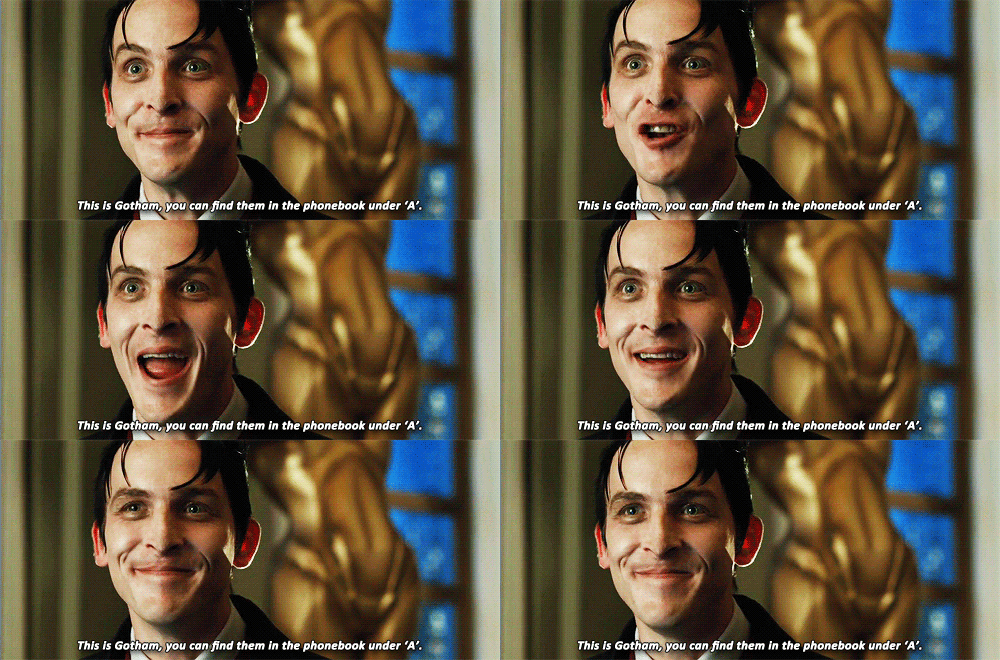
Then Gotham does something you wouldn’t expect: IT RICKROLLS YOU.


I kid you not, the next scene is at some random couple’s wedding, and the band is playing “Never Gonna Give You Up.” A crew of criminals burst in, with the intent of robbing the guests blind. But guess who’s just sitting around, like he knew they’d be there?


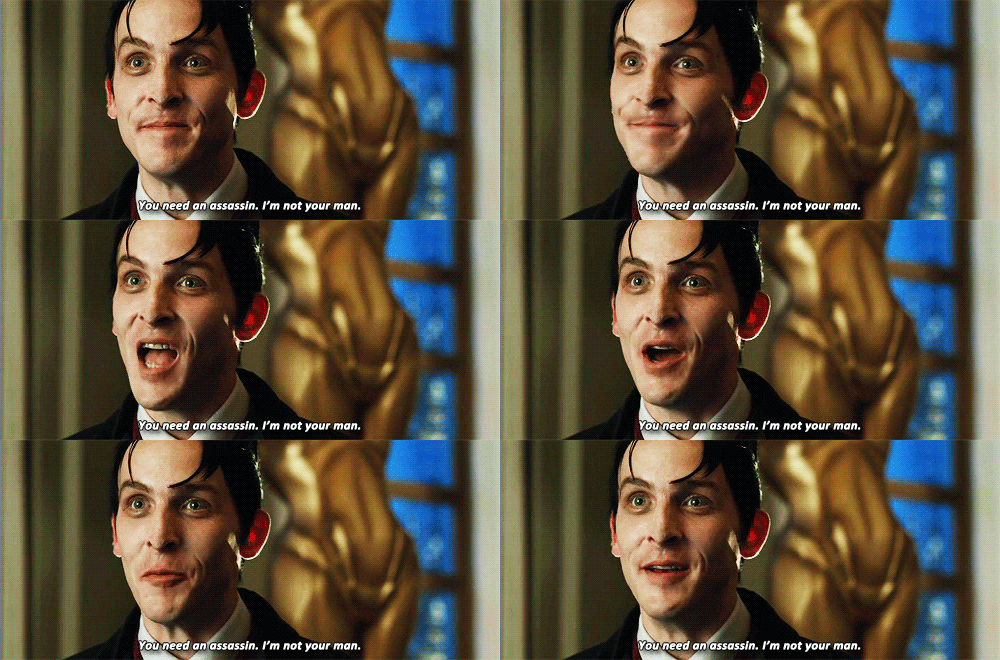
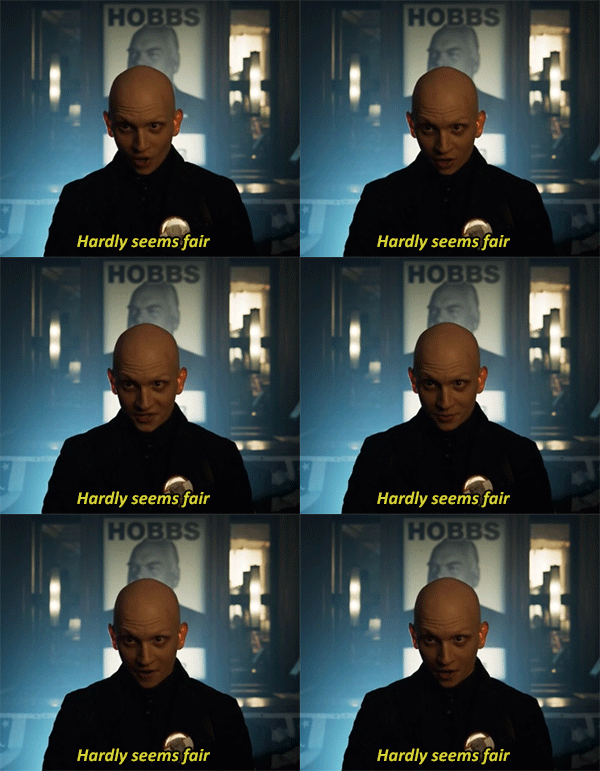
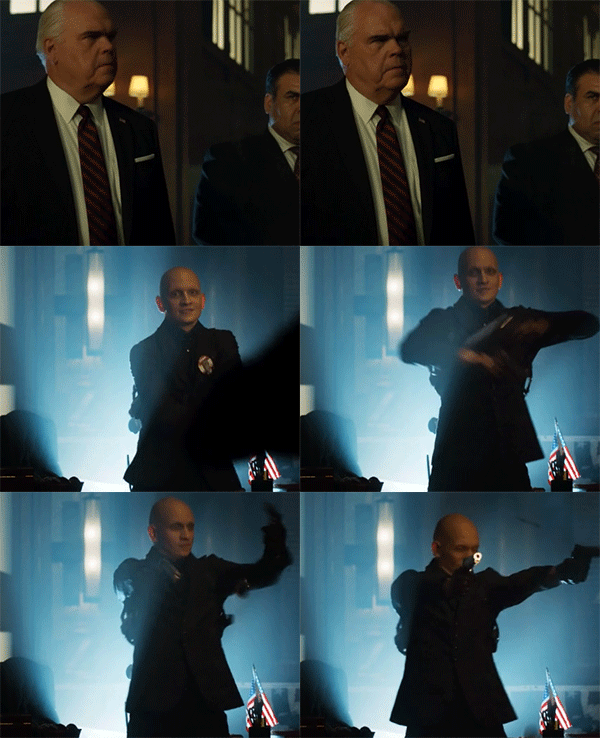
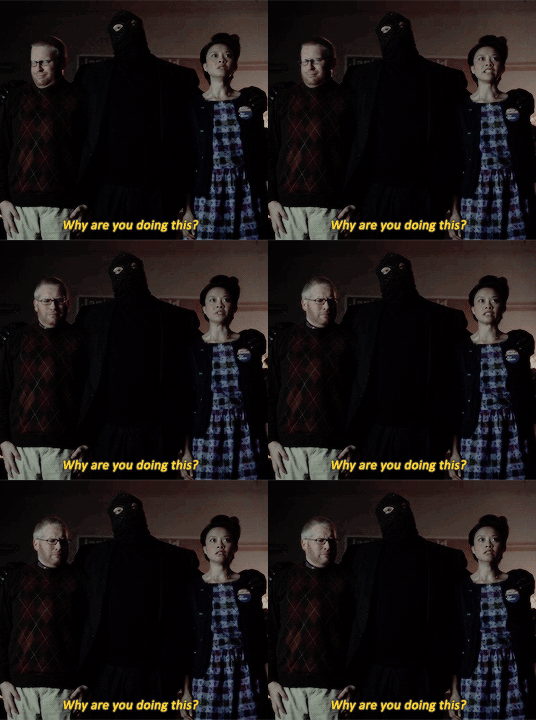
Victor Zsasz, everyone’s favorite assassin. If this episode is any indication, he’ll be showing up a lot more often in Gotham, and I’m glad to see him. Zsasz explains that in order to rob the people, the crew needs to be licensed by Penguin, who will take part of their cut. The crew refuses, but quickly leave after he shoots the finger off of one of their men. The bride is quick to thank Zsasz—until a crew licensed by Penguin sweeps in to loot the reception.

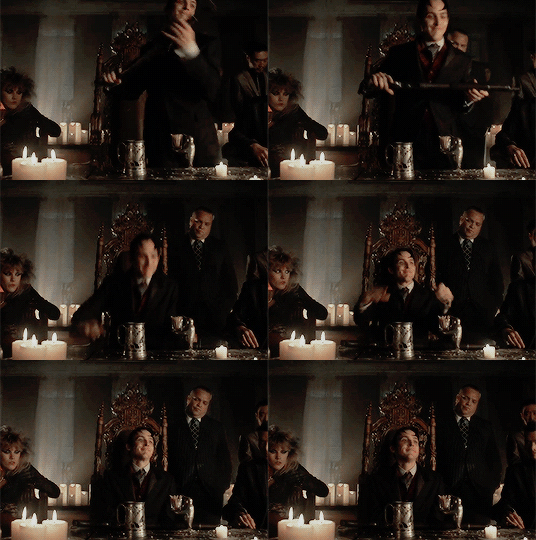
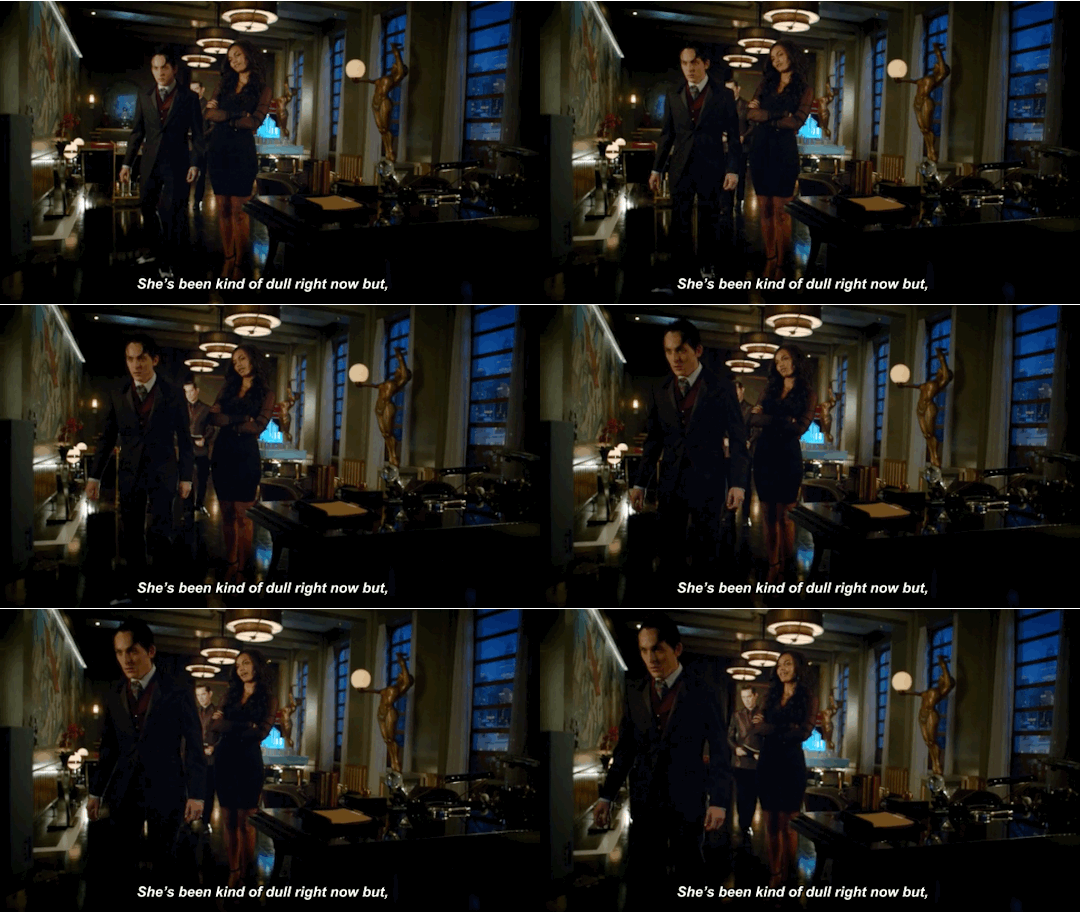
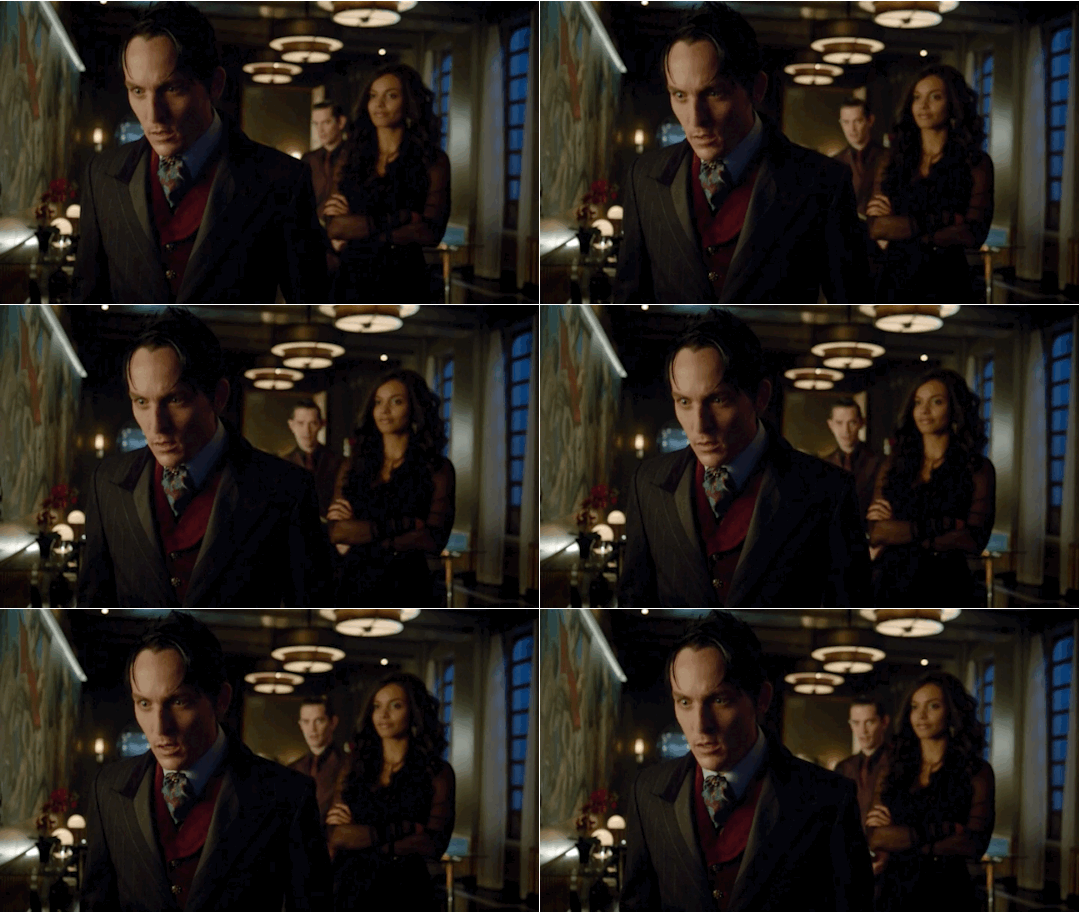
Cut to Penguin, explaining the concept of “licensed crime” to the new powers-that-be. Basically, no one can commit a crime without an issued license from Penguin, who gets half of their profits and give a small percentage to officials in exchange for them looking the other way. Penguin repeatedly states that his control over Gotham has made city “safe again,” as per his campaign promise in season 3.

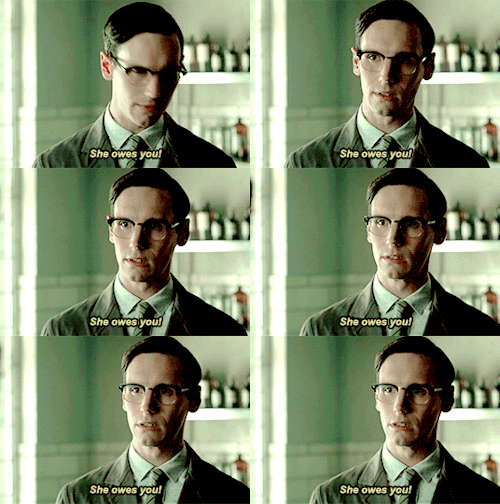
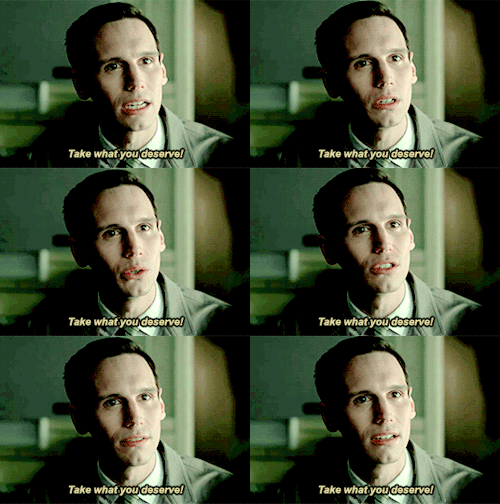
One interesting thing about this scene is that Penguin is dressed in black from head-to-toe—as is Bruce in this episode, even when he’s not in his vigilante persona. I’m curious to see if the show will draw any parallels between the two characters in the season to come. They both have their own ideas about how Gotham should be run and aren’t afraid to take what they want by going outside of the law.

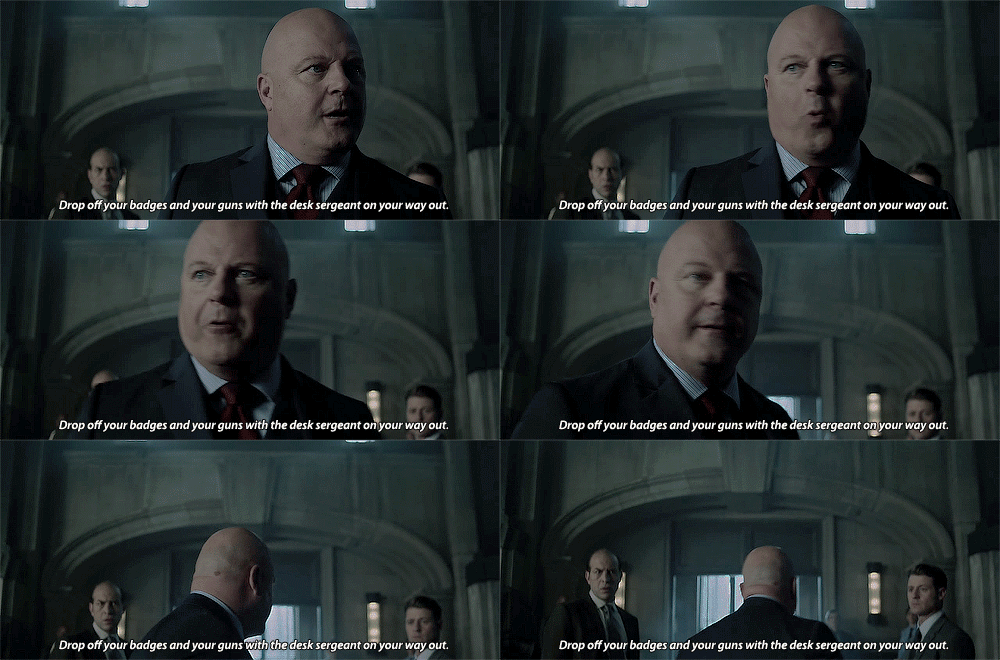
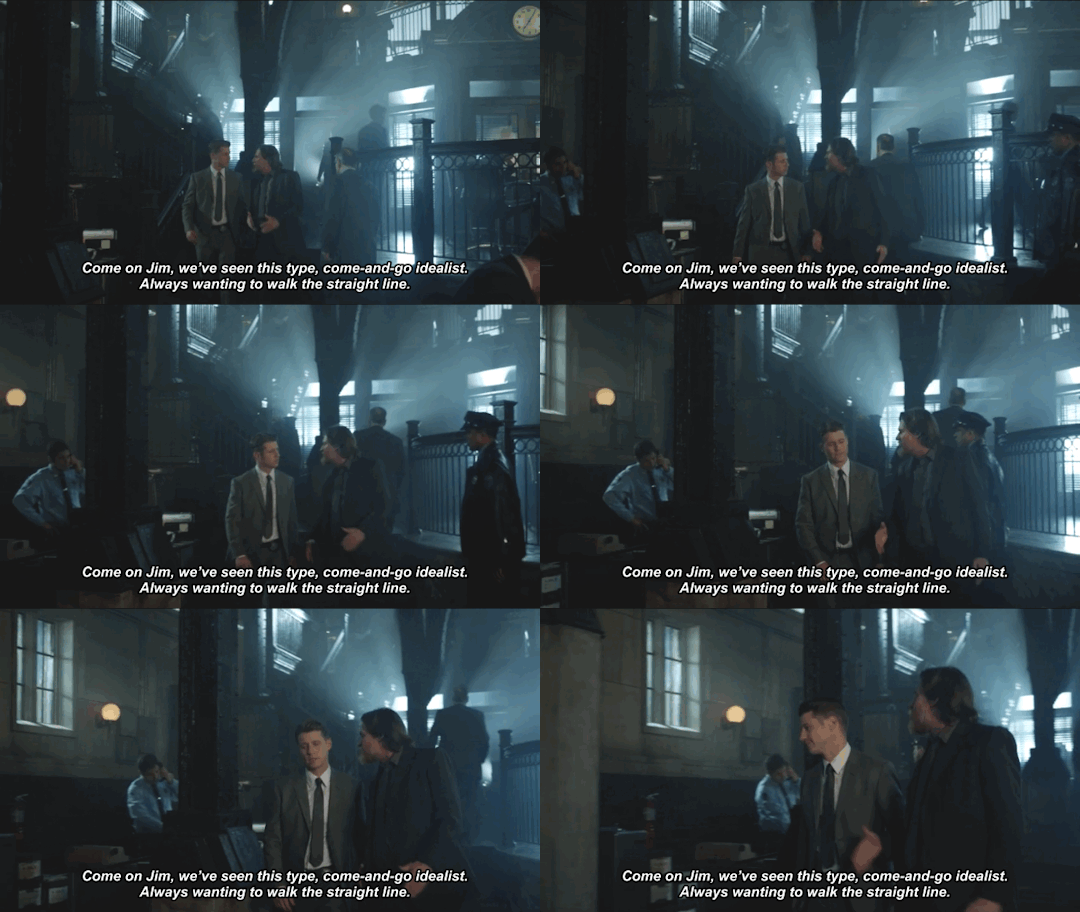
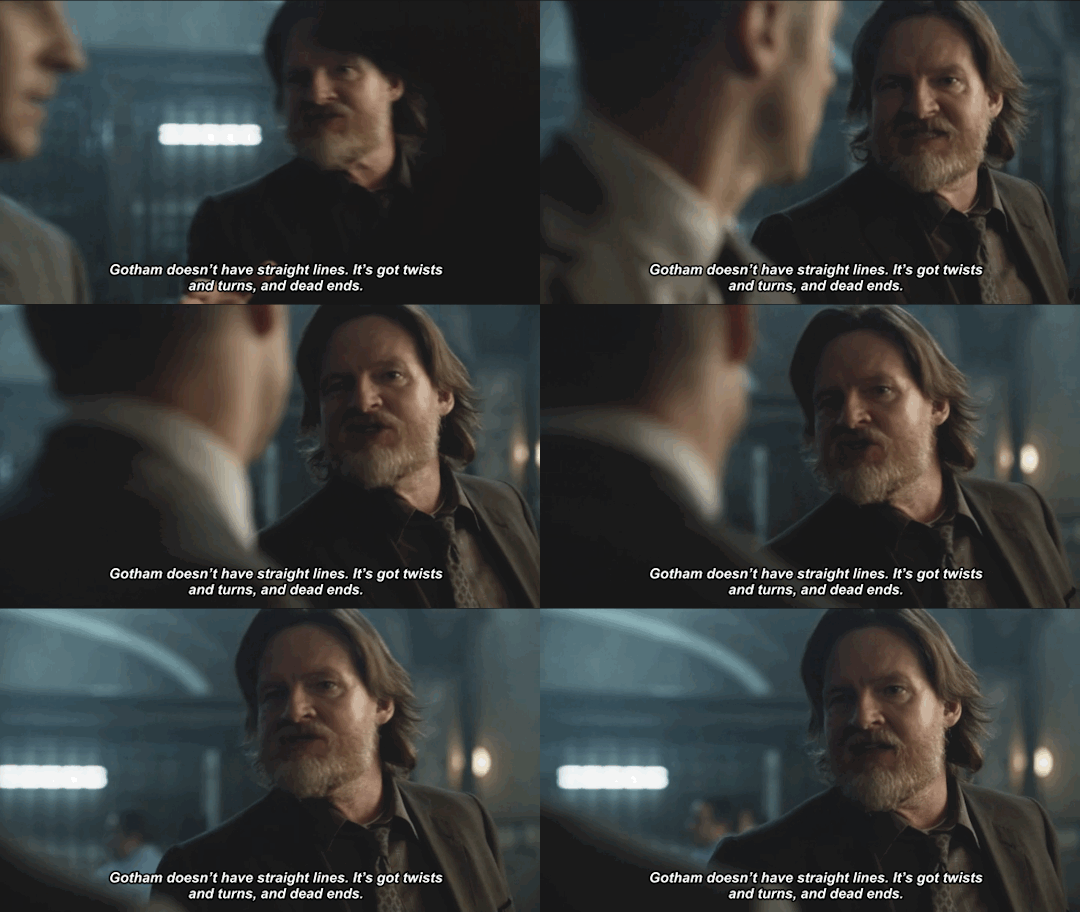
Penguin tells the commissioner and mayor that the GCPD will have to comply with the licenses, and the scene immediately cuts to Jim arresting a man for holding up his favorite bar, in spite of his “license.” Jim takes the man to the GCPD, and, as per usual, no one is on his side. To be honest, I can’t entirely blame them. With the amount of trouble Jim gets into, it’s no wonder his only friends at the precinct are Lucius and Harvey.

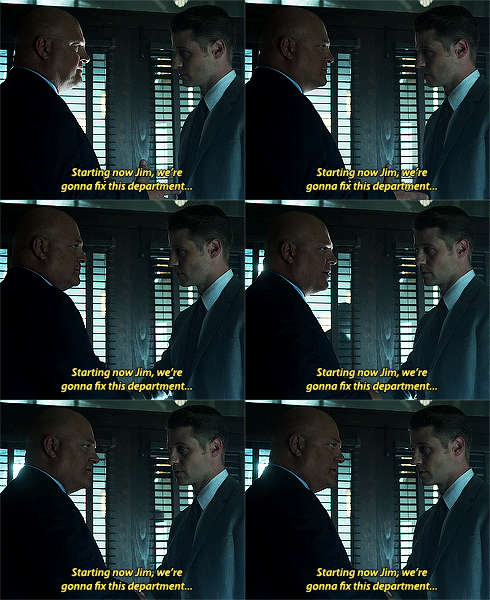
Harvey tells Jim to fall in line until the city is back on its feet. Both characters actually make good points. Harvey wants the crime rates to continue dropping, and Jim wants the citizens of Gotham to look to the GCPD for protection instead of Penguin. Every time the city endures a disaster, a kingpin always sweeps in to take control. At the beginning of season 2, it was Theo Galavan. At the start of season 3, Penguin tried to assume that role (although the Court of Owls was manipulating events behind the scenes), and this time he’s actually pulled it off.

Next we see Alfred and Bruce debate about whether latter’s mission is to protect Gotham or to train for Ra’s al Ghul’s return. While I agree with Bruce that the two goals aren’t necessarily separate, it’s hard to believe he’ll ever be ready for Ra’s al Ghul, especially since he was unaware of his presence earlier. It seems fitting that Bruce often finds himself torn between two paths; dichotomy has always been at the heart of the Batman mythos.

In the next scene, we see the crew of robbers from the wedding visiting an unfamiliar asylum. If it’s Arkham, the layout has definitely changed since season 2. The setup is chaotic, with inmates barely restrained. The crew bribe the man in charge of the asylum to let them take Jonathan Crane, who they plan to coerce into recreating his father’s fear toxin and strike back at Penguin. Crane, still hysterical and terrified from his overdose in season one, has no choice but to follow them out.

The crew’s plan initially works as they’re able to rob a bank using the toxin. Jim argues that Harvey can’t stop him from taking the case because the crew had no license, and the two show up at the asylum to ask about Crane. The head man is tight-lipped at first, but when they point out that Penguin will probably send Zsasz after him because of his involvement, he talks.

Harvey and Jim track down the crew, but they get the upper hand and escape. One remarks that they wouldn’t kill cops because they’re outlaws, and “Outlaws have a code.” (Jason Todd, anyone?) It’s a weird bit of reasoning from characters that are probably going to die in the next episode, but the next sequence is cool enough to make me forget about those minor details.

A group of thugs corners Selina, and she takes them out with a combination of amazing fighting and whipping. Tabitha appears to take out the last man standing, and says, “Not bad.” The two go out for pizza in a scene that's oddly reminiscent of season one.


It's nice to see them having a sisterly relationship as they bicker about Selina stealing Tabitha’s pepperonis. When they return to their apartment, Zsasz is there, offering a license from Penguin if they show up at the opening of the Iceberg Lounge. Tabitha doesn’t want to be under his thumb, but Selina wants to move up and knows they can’t do it without an okay from Penguin. It’s nice to see her taking a more active role.

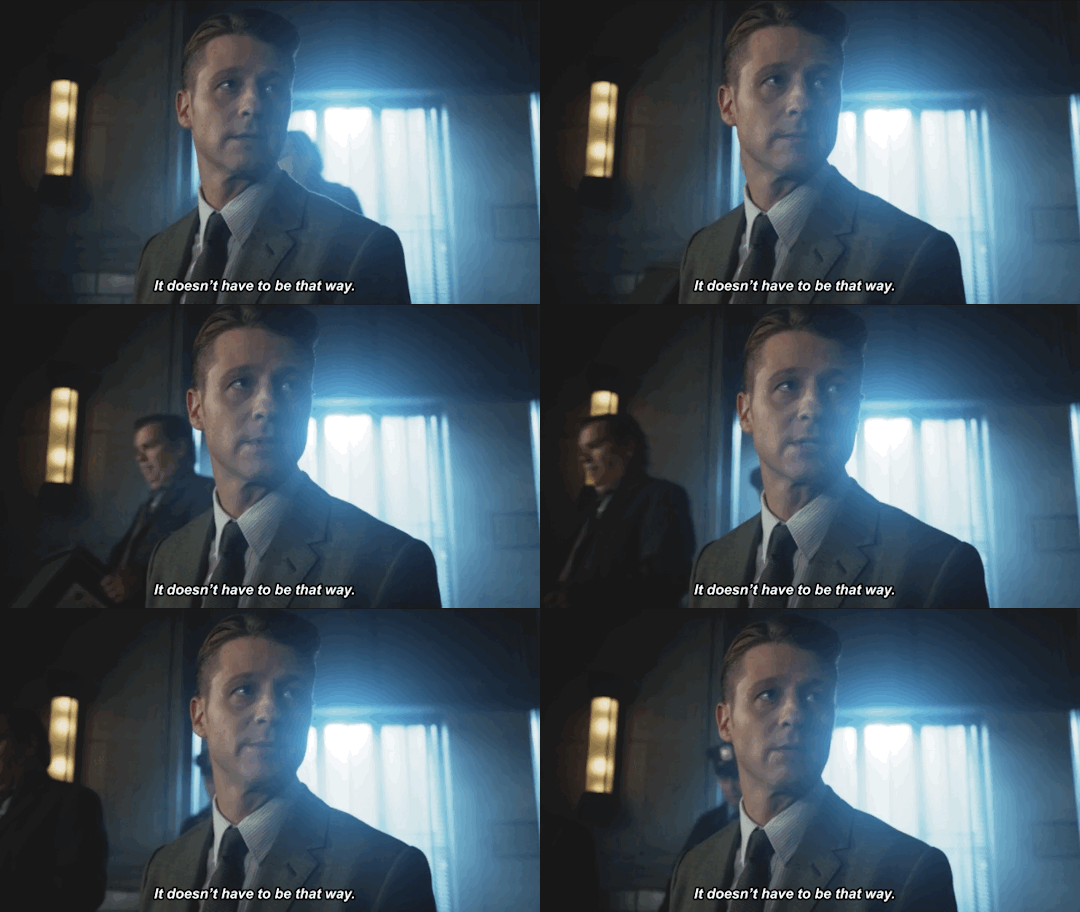
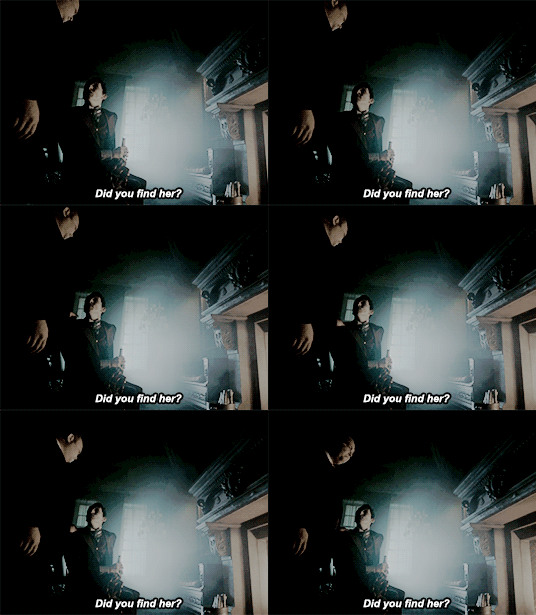
The next scene is really conflicting for me. Bruce sneaks up on Gordon at the GCPD to ask him about the license. He actually gives Gordon a chance to stop Penguin, pointing out that the number on the licenses must be linked to a list of crimes. Gordon replies that he can’t take on Penguin without getting in trouble, and Bruce silently resolves to get the list himself.

On the one hand, I love that Bruce is starting to appear and disappear on Gordon; it’s a very Batman thing to do. On the other hand, Bruce needs to start separating his two lives. The stoic, serious vigilante needs to be completely separate from the careless playboy.


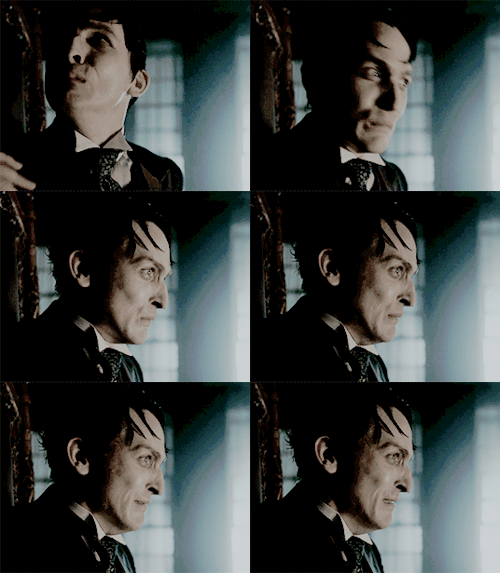
At the Iceberg Lounge, Penguin discusses the grand opening with a herd of reporters, who ask if he’s behind the licenses. He skates around the question (citing low crime rates) and unveils the frozen Ed Nygma, claiming that Ed has a brain disease and needed to frozen in stasis until a cure was found. It’s a hilariously bald-faced lie, and you can tell that Penguin’s barely trying to hide his wrongdoing. He’s just so flamboyant about all of it.


Gordon crashes Penguin’s press conference to point out at that not everything is under his control— namely, the gang with the fear toxin. Turns out it’s actually part of a plan to get Penguin to denounce the gang on television so the gang will attack him and Gordon will end up catching them. None of the other cops want to go along with the convoluted plan, and they beat him up in the locker room.

It’s hard to watch Gordon screw up over and over, but in a way, it makes sense. Just as Bruce has a ways to go before he’s truly Batman, Gordon has a ways to go before he can be an effective leader.

However, Bruce does slip into his playboy persona as he attends the grand opening of the Iceberg Lounge. He talks briefly with Penguin, asking about the licenses as if he’s just idly curious. He even says, with a smirk: “So does someone come up to you and say ‘I want to rob a bank?’” Penguin asks if Bruce supports licensed crime, and Bruce cleverly answers that if crime had been licensed three years ago, his parents wouldn’t have been murdered.


Penguin agrees and mentions that a bespectacled man named Mr. Penn keeps track of the licenses. Although it does seem odd that Penguin would give him that much information, it’s not totally unrealistic. Bruce and Penguin have only had three scenes together, and this is only the second time they’ve spoken. Penguin has no idea what Bruce is capable of and only knows him as a public figure. It does kind of make sense that he wouldn’t be overly cautious of a teenager (especially one that he’s helped rescue twice).

Selina arrives at the party, initially thinking she’ll take up Penguin’s offer on her own, but Tabitha joins her. And like clockwork, Bruce spots Selina and ends up following her out onto a rooftop. He does make an effort to apologize but remains oddly formal, like he knows there’s no way back to where they used to be. It works somewhat, but the scene is interrupted by Alfred, who tells Bruce that there’s “a situation” in the club.

The situation? Penguin’s caught the crew with the fear gas trying to crash the party and plans to have them escorted out (and subsequently killed) as an example to the rest of Gotham. Bruce wants to sneak out and stop it, but Alfred points out that this is one situation where Bruce Wayne might be more effective than a vigilante. Bruce speaks up and tries to use his public status to get Penguin to turn the men over to the police. Penguin refuses, but before he can go through with his plan, Ivy ruins it by cutting off the power.

That’s my main problem with the episode. While people have ignored and overlooked Ivy a few times in “Pax Penguina,” we still don’t get a lot of buildup to her lashing out at Penguin. It’s mainly a plot device that allows the crew to escape and dose Penguin with the fear toxin to humiliate him. Gordon arrests most of the crew, except for one member.

The last member returns back to Crane’s old house, where the crew left Jonathan locked in a closet with the scarecrow that haunts his nightmares. But when they open the door, Jonathan turns around, decked out as the scarecrow himself, and doses them with the toxin.


While I wish we’d seen more of the transformation (and I hope we will later on), I do have a theory on what happened. I think Jonathan’s fear was so crippling that he created another personality to disassociate from it and even embrace it, hence the Scarecrow. In a way, it’s not so different than the traditional reasoning behind the mantle of Batman: bats scared Bruce Wayne, so he embraced that fear and used it to intimidate others.

Speaking of Bruce, our caped crusader takes the list from Penn, only to mess up when tracking down a group of criminals. He falls through a glass roof, hurriedly takes off the mask, and is found by the police. Like I said, he’s not quite Batman yet.

All in all, I’d say “Pax Penguina” was a great way to start the season, despite a few minor errors. I’m really glad that we’re seeing a lot more of Bruce in this season; David Mazouz’s performance is one of my favorite things about this show. With that in mind, it’s a little frustrating when Bruce gets pushed to the side so that the show can focus on Gordon. Gordon may technically be the show’s main character, but I’m not quite as invested in his storyline. Next week’s episode, “The Fear Reaper,” will probably be Scarecrow-centric, but we’ll get at least a few scenes with Bruce that tie up that cliffhanger. Until then, make sure you don't rob a bank unless you have a license!

Thursday, July 14, 2016

"They Are the Most Important Work": Thoughts on Children and Fandom


Disclaimer: I am not a mom, but do I spend my 9 to 5 with people under the age of 13. 


As I sit here writing this article, I feel like I really should be planning activities for next week. You see, I'm an assistant teacher in a summer school program and my lead teacher graciously asked me to help her with some ideas for next week's theme. Mainly because it's Superhero Week and she knows I'm a bit of a fan. As ideas for research topics and cool art projects jumped out of my brain and Pinterest account I started to think beyond the task at hand. It's important to share things you like with younger people, not in a "here, let's watch [insert thing here] until you can repeat the theme song ad nauseam" sort of way but in a curiosity-inspiring way. Especially when the topic in question already interests them in the first place. The next generation of creators, artists, and writers is out there and probably hitting someone with a stick as we speak.


Let's say you're watching The Wizard of Oz with a second grader and they ask you, "Is that real magic? It can't be." You have a few options: (A) pretend that you in fact believe in magic and are offended that they dare ask such a thing, (B) explain special effects to them and research how they pull them off, or (C) reply, "No, they aren't," and continue watching the film while fielding more questions. If you chose (A), the child you're babysitting may think you've lost your mind a bit but feel slightly relieved that magic isn't so implausible. If you chose (B), they will also most likely be inspired; hopefully this results in a future set designer and not a pyromaniac. But, their parents will likely later thank you for getting their child interested in chemistry. If you chose (C), you're probably the type of person who doesn't like to talk during movies.
It's all about encouraging imagination and going along with their inspiration. Scientifically speaking, there's a reason that kids like to do the same thing over and over again (yes, including watching the same movie repeatedly). Their brains are trying to make connections and they often aren't entirely aware of this. They just know that launching toy cars off of the top of the shelf in the block center is really fun, and probably pretending that the cars have to jump over a pit of fire or a lake. They're also learning concepts of physics without even knowing the word. The little boy in your class who plays like this every day might be one of the next hosts of Top Gear or go on to write or direct the next successful car-related heist franchise. He also might grow up to be a mechanic or a race car driver. Every kid is  a future adult and needs the same guidance and encouragement that you did as a child, it only makes sense.


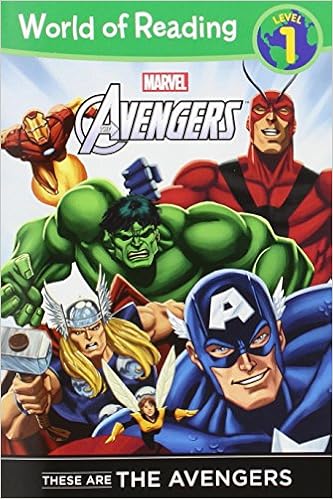
In the third grade my reading teacher knew that I loved Star Wars. She also knew that I had a tendency to rush through my work, or finish early and then sit there gabbing. Mrs. Banner (renamed after my favorite superhero to protect her privacy)  brought in her husband's Star Wars books from when he was a kid for me to read as a reward. In turn, I drew her comics of Anakin and Padme. During my first year in the classroom as a teacher we had a class full of boys, and the few girls that we did have also liked superheroes. My boyfriend's mom bought me a storybook full of Marvel characters to take in to school, and the kiddos loved it. They asked questions about the characters and talked through moral issues in a way that only four-going-on-five-year-olds can. Spider-Man didn't like getting made fun of so they decided not to be mean to people; The Hulk doesn't always mean to get angry so maybe we should forgive our friends when they're mean for seemingly no reason. The book got them thinking, even if it was only momentarily, about other people's feelings in relation to their own. If being read a few stories about The Avengers can do that, what can deeper connections to story do?


What if fostering those connections truly causes a change in a child's life? What if the child curious about my The Hobbit inspired tattoo goes on to pen the next great epic fantasy saga of their time? A story can inspire, influence, and broaden a person's worldview. Fiction is a safe place to explore and realize things about the world. In that context parents, guardians, and other family and friends have a conversation starter and wealth of metaphor to use in explaining things to a child. Using the familiar to explain something new and potentially scary can create an open mind where plainly discussing something may close it.

In case you were wondering, here's what we're doing next week with the kiddos. Each group is going to research a superhero through guided questions--for fun yes, but also to get them thinking. Who knows, maybe someone will be inspired to figure out how to make clean nuclear energy a real thing, or will go on to work for Marvel, or will be inspired to do the right thing even when it's hard.


How do you use fandom to encourage and help the little people in your life learn and explore?
When you were a child, did the adults in your life incorporate your interests into lessons and activities? How did it affect you? 

Wednesday, April 27, 2016

5 Reasons to Watch Young Justice

(Spoilers for Young Justice.)

I’m a professed Marvelite. When the question “DC or Marvel” comes up, my allegiance is always with Marvel. But in spite of that, there is one DC show that claims a special part of my heart. Six young heroes—Aqualad, Robin, Kid Flash, Superboy, Miss Martian and Artemis—the sidekicks of the heroes of the Justice League, come together to form a team of their own, to do the missions the adult heroes can’t, in secret and in plain sight. Their adventures, missions, trials and triumphs are Young Justice, and here are five reasons to experience them for yourself.


1. The characters are nuanced and well-written. 

When we meet the six main characters, they are already complex and compelling, but they grow and mature over the course of the show. Each of them are showcased and given the chance to win a place in viewers’ hearts. For example: Superboy, a.k.a. Conner Kent, was given a backstory that differed a little sharply from the "Connor Kent/Kon-El" of the comics. He was cloned from Superman’s DNA and speed-grown in sixteen weeks by the mysterious and unscrupulous organization called Project Cadmus when he was discovered and rescued by Robin, Kid Flash, and Aqualad. Over the course of the show and with the help of his teammates, Superboy learns to define and discover who he is as a person and chooses for himself the name Conner. I personally find it intriguing and different that Conner only has super-strength, infra-red vision, limited invulnerability, and can only leap tall buildings in a single bound. Yeah, he can’t fly, and he doesn’t have heat vision. To me that makes him more real and more accessible—and closer to Jerry Siegel and Joe Shuster's original vision of Superman.
Sue me, Superman fans.


 2. The villains are fresh and less clichéd than usual. 

Let’s face it—in superhero animated shows like Young Justice, the villains are usually all about beating the heroes and “taking over the world” and causing as much mayhem and chaos as possible with no better motives or reasons. The main villains of Young Justice are a shadowy and villainous circle of figures who call themselves “the Light”. They and their compatriots do cause a lot of chaos and mayhem, but usually they do have believable and plausible reasons for doing so. One of their number—Klarion the Witch Boy, a Lord of Chaos who seems to be pretty much a spirit of evil magic—orchestrates a powerful spell that splits the world into two dimensions: one for the children and one for the adults. The heroes defeat him—at a price—but it’s revealed that Klarion’s magical display was no more than a smoke screen—a diversion so the Light could steal an object vital to their plans. When villains actually start finding direction and traction with their plans…things start to get a little scary, don’t they?


3. The problems, the struggles, the obstacles are real. 

Again, unlike a lot of superhero and “kids” cartoons and shows, the writers and showrunners don’t insult their heroes’ intelligence—or ours. The missions that Batman sends the team on challenge them to the best of their abilities, and it is never without a struggle. And just like in real life…there is tragedy. And loss. In the aforementioned fiasco with Klarion the Witch Boy, the team was losing—badly—so their friend Zatanna donned the Helmet of Fate, which enabled the legendary Lord of Order—Doctor Fate—to possess her and help defeat Klarion. The price was that Fate refused to release her, for he is the mortal enemy of Lords of Chaos like Klarion and he was convinced that the world needed Doctor Fate more than a little magician’s apprentice like Zatanna. Her father, the seasoned Justice Leaguer Zatara, offered himself in his daughter’s place as a stronger and more suitable host, and so Zatanna could be free to live her own life. The bargain was accepted, and Zatara was lost to Fate. Before this moment, Zatara’s appearances could be counted on one hand, but even so, for me this episode hit hard, and needless to say I bawled my eyes out. Of course, it didn’t help that Zatara was voiced by one of my favourite voice actors, Nolan North.


4. The fresh, exciting storylines. 

In an environment in which networks seem to be introducing more and more kid shows with shorter and shorter run times and less serialized arcs, Young Justice invited its viewers to put every episode under a microscope and speculate and theorize on which side Artemis was playing for, who were members of the Light, and what their endgame was—among many others. In Season 1, each member of the team got an episode that centered around them and focused on their individual, personal struggles and problems and showcased each of them for who they were and whom they were growing to be. And all the smaller story lines are masterfully woven into the larger arc of unmasking and defeating the malevolent Light. No episodes are filler, and even though they’re not all home runs, the writers and showrunners consistently deliver a satisfying conclusion to each arc.


5. The equal racial and gender representation. 

It’s a none-too-pretty truth that when comics first started, it was a mostly white man’s world—and for a while, a man’s world. In recent decades, things have gotten a lot better in that regard, and Young Justice is excellent proof of that. When the team starts out they have two girls in their ranks: one a Martian and the other part Vietnamese. Their leader is Aqualad, canonically Atlantean, but of undeniable African American influence. And as the team grows into Season 2, they are joined by Blue Beetle, a Hispanic superhero; Guardian, another African American hero; Batgirl and Wonder Girl, the young sidekicks of their Justice League counterparts; and Rocket and Bumblebee, both African American female heroes. It’s heartening to see heroes of all shapes, sizes, genders, and races step into prominence—the way it’s meant to be.

(Whoops, sorry, wrong fandom :P )

I call myself a Marvel girl not because I hate DC. I don’t hate DC. It’s because more times than not, DC has disappointed me. But there’s been times that DC has come through, and Young Justice is one of those times. These are the stories of young heroes stepping out of their mentors’ shadows, finding their own place in the world, rising up to meet challenges both too big and too small for their Justice League counterparts. And even though the show was cancelled in 2013, since then it has found new life on Netflix, and there have even been rumours that Netflix will pick it up for a Season 3.  So go.  Watch. Experience Young Justice for yourself. And who knows?  f you love it as so many others do and enough of us are watching it, we just might get that Season 3.

Are you interested in watching Young Justice?
Have you already seen it?
Let us know below!

Sunday, October 18, 2015

Gotham Recap: 3x04 Strike Force

Time for another Gotham recap! Before we delve in, I’d like to remind readers that Gotham contains adult content and viewer discretion is advised. Content/Trigger warning for language, violence, and physical abuse of a minor. Spoilers ahead!


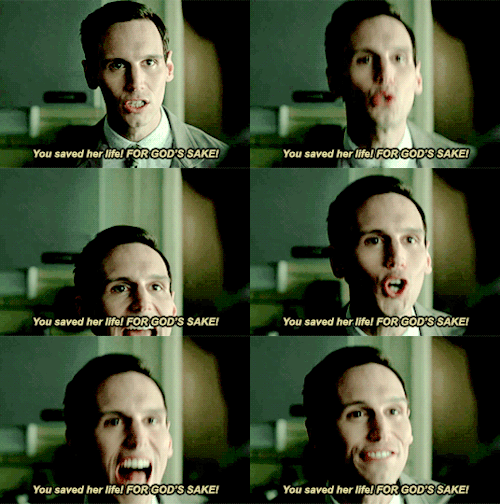
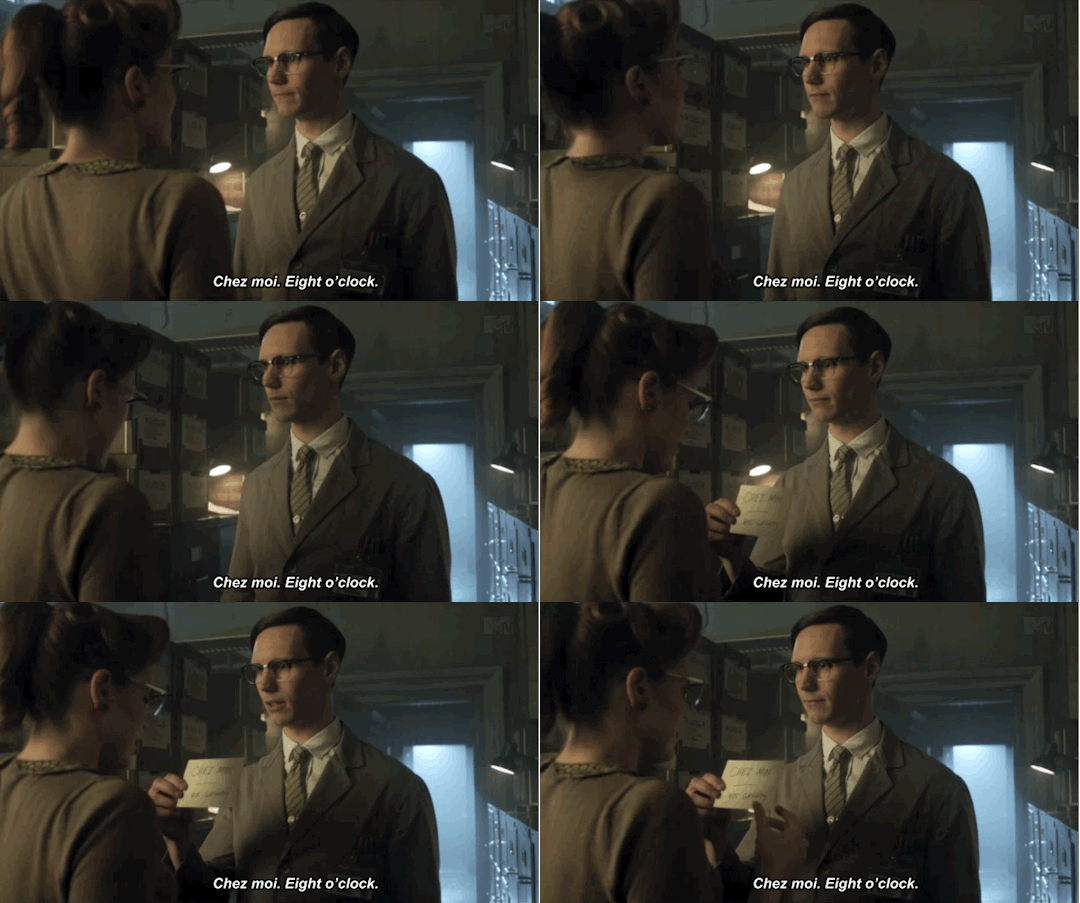
Eddie’s darker self tells him that saving Kristen’s life entitles him to a date with her.

(Source: baskervilleshund.tumblr.com)

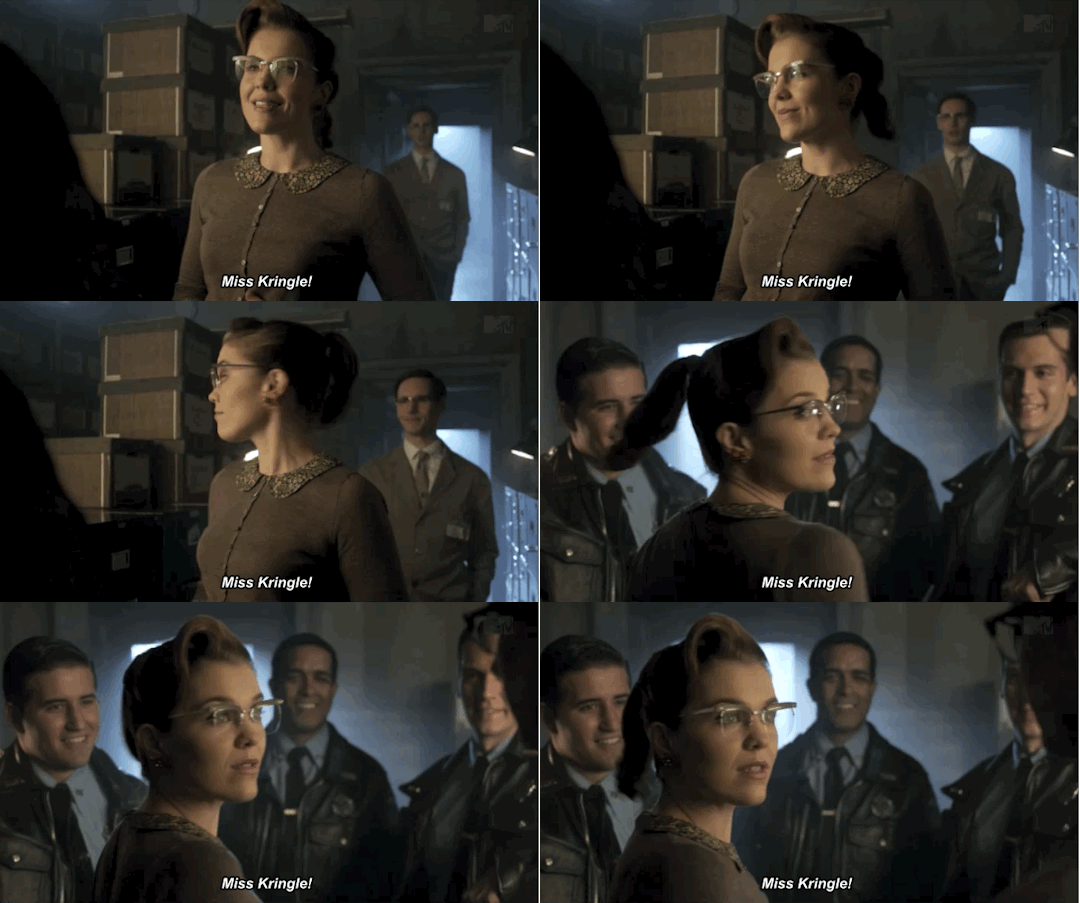
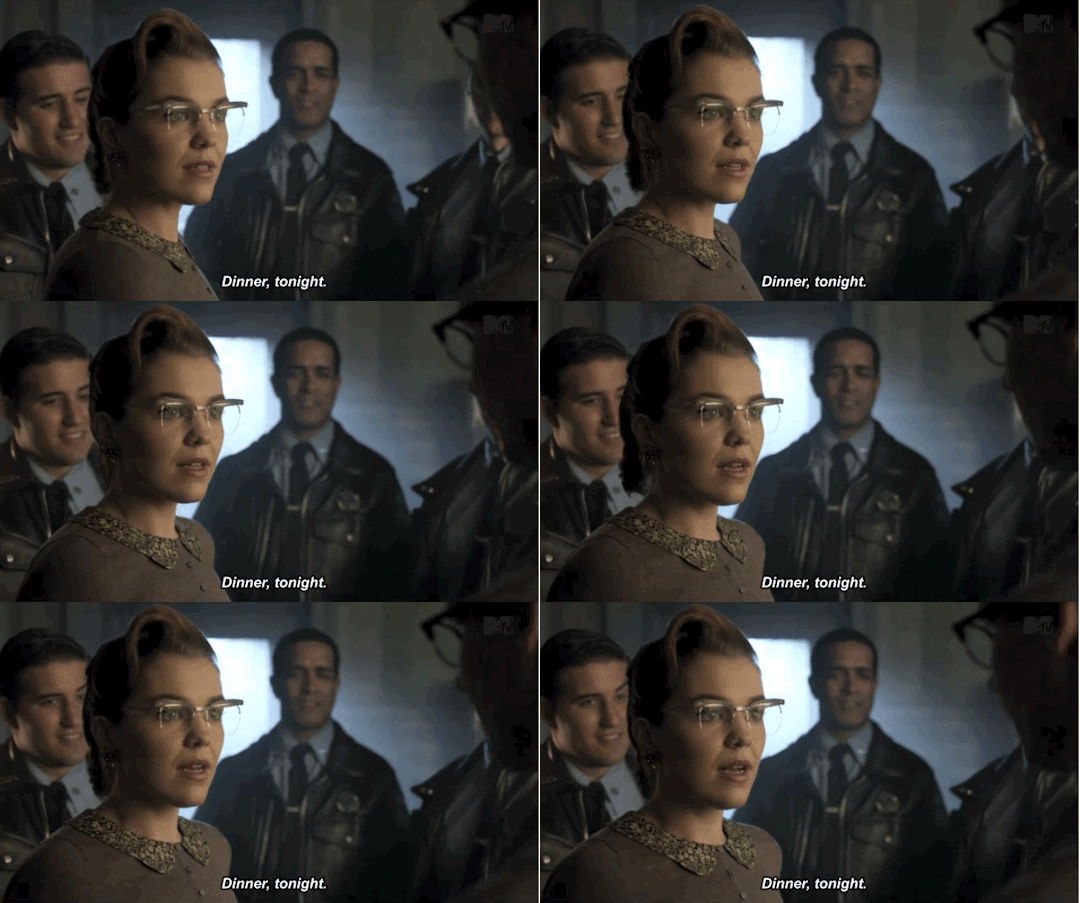
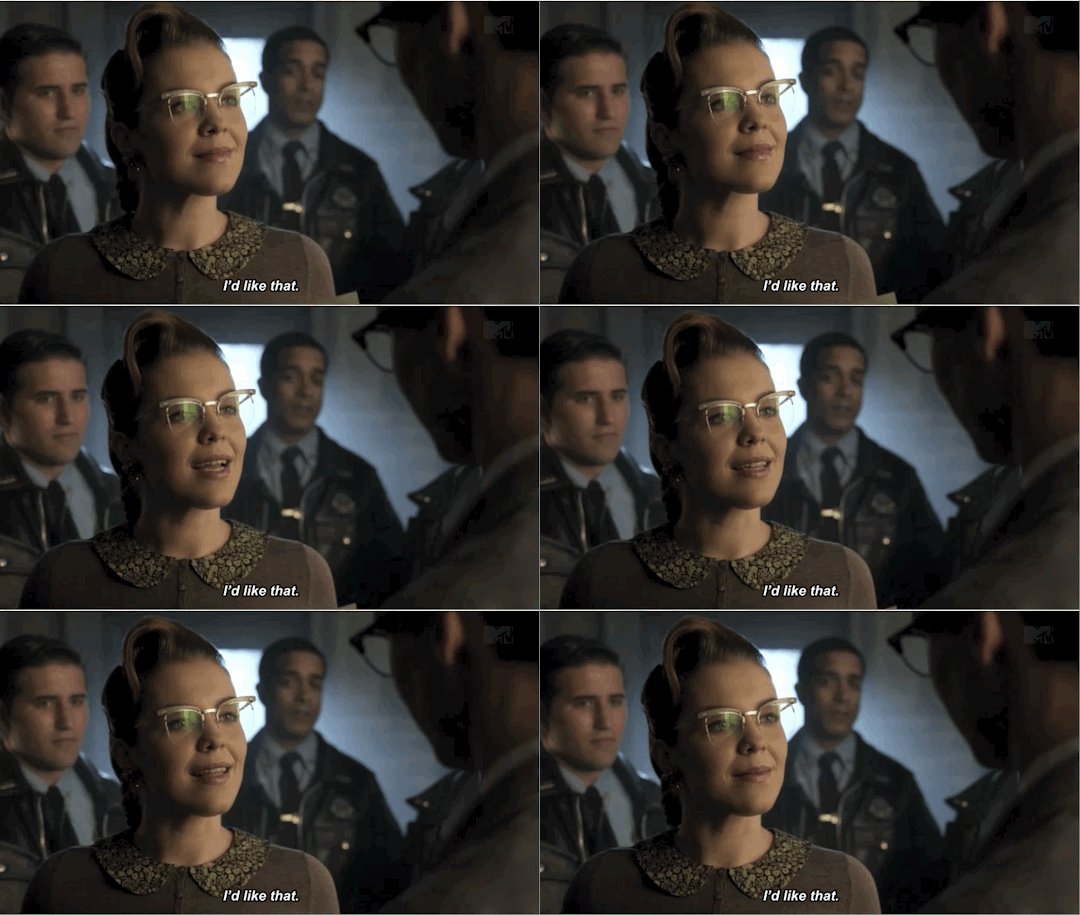
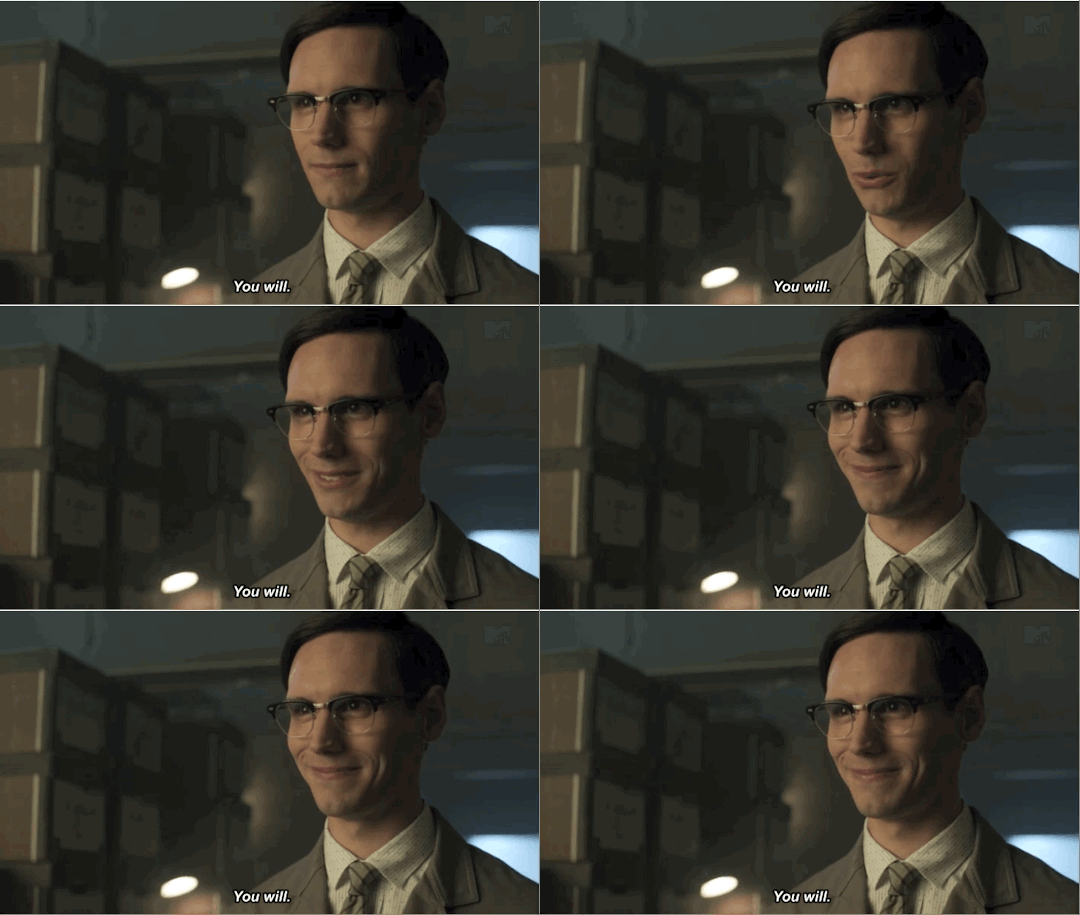
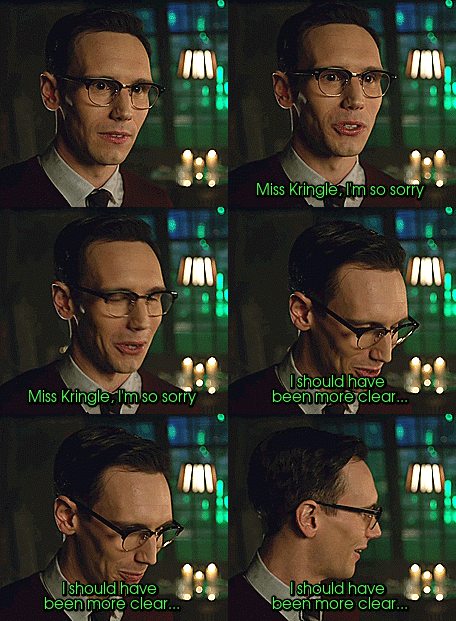
He goes up to Kristen, gives her an address, and tells her to meet him there at eight o’ clock.

(Source: gobblepotfans.tumblr.com)

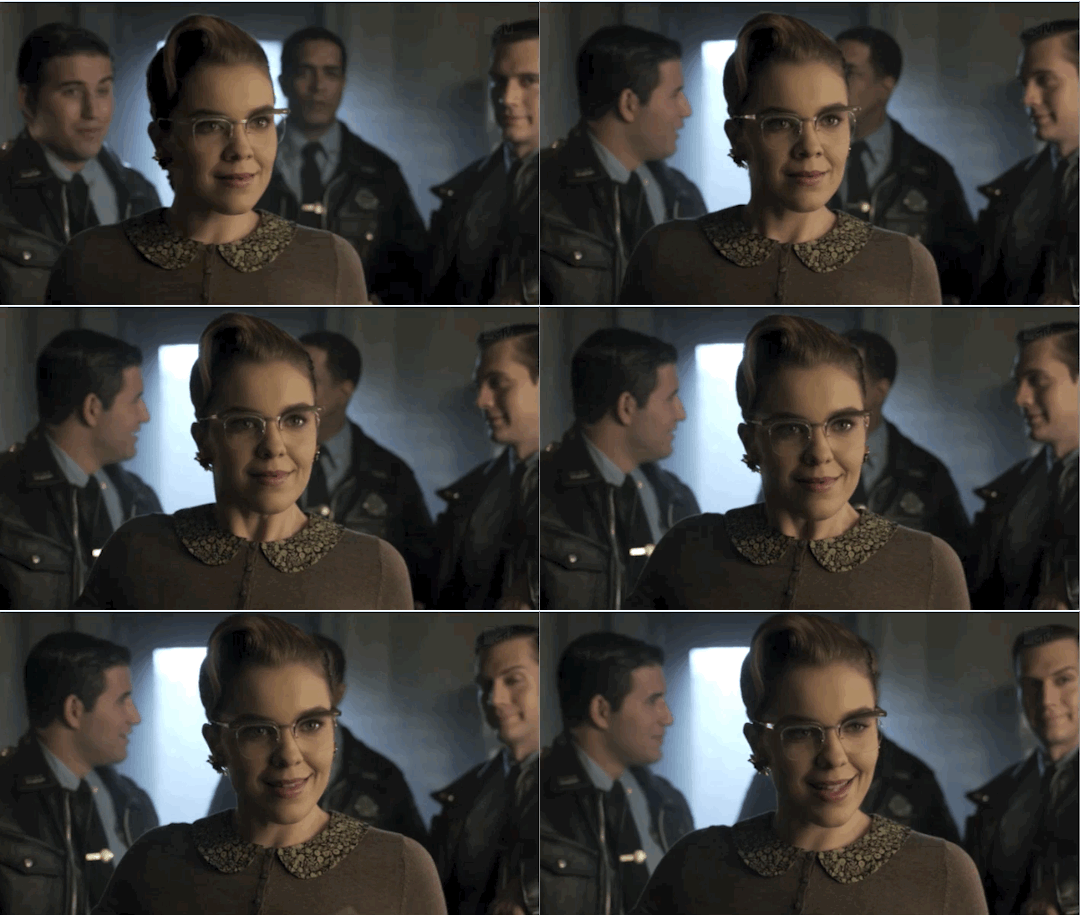
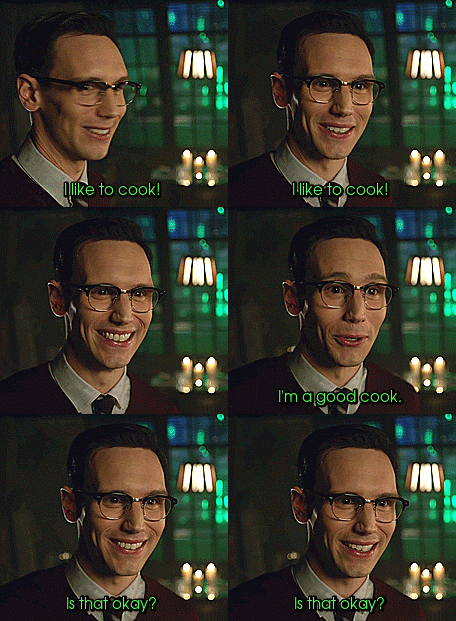
The address turns out to be his apartment, where he has cooked a dinner for Kristen himself.

(Source: lankybrunettepartdeux.tumblr.com)

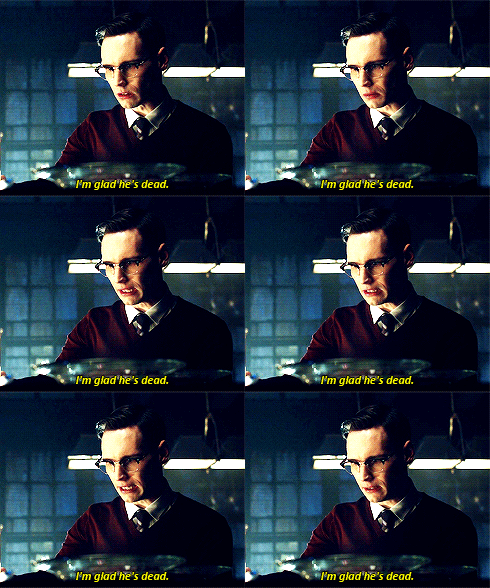
As the two have a lovely date, Kristen apologizes for being mean to him at work. Eddie says she isn’t to blame, as his behavior toward her has been inappropriate. Embarrassed, Kristen says she can’t believe she suspected Eddie of forging Dougherty’s note or that she ever let Dougherty abuse her to begin with. Eddie says he’s glad Dougherty is dead, forgetting that Kristen still believes him to be alive.

(Source: okimi79.tumblr.com)

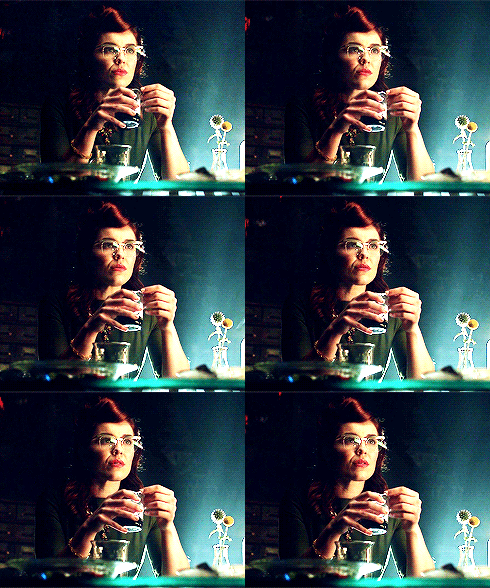
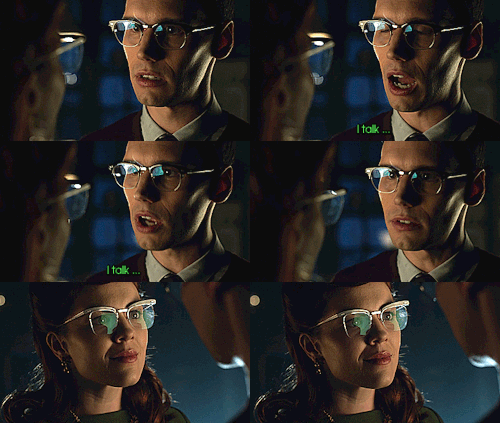
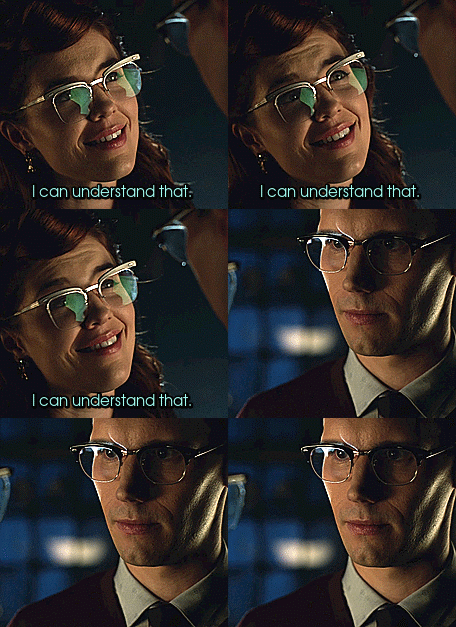
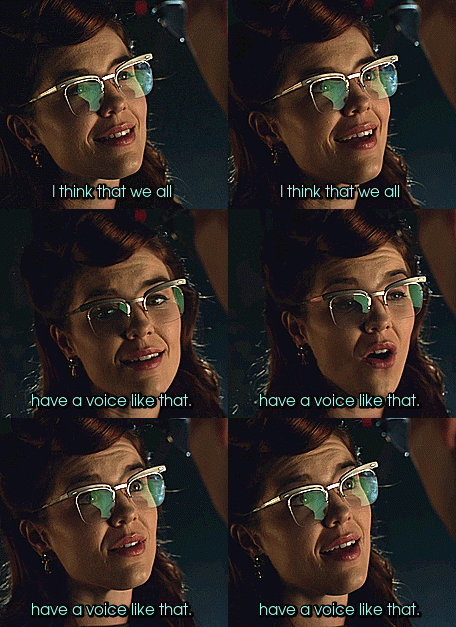
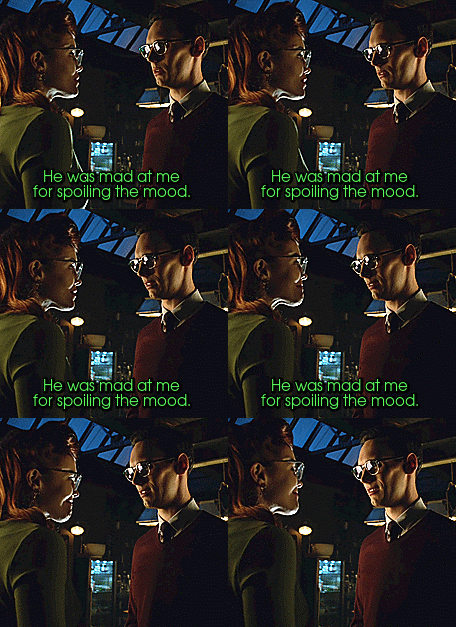
Disturbed, Kristen excuses herself for a moment. And when she returns, she catches Eddie in the middle of talking to his other self. Eddie is forced to explain that he has another voice in his head, but Kristen is unexpectedly understanding about it as she assumes that voice is something a bit less sinister.

(Source: lankybrunettepartdeux.tumblr.com)

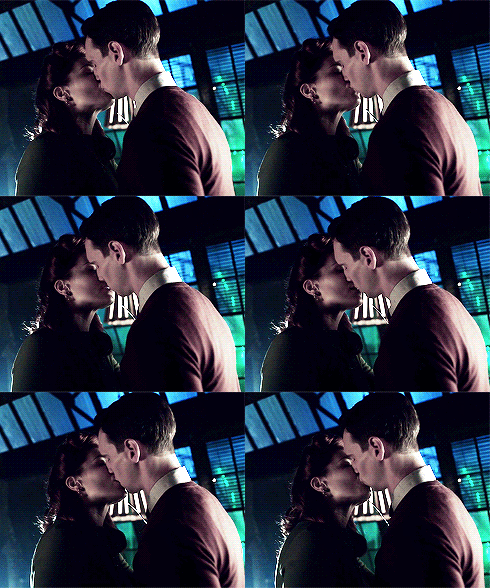
Eddie and Kristen share their first kiss.

(Source: okimi79.tumblr.com)

Cat tries to meet up with Bruce after school. When Alfred sees her, he punches her out of revenge for killing Reggie.

(Source: skeleseerellie.tumblr.com)

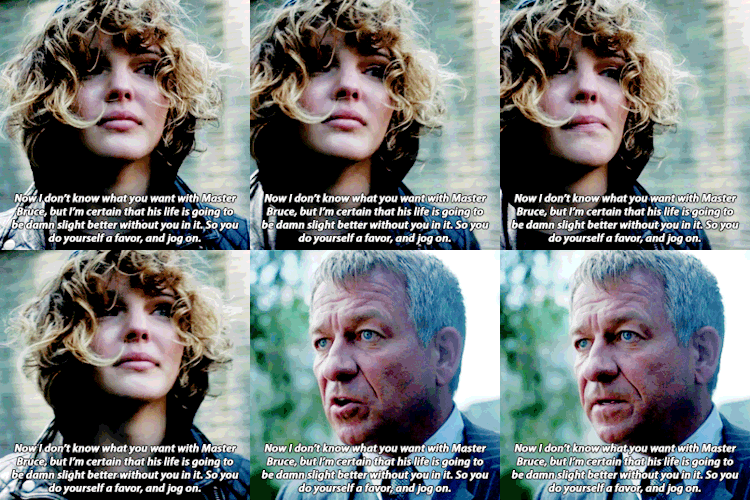
He then tells her that Bruce is better off without Cat and that she should stay away from him. Upset, Cat leaves.

(Source: skeleseerellie.tumblr.com)

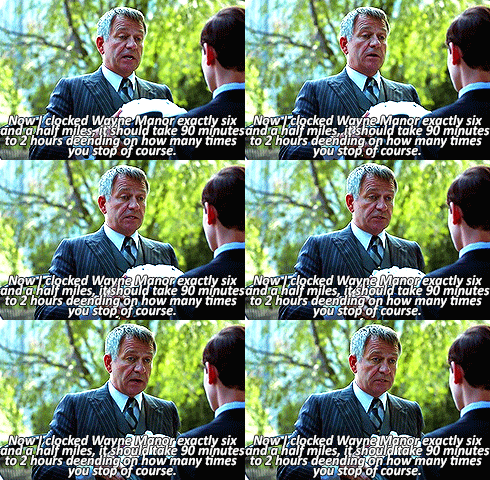
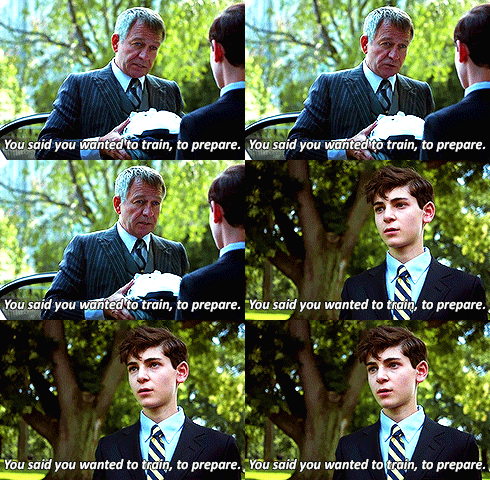
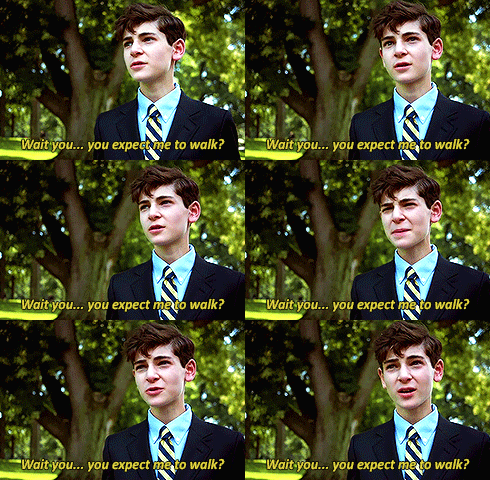
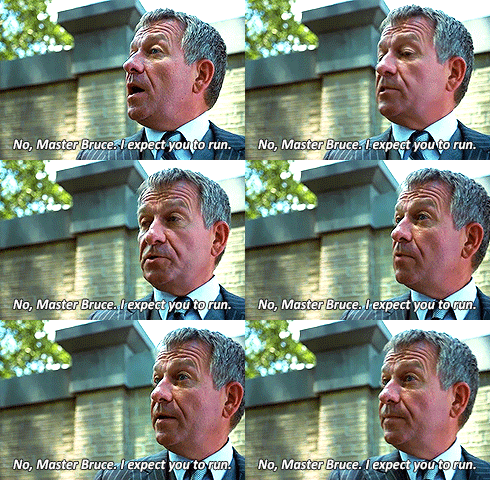
Bruce has a time set to eat dinner with Theo Galavan. As part of his training, Alfred has Bruce run to the restaurant instead of driving him there.

(Source: legendsofdc.tumblr.com)

While eating, Bruce spots a beautiful girl playing in the fountain outside the window. Theo introduces the girl as his niece and ward, Silver St. Cloud, who will be going to the same school as Bruce.

(Source: redrobin.co.vu)

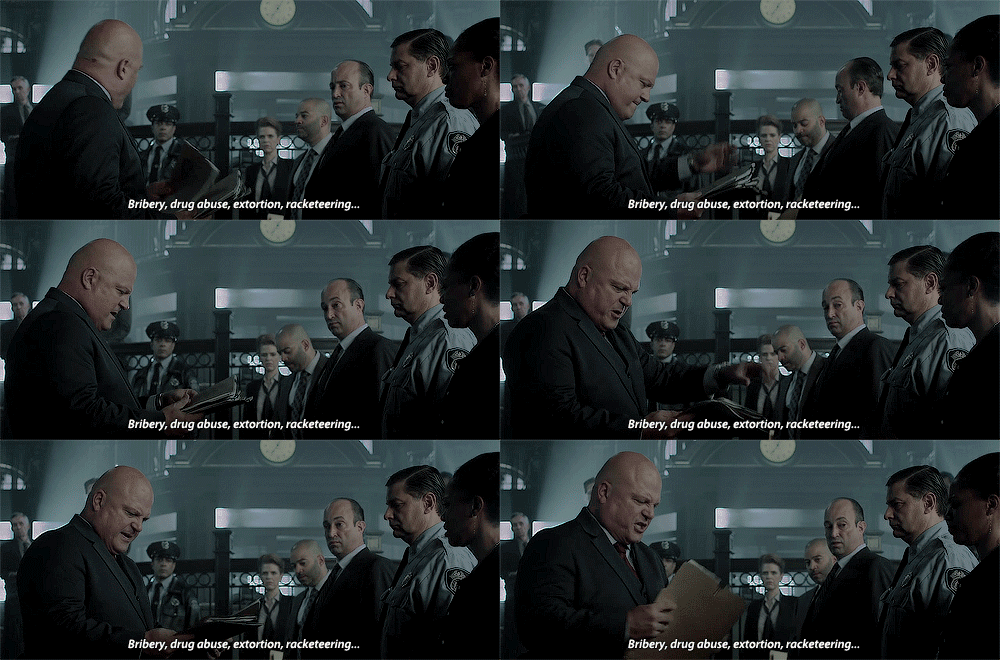
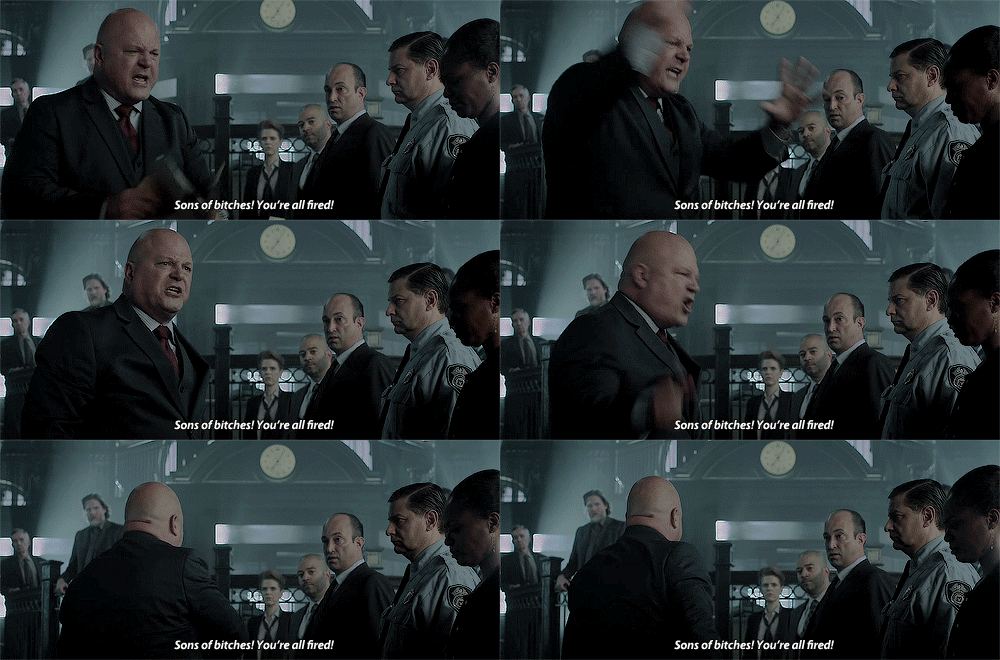
The new captain, Nathaniel Barnes, arrives at the GCPD and fires everyone he knows has been involved in corrupt dealings.

(Source: fuckyeahgotham.tumblr.com)

An idealist, he says things at the station are going to work much differently now, and he makes Jim Gordon his second-in-command.

(Source: fuckyeahgotham.tumblr.com)

Harvey, however, isn’t too happy about the new captain’s approach.

(Source: gobblepotfans.tumblr.com)

Barnes asks Jim to meet him at the police academy. There they hire new graduates to form Unit Alpha of the GCPD Strike Force.

(Source: theogalavan.tumblr.com)

Oswald is attempting to restore order among his people when Tabitha pays him a visit and says her brother would like to speak to him.

(Source: josephdun.co.vu)

Theo shows Oswald his plans for rebuilding the city, which include tearing down a residential area to clear the way for new skyscrapers. As for who’s going to tear down the residential area, he wants to make Oswald his destroyer. Oswald refuses and says he’s a builder. Plus, he doesn’t understand how Theo could ever become powerful enough to carry out this plan anyway. Galavan says he plans to become mayor, as everyone has been begging him to do so since he killed Jerome. To ensure his victory, he wants Oswald to kill all the other candidates running.

(Source: gothamedits.tumblr.com)

When Oswald refuses, the Galavans reveal they have kidnapped his mother, and he must do what they say to keep her alive.

(Source: gobblepotfans.tumblr.com)

To ensure no one suspects that Theo is behind the killings, Oswald stages a fake attempted shooting at the ceremony where Galavan is receiving a medal of valor.

(Source: acklesjensn.tumblr.com)

Galavan pretends to be outraged by this and announces to run for mayor to show criminals who’s boss.

(Source: theogalavan.tumblr.com)

Oswald murders the first of Theo’s running mates.

(Source: gobblepotfans.tumblr.com)

There are witnesses to the murder, and Butch finds their names and addresses so he can threaten them into staying quiet. The threats don’t work, however, and one of the witnesses gives a description of Oswald to the GCPD, which Jim recognizes immediately.

Butch is confused as to why Oswald is killing these people, and Oswald explains the situation about the Galavans and his mother.

(Source: baskervilleshund.tumblr.com)

Oswald sends in Victor Zsasz to kill off the other candidate.

(Source: logicalharleyquinn.tumblr.com)

This leads to a shootout in the street between Zsasz and the new Strike Force members. Both Zsasz and a Strike Force officer are shot but not fatally. Zsasz escapes.

Jim visits a very upset Oswald, telling him the GCPD knows he’s been killing political candidates and that they won’t make deals with him anymore. Upset about the circumstances concerning his mother, Oswald lashes out and reminds Jim there are things that can be used against him, such as the murder of Ogden Barker.

(Source: elenathenerd.tumblr.com)

Barnes brings the team together and announces Oswald is enemy number one, and it’s time to take him down.

(Source: theogalavan.tumblr.com)

Galavan tells Barbara and Tabitha that while the GCPD is preoccupied with taking down Oswald, he’ll become mayor and rise as the most powerful figure in Gotham.

(Source: theogalavan.tumblr.com)

Butch looks for Oswald’s mother but is unable to find her.

(Source: baskervilleshund.tumblr.com)


Final Thoughts: 

Overall, this wasn’t a bad episode per se, but it definitely had a number of problems. The first of which is Theo Galavan. It’s clear the showrunners want Galavan to appear clever, menacing, and unstoppable, but they are going about this in all the wrong ways. Instead of having the character naturally earn this reputation, they seem to be dumbing down the other characters to make him appear clever in comparison. Why would Oswald leave his mother unprotected, so she could be used against him like that? Why would he murder someone in front of witnesses, assuming Butch’s threats would be enough to keep them quiet? Oswald, having risen above not one but three powerful underworld figures last season, is experienced in the game. He knows what he can use against people and what can be used against him. He is also notorious for planning things out to the tiniest detail. There’s no way he would leave so many bases uncovered. Having a stranger, Theo Galavan, come to Gotham and easily defeat all the people we came to know and love last season – by having those people act out-of-character, no less – is not any way to establish a new villain. It only makes us hate him, and not in the way the showrunners want us to hate him. Instead of being impressive or frightening, he simply seems like a cardboard cutout of a villain who wins automatically simply because the writers want him to.

And speaking of people acting out-of-character, did Alfred really just punch a little girl in the face? He did? Well then.

(Source: likedevils.tumblr.com)

Seriously, what was going on with that? Besides the fact he did it out of revenge for killing Reggie – a man who tried to kill Alfred, and would have gotten both Bruce and Cat killed as well, had he lived long enough to do it – what kind of man just straight up punches a young girl in the face? Not the kind of man Alfred is supposed to be. Seriously, it seems like every episode the writers stick in something absolutely absurd. In the first episode, we had a man named Zaardon breathing out blue smoke that could knock a whole room of people unconscious. In the second episode, a twelve year old boy fired his own legal guardian. In the third episode, they killed their version of the Joker, only to reveal that the Joker is not a person but rather an ideology that is spread when people randomly start laughing and committing crimes after seeing Jerome on TV. And now, in the fourth episode, Alfred Pennyworth is punching children. Why are you doing this, Gotham writers? Why?

(Source: josephdun.co.vu)

Nathaniel Barnes is quite a powerful figure. And while his intentions for the city are good, I don’t think he understands Gotham well enough to really accomplish what he’s setting out to do. In fact, it really makes me wonder how Barnes has stayed so naïve and ideologically pure for so long. He seems to be older than Jim and yet knows less about Gotham than he does. Has Barnes been to Gotham before? Doesn’t he have experience with the kind of crime and corruption that plagues the city? Where has he been all his life? He seems to have just popped out of nowhere with tons of drive and little wisdom.

(Source: ianmckllen.tumblr.com)

I absolutely loved Kristen in this episode. I have mixed feelings about her scenes with Eddie because, on one hand, they are adorable together and it’s nice seeing them get along so well. But on the other hand, Eddie is dangerous. And the fact that his other self is pushing him toward entitlement spells bad news for Kristen’s safety.


What’s To Come: 

It looks like the fans’ protests have worked! While the showrunners have insinuated in past interviews that episode three of this season would be Cameron Monaghan’s last, and that Jerome’s story would be completely wrapped up by then, they now seem to be saying something different. At this year’s NYCC, executive producer John Stephens said, “we probably have not seen the last of that fellow” when asked about Jerome.

(Source: stevenrogered.tumblr.com)

We got a few more interesting pieces of news from NYCC as well, such as the fact that Oswald may soon team up with Barbara and a hint that Tabitha Galavan may not be all the way on her brother's side after all. And most excitingly, Oswald’s father will be coming to the show very soon, played by Paul Reubens.


The synopsis for episode seven, entitled “Mommy’s Little Monster”, has been released and reads as follows:

"Butch leads Penguin and his men to the warehouse where Gertrude is being held, as Penguin plots his revenge on Galavan for kidnapping his mother. Meanwhile, Nygma deals with the aftermath of a deadly accident."

Deadly accident? Hmm. I hope nothing tragic happens to Kristen Kringle.

And, as always, here are all the links to promos and sneak peeks of tomorrow’s episode: